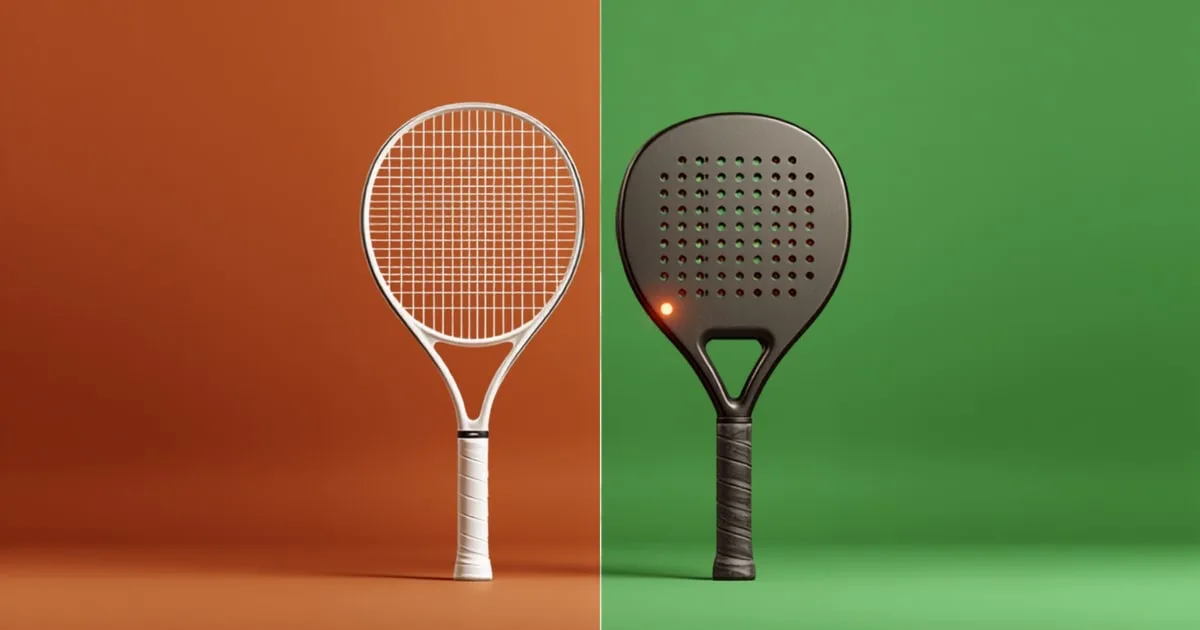
Padel vs Tennis: The Real Differences (and What Transfers)
Padel vs tennis differences explained for tennis players — court size, swing, wall play, and what actually carries over when you make the switch.
Published
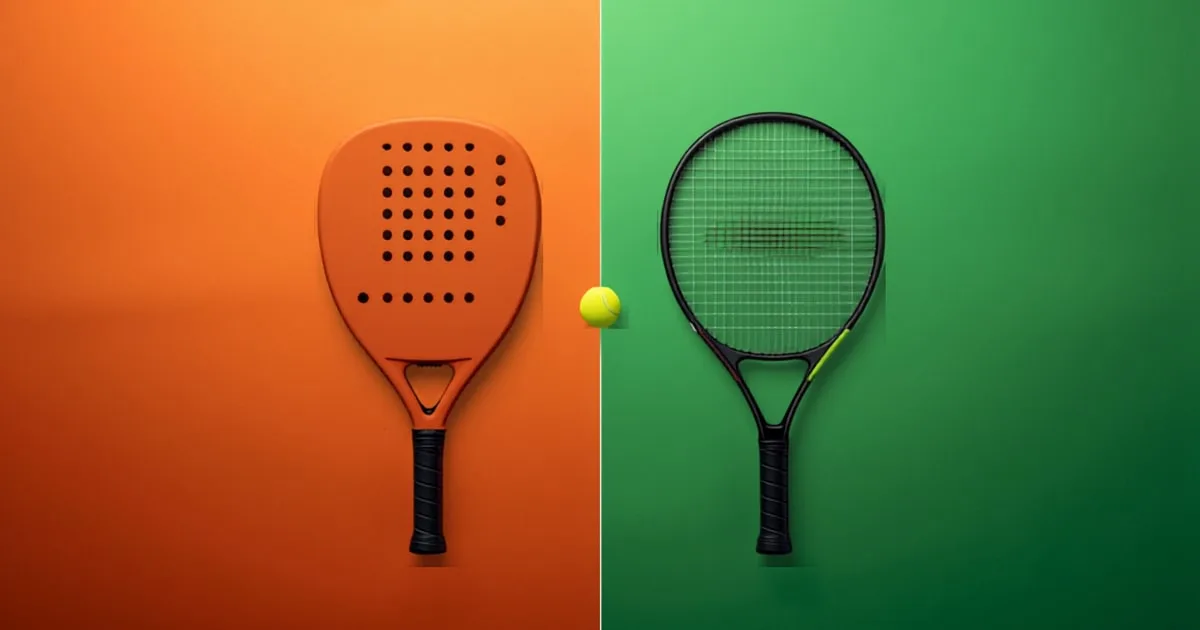
| Criteria | Padel | Tennis |
|---|---|---|
| Court size | 10 × 20 m, enclosed | 23.77 × 8.23 m, open |
| Walls in play | Yes — glass + mesh | No |
| Format | Almost always doubles | Singles or doubles |
| Swing | Short, compact | Full, long |
| Serve | Underhand, after a bounce | Overhand, powerful |
| Learning curve | Gentle at first | Steeper early on |
| Typical cost to start | Lower gear cost | Higher gear cost |
Here's the short version: padel is the friendlier sport to pick up, especially if you already play tennis, but it's not "tennis lite." It's a different game with walls, a smaller court, and a swing you'll have to shrink. If you love big topspin, singles battles, and a full swing, tennis stays king. If you want fast doubles rallies and to feel competent in your first few sessions, padel wins.
The good news for tennis players: more of your game transfers than you'd expect. The bad news: the two habits that hold most crossovers back — a long swing and letting balls go past you — are exactly the ones tennis drilled into you.
Key differences at a glance
The head-to-head table above covers the specs. But the numbers hide the feel. Padel plays like a chess match at close range: short exchanges, lots of resets off the glass, and points that reward patience and placement over raw pace. Tennis rewards weapons — a big serve, a heavy forehand, the ability to hurt someone from the baseline.
If you're weighing padel against pickleball too, that's a different comparison with its own tradeoffs — we break it down in padel vs pickleball.
The court: smaller, enclosed, and the walls are your friend
A padel court is 10 by 20 meters and wrapped in glass and mesh. The walls are in play, which is the single biggest mental shift for a tennis player. In tennis, a ball heading for the back fence is a lost point or an out call. In padel, it's a rally that's still very much alive — you let it bounce off the glass and play it on the rebound, like a squash shot with a lower ceiling.
That enclosure changes everything about positioning and shot selection. You can hit the glass on purpose. You can defend balls you'd never reach on a tennis court. And the smaller footprint means less ground to cover, which is a big reason padel is kinder to older knees and casual players.
The tennis court, by contrast, is open and huge — 23.77 by 8.23 meters for singles. More space to cover, more room for angles, and no walls to bail you out.
The swing: this is where tennis players struggle
Compact. That's the word to tattoo on your racket hand.
Tennis trains a long, looping swing to generate pace and topspin across a big court. Bring that swing to a padel court and you'll spray balls into the glass or over the back fence constantly. Padel's swing is short and punchy — think of a volley or a controlled block rather than a full groundstroke. The ball's already coming at you fast in a small space, so you don't need to add much; you redirect and place.
Good padel players hit with touch and spin, not brute force. The overheads (bandeja and víbora) are the flashy shots, but the bread-and-butter game is control. For a tennis player, this is the part that feels awkward for the first few weeks — your body wants to wind up and rip it. Fighting that instinct is 80% of the transition.
The serve: from your hardest shot to your easiest
Tennis serving is a full-body overhand motion that takes years to master. It's the highest-skill shot in the sport.
Padel's serve is underhand. You bounce the ball, then hit it at or below waist height into the service box. It's low-power and low-drama — nobody's getting aced. This is a gift for tennis players, because it removes the one shot most beginners agonize over. You skip straight to rallying.
The flip side: because the serve isn't a weapon, points don't start with a free advantage. You have to win rallies with positioning and patience, not with a bomb serve. That's a mindset adjustment more than a technical one.
Cost and gear
Getting into padel is generally cheaper up front. Padel rackets are solid, perforated, and strung-less, and a solid beginner frame costs less than a good tennis racket plus stringing and restringing over time. You also don't burn through overgrips and strings the same way.
One hard rule: you cannot use a tennis racket for padel. It's the wrong shape, it's strung, and it's illegal in the sport. So switching means buying a padel racket. The upside is that tennis players have particular needs from that first racket — more control to tame the long-swing habit, a forgiving sweet spot while you adjust. We put together a whole guide on the best padel racket for tennis players so you don't overspend on a pro-level frame you're not ready for.
Court access varies by region. Tennis courts are nearly everywhere; padel courts are booming but still patchy depending on where you live. Worth checking what's near you before you commit.
Which is easier to learn
Padel, early on. And it's not close.
Between the smaller court, the easier serve, and a racket that's genuinely forgiving, most people have real rallies going within a session or two. Tennis takes longer to reach that "we're actually rallying" milestone — the full swing, the serve, and the court size all fight you at the start.
Here's the non-obvious part, though: padel's ceiling is deceptively high. The walls, the geometry, the reflex volleys, and the touch shots take a long time to master well. So "easier" is a beginning-of-the-journey statement. The gap in difficulty between a casual player and a strong one is huge in padel — arguably bigger than in tennis, because the wall play is a skill tennis never taught you.
Tennis to padel: what actually transfers
- Footwork and split-step — carries over almost completely.
- Volleys and reflexes at the net — a big head start; padel lives at the net.
- Court sense and anticipation — reading your opponent transfers directly.
- Hand-eye coordination — obviously.
What you have to unlearn:
- The long swing. Shrink it or suffer.
- Letting balls go long. In padel that ball's still in play off the glass.
- Singles mindset. Padel is a doubles game — spacing and communication with a partner matter more than solo shot-making.
Which should you choose
Pick tennis if you love the physical, athletic version of racquet sports — running, big swings, singles duels, and the satisfaction of a clean weapon. It's more demanding and more solo, and some people love it exactly for that.
Pick padel if you want a social, doubles-first game that's easier on your body and quicker to enjoy, and if you like the puzzle of the walls and placement over raw power. For tennis players specifically, it's a low-risk, high-fun way to try something new with a real transfer of skills.
Plenty of people play both. They scratch different itches — tennis for the workout and the weapons, padel for the social, tactical, quicker-fix rally sessions.
Frequently asked questions
Is padel easier than tennis?
Padel is easier to start and get fun rallies going, largely because the court is smaller, the racket is easier to control, and the underhand serve removes tennis's hardest first hurdle. Mastering high-level padel — the walls, positioning, and touch — is its own deep challenge, so 'easier' really means easier to enjoy on day one.
Can you use a tennis racket for padel?
No. Padel has its own strung-less, perforated, solid racket with no handle length like a tennis frame, and courts require it. A tennis racket is illegal in padel and would play terribly against the walls anyway.
How different is the padel court from a tennis court?
A padel court is much smaller — 10 by 20 meters versus a tennis court's 23.77 by 8.23 meters singles lines — and it's fully enclosed by glass and mesh walls that stay in play. Tennis is open with no walls.
Does tennis experience help you learn padel?
Yes, a lot of it transfers. Your footwork, court sense, volley timing, and hand-eye coordination all carry over. The main things you have to unlearn are your long swing and the instinct to let a ball go when it heads for the back fence.
Which sport is more physically demanding?
Tennis is generally more physically demanding, with more running, bigger swings, and more singles play. Padel is quicker in short bursts and easier on the body over a full session, which is part of why it's popular across a wide age range.