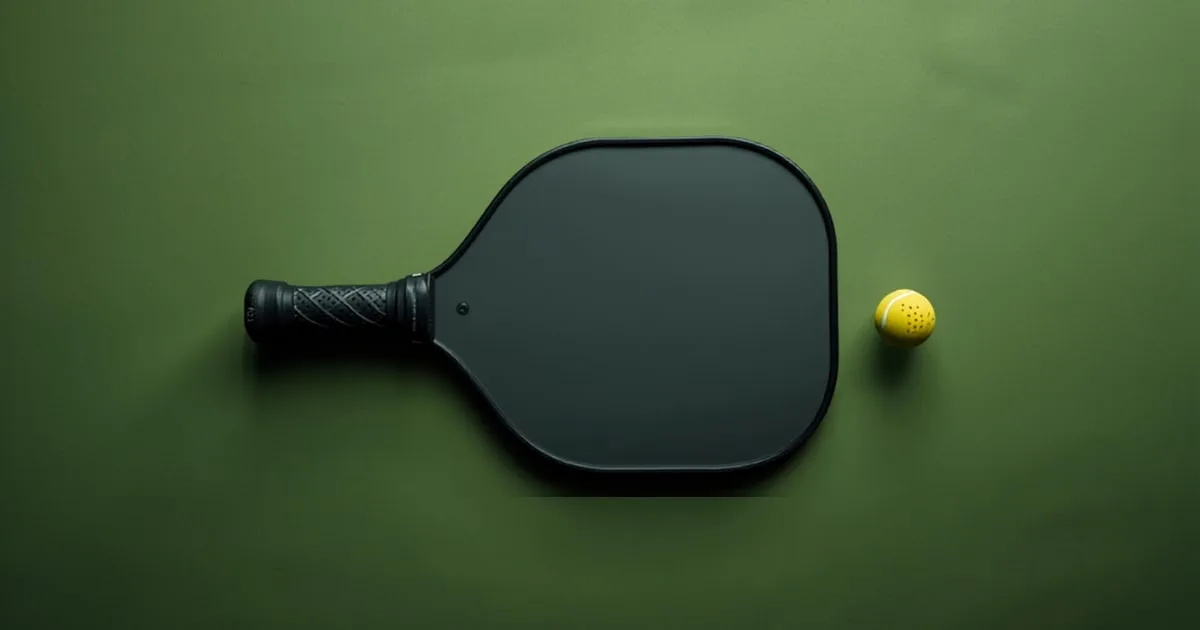
Pickleball
America's fastest-growing sport, minus the guesswork. Paddle weight, materials, and budget picks — tested logic for recreational players.
Paddle weight drives everything else. Lightweight paddles (under about 7.8 oz) are quick at the net and easy on the arm, ideal for control players and anyone with elbow trouble; heavier paddles (8+ oz) add put-away power and stability but slow your hands and fatigue the arm. Most recreational players are happiest in the midweight band around 7.8–8.3 oz.
Nearly all modern paddles use a polymer honeycomb core — the thickness matters more than the brand: thicker cores (16mm) are softer and more forgiving, thinner ones (13mm) feel poppier but less stable. Surfaces are usually fibreglass (more power, larger sweet spot feel) or carbon/graphite (more control and spin). Thermoformed edges add stiffness and durability at a higher price.
Standard-shape paddles give the biggest, most forgiving sweet spot; elongated shapes trade some forgiveness for reach and spin, which advanced players prefer. Match grip size to your hand — smaller grips help wrist spin, larger grips add stability. You do not need to spend big to start: a solid midweight paddle in the mid double digits will outlast your beginner phase.