Tennis Player Moving to Pickleball: Paddle Guide 2026
The best pickleball paddles for tennis players making the switch — what feels familiar, what's different, and which weight and shape ease the transition.
Published
JOOLA Ben Johns Hyperion
- Best for
- Tennis players who want their groundstroke swing to carry over
- Price
- around $200–250
Selkirk SLK Halo Control
- Best for
- Crossover players who need help calming down at the kitchen
- Price
- around $130–160
Engage Pursuit MX
- Best for
- Aggressive baseliners who want spin plus control
- Price
- around $150–180
Paddletek Bantam EX-L
- Best for
- Players who want a bigger, more forgiving hitting zone
- Price
- around $120–150
Franklin Signature
- Best for
- Budget-conscious tennis players testing the waters
- Price
- around $70–100
If you're coming from tennis, grab the JOOLA Ben Johns Hyperion: its elongated shape and head-heavy balance let your groundstroke swing carry over almost intact. But if your instincts are already whispering "just rip it," the softer Selkirk SLK Halo Control will save you a lot of balls flying past the baseline while you learn touch. This guide maps five solid paddles to the specific ways a tennis player's game translates, and where it works against you.
The good news: you already have most of what you need. Racket-head speed, spin, footwork, an overhead you can trust. The bad news: pickleball's kitchen (the no-volley zone) punishes the exact swing that makes you good at tennis. Picking the right paddle can either cushion that transition or make it harder.
How we picked
These picks come from cross-referencing manufacturer specs, verified spec sheets, and the consensus you'll find across pickleball review sites and player forums — not hands-on lab testing, and our how we research page lays that out in detail. We leaned on the specs that actually matter for a crossover player: weight, shape, core thickness, and handle length, plus how each paddle tends to play by reputation.
Every paddle here is currently sold and verified. We prioritized a spread (from a sub-$100 tester to a premium power paddle) so you can match the paddle to where you actually are in the transition, not merely to the flashiest option.
What changes when you switch from tennis to pickleball
Three things trip up nearly every crossover player, and understanding them shapes which paddle makes sense.
Your swing is too big. In tennis, a full backswing is your friend. In pickleball, near the net, it's a liability: the ball's already at you before you finish loading. The dink game rewards a compact, controlled push. A softer, higher-control paddle forgives this while you retrain.
There's no string bed. A paddle is a solid face. It doesn't pocket the ball or give you the trampoline effect a strung racket does. Spin still works, since textured carbon faces grab the ball well, but you generate it with brush-up motion, not a deep string bed.
The court is tiny and the kitchen rules everything. You can't volley inside the seven-foot no-volley zone. That single rule flips pickleball from a power game into a patience game up front. Your tennis power wins at the baseline; your soft hands win at the kitchen.
Weight and balance
Tennis players usually adapt fast to a mid-weight paddle around 7.8–8.3 oz because you're used to swinging something heavier. Head-heavy paddles (like the Hyperion) feel like a natural extension of a groundstroke swing, but they can aggravate tennis elbow. If your arm's already been through the wars, lean lighter and more balanced. Our beginner paddle weight guide goes deeper on where to land.
Shape and handle
Shape is where crossover advice gets counterintuitive: most tennis players are happier with an elongated paddle. The longer body mirrors tennis reach and swing feel, and the longer handle actually fits a two-hand backhand, a shot most single-sport pickleball guides forget you already own. The tradeoff is a narrower, less forgiving sweet spot. If you shank a lot early on, a wider standard shape buys you margin. We break the full tradeoff down in elongated vs standard paddles.
Our top picks explained
JOOLA Ben Johns Hyperion: best swing translation
The Hyperion is the paddle that feels most like "tennis, but smaller." At 8.4 oz with a head-heavy balance and an elongated 16.5" x 7.5" shape, it rewards a full, confident swing and lets you drive the ball with pace you'll recognize. The textured carbon face bites the ball, so the topspin you already know how to hit shows up on the paddle.
The catch is that head-heavy weight. Over a long session it's more fatiguing, and if you've fought tennis elbow before, this one can poke the bear. It's also a premium price. But for a hitter who wants to keep swinging, nothing here translates more directly.
Check price· around $200–250 (opens in new tab)Selkirk SLK Halo Control: best for taming your swing
If the Hyperion is your tennis brain, the Halo Control is your pickleball brain. The 16 mm core plays soft and controlled, which is exactly what you want when you're learning to dink instead of drive. It's elongated, so you keep the reach and the room for a two-hand backhand, and the raw carbon face still grips for spin.
It won't blast winners. Ask it to end points with raw power and you'll feel it holding back. That's the point: it's a paddle that keeps you honest at the kitchen while your soft game catches up to your hard game.
Check price· around $130–160 (opens in new tab)Engage Pursuit MX: best spin-and-control blend
The Pursuit MX splits the difference. At around 8 oz with a thinner 13 mm core and a raw Toray T700 carbon face, it gives you more pop than a 16 mm control paddle while the elongated 16.5" x 7.5" shape keeps your tennis reach. The carbon face is a genuine spin monster, so if you liked hitting heavy topspin, this rewards it.
That thinner core cuts both ways: it's less forgiving on off-center hits than a chunky 16 mm paddle. If your contact point is still all over the place early on, you'll feel the mishits. For an aggressive baseliner with decent hand-eye, though, this is a sweet spot.
Check price· around $150–180 (opens in new tab)Paddletek Bantam EX-L: best forgiveness
The Bantam EX-L is the friendly one. Its standard 16" x 8" shape gives you a wider, more forgiving sweet spot, so those early mishits from a swing that's still too big get punished less. A comfortable medium weight (7.7–8.4 oz) and a 14.3 mm core make it easy on the arm and reasonably balanced between power and touch.
The main drawback for a tennis convert: the shorter 4.75" handle leaves little room if you want to swing a two-hand backhand. If that's a core shot for you, look elongated instead. If you'd rather have a big, forgiving face, this is the safe pick.
Check price· around $120–150 (opens in new tab)Franklin Signature: best budget starter
Testing whether pickleball sticks before dropping real money? The Franklin Signature is a legit entry point. It's elongated (16.5" x 7.3"), runs 7.9–8.3 oz, and the fiberglass face gives a lively, poppy response that a hitter will find satisfying. The 16 mm polypropylene core keeps it stable.
Fiberglass is where the price shows: it's less durable and less spin-friendly than raw carbon over months of play, and serious players outgrow it. But as a "am I actually into this?" paddle, it does the job without feeling like a toy.
Check price· around $70–100 (opens in new tab)Quick comparison
JOOLA Ben Johns Hyperion
- Shape
- Elongated
- Weight
- 8.4 oz
- Best for
- Keeping your full swing
Selkirk SLK Halo Control
- Shape
- Elongated
- Weight
- 7.6–8.2 oz
- Best for
- Learning touch
Engage Pursuit MX
- Shape
- Elongated
- Weight
- 8 oz
- Best for
- Spin + control
Paddletek Bantam EX-L
- Shape
- Standard
- Weight
- 7.7–8.4 oz
- Best for
- Forgiveness
Franklin Signature
- Shape
- Elongated
- Weight
- 7.9–8.3 oz
- Best for
- Budget testing
Bottom line
Most tennis players end up choosing between two paths: the Hyperion if you want your swing to carry over and you'll grind out the kitchen game later, or the Halo Control if you'd rather build the soft hands first and add power once your dinks are reliable. Both are elongated, both keep your reach, both fit a two-hand backhand — and both will feel more like an extension of your tennis than a foreign object.
Whichever you pick, the paddle isn't your real project. Shortening that backswing is. And if you're curious how pickleball gear stacks up against padel (the other racquet sport tennis players keep drifting toward), our padel vs pickleball equipment comparison has the full rundown.
The picks
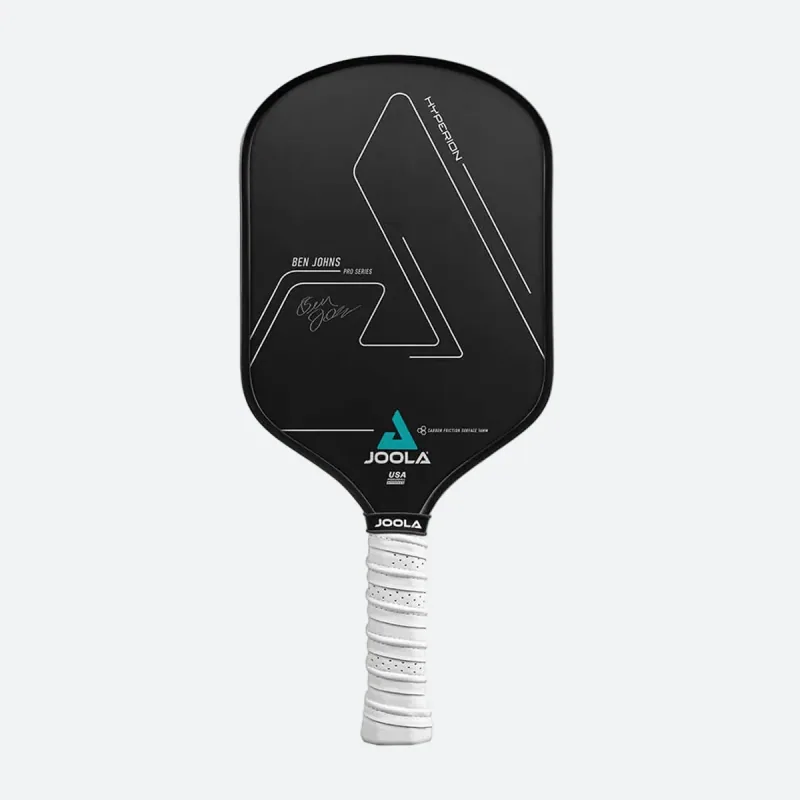
JOOLA Ben Johns Hyperion
Best for: Tennis players who want their groundstroke swing to carry over
- Weight: 8.4 oz
- Shape: elongated (16.5" x 7.5")
- Core: 16 mm polymer
- Face: textured carbon
- Grip: 4.25"
Pros
- Head-heavy balance rewards a full swing — very familiar from tennis
- Elongated shape gives extra reach on wide balls
- Textured carbon face bites the ball for spin you already know how to generate
Cons
- That 8.4 oz head-heavy weight can be a wrist-and-elbow tax if you're already prone to tennis elbow
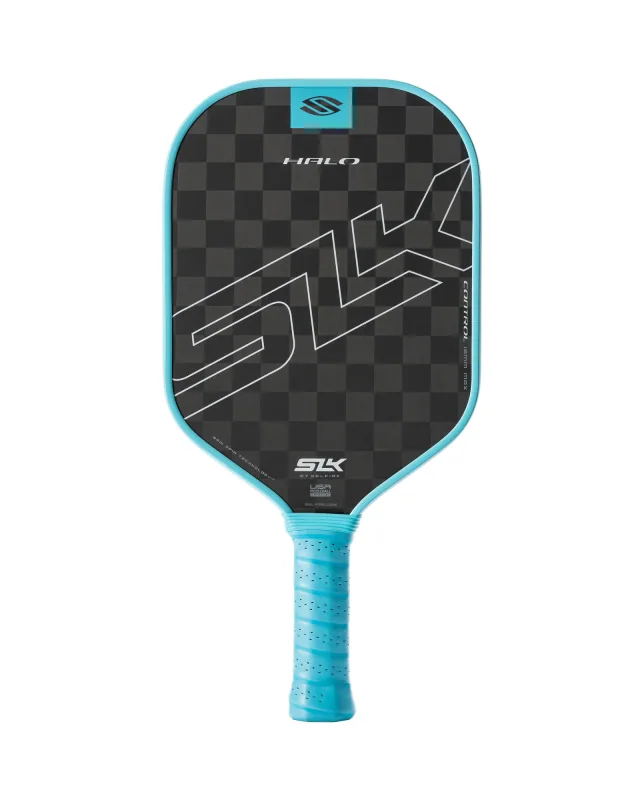
Selkirk SLK Halo Control
Best for: Crossover players who need help calming down at the kitchen
- Weight: 7.6–8.2 oz
- Shape: elongated (16.4" x 7.4")
- Core: 16 mm
- Face: raw carbon fiber
- Grip: 4.25"
Pros
- 16 mm core plays soft and controlled — a real asset for touch shots
- Longer handle leaves room for a two-hand backhand
- Raw carbon face grips the ball for spin and dinks
Cons
- Not a power paddle — if you like ripping winners, you'll feel it holding back
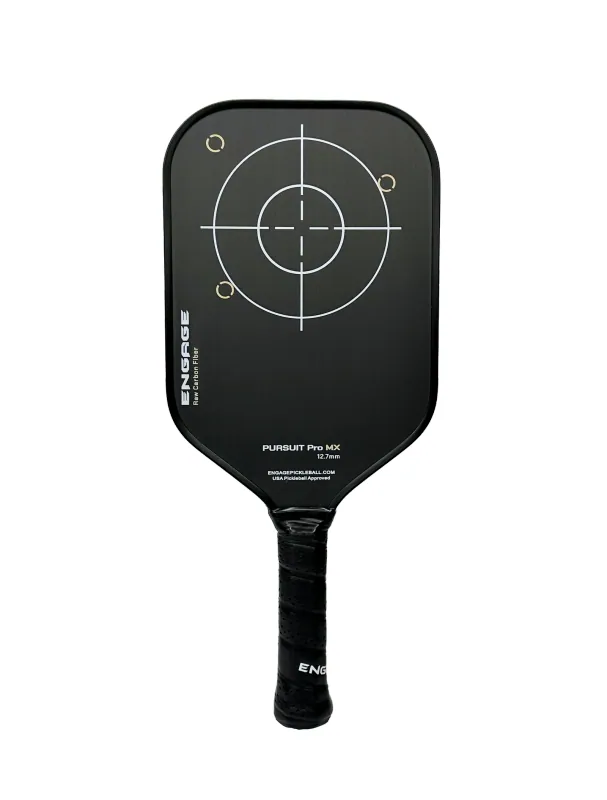
Engage Pursuit MX
Best for: Aggressive baseliners who want spin plus control
- Weight: 8 oz
- Shape: elongated (16.5" x 7.5")
- Core: 13 mm
- Face: raw Toray T700 carbon
- Grip: spec varies — check the listing
Pros
- Thinner 13 mm core gives more pop than a 16 mm control paddle
- Raw Toray carbon face is a spin monster
- Balanced weight that doesn't punish your arm as hard as the Hyperion
Cons
- 13 mm core is less forgiving on off-center hits than a thicker paddle
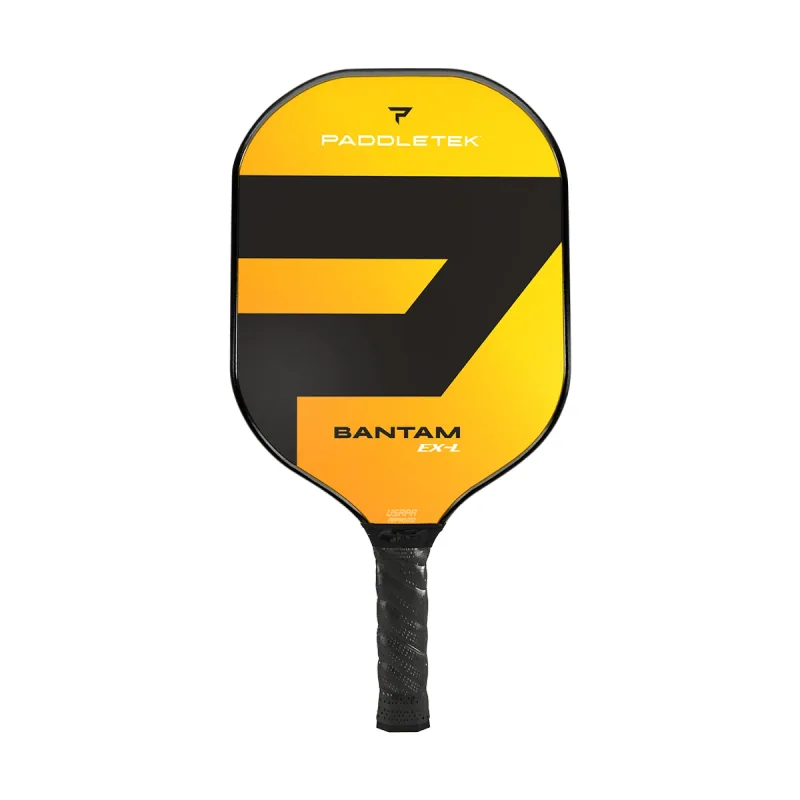
Paddletek Bantam EX-L
Best for: Players who want a bigger, more forgiving hitting zone
- Weight: 7.7–8.4 oz
- Shape: standard (16" x 8")
- Core: 14.3 mm polymer
- Face: spec varies — check the listing
- Grip: 4.25"
Pros
- Wider standard shape means a larger, more forgiving sweet spot
- Comfortable medium weight that's easy on the arm
- Handles power and touch reasonably well without specializing
Cons
- Shorter 4.75" handle leaves little room if you rely on a two-hand backhand
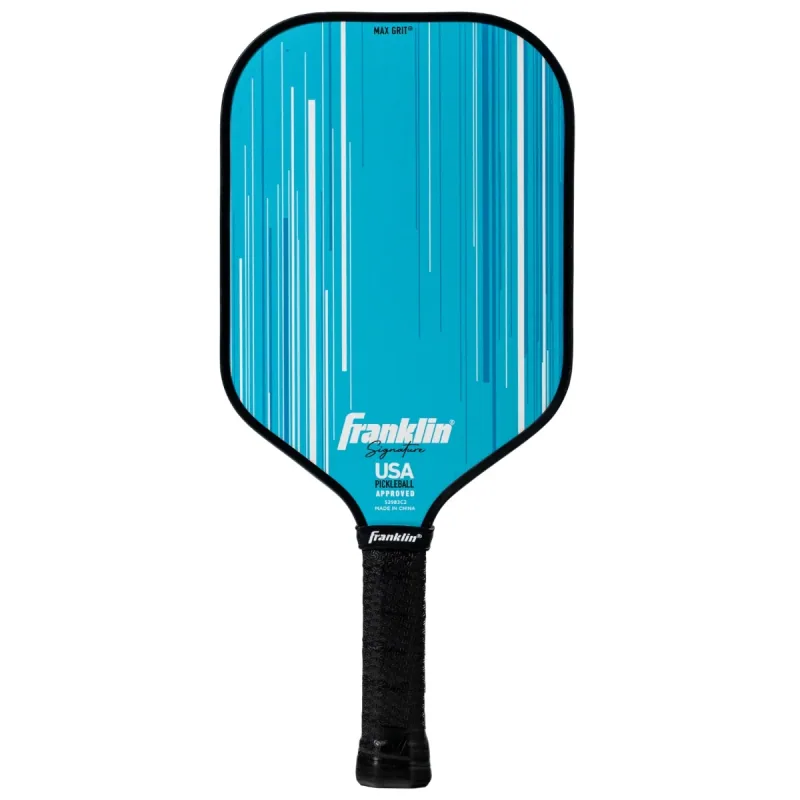
Franklin Signature
Best for: Budget-conscious tennis players testing the waters
- Weight: 7.9–8.3 oz
- Shape: elongated (16.5" x 7.3")
- Core: 16 mm polypropylene
- Face: fiberglass
- Grip: 4.75" handle length
Pros
- Genuinely affordable entry point without feeling like a toy
- Fiberglass face gives lively, poppy response — satisfying for a hitter
- 16 mm core keeps it stable and reasonably controlled
Cons
- Fiberglass isn't as durable or spin-friendly as raw carbon over the long haul
Frequently asked questions
Do tennis players make good pickleball players?
Yes, especially on the power and movement side — your groundstrokes, footwork, and overheads transfer fast. The hard part is unlearning the big swing at the kitchen line, where pickleball rewards soft hands over racket-head speed.
What weight pickleball paddle should a tennis player use?
Most tennis players do well starting around 7.8–8.3 oz. You're used to swinging a heavier tool, so a mid-weight paddle feels natural and adds stability without wrecking your arm. Our beginner weight guide breaks the tradeoffs down further.
Should a tennis player get an elongated or standard paddle?
Elongated, in most cases. The longer shape mirrors the reach and swing feel of a tennis racket, and a longer handle gives room for a two-hand backhand. Go standard only if you want a bigger, more forgiving sweet spot over reach.
Will my tennis swing hurt my pickleball game?
At first, yes. The full backswing that wins points in tennis will send balls sailing long in pickleball, especially on dinks and volleys near the net. Shortening your swing is the single biggest adjustment for crossover players.
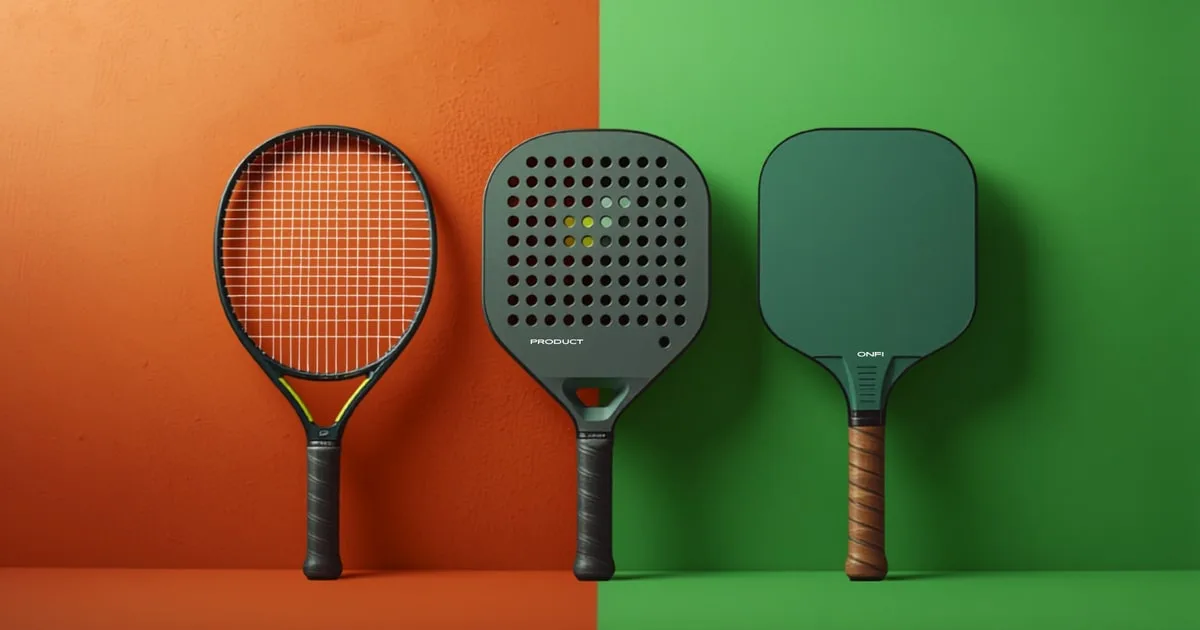
Is a pickleball paddle the same as a padel racket?
No — they're different sports with different gear. Padel rackets are thicker, perforated, and stringless in a different way, and the game uses walls. See our padel vs pickleball equipment breakdown for the full comparison.