Best Beginner Padel Racket UK Under £100 (2026)
The best beginner padel rackets you can buy in the UK for under £100 — honest picks, real specs, and what you actually give up at this price point.
Published
Babolat Contact
- Best for
- Most beginners who want control
- Price
- typically £80–100
Bullpadel Indiga CTR
- Best for
- Best value control racket
- Price
- typically £80–100
Adidas Drive Light
- Best for
- Players who want a lighter racket
- Price
- typically £70–100
Head Flash
- Best for
- Beginners who want a bit more reach and pop
- Price
- typically £70–95
Wilson Blade LT v2 Padel
- Best for
- Improvers chasing a bit more power
- Price
- typically £80–100
Short version: for most beginners in the UK, the Babolat Contact is the racket to buy under £100. Round head, soft EVA core, forgiving as they come. If you want a lighter, easy-to-swing alternative at similar money, the Bullpadel Indiga CTR is the best-value runner-up. Everything below is control-first and beginner-friendly, and every one of them shows up at UK retailers under (or right around) a hundred quid.
This guide is for anyone booking their first few padel sessions who doesn't want to overthink (or overspend on) a first racket. I'll be straight about what you're giving up at this price, and when it's worth stretching a bit further.
How we picked
No lab, no stopwatch: this is research synthesis. Picks are built from manufacturer specs, UK retailer listings, and the consensus you find in player reviews and forums. You can read the full method on our how we research page.
The filters for this list were simple: the racket has to be aimed squarely at beginners (round or near-round shape, soft core, forgiving balance), it has to be on sale at UK shops, and it has to land at or under about £100. Prices at this end move around a lot with sales, so treat every figure as a range, not a promise. For the bigger picture across every budget, see our best padel racket UK 2026 roundup.
What actually matters in a beginner racket
Three things do most of the work: shape, weight, and core softness. Get those right and you'll barely notice the rest for your first year.
Shape and sweet spot
Padel rackets come in three broad shapes, and the difference is basically where the sweet spot lives. A round head keeps it dead centre, so a mishit still lands in the court. That's the forgiveness you want when your timing's all over the place. Teardrop pushes the sweet spot higher for a bit more power, and diamond shifts it right to the tip for advanced hitters. Beginners should lean round. Full explanation in our round vs teardrop vs diamond padel racket guide.
Weight
Somewhere around 355–370 g suits most adults. Lighter is easier to whip around the net and gentler on the wrist; heavier gives you a little free power but wears you out. If you're crossing over from tennis, brace yourself: even the "heavy" end of padel feels absurdly light in the hand compared to a tennis frame. The adjustment is less about muscle and more about not over-swinging.
Core softness
A soft EVA or foam core flexes on contact, which does two things: it's comfortable (kind to a new player's elbow) and it holds the ball a fraction longer for control. Harder cores give more pop but punish poor contact. At this level, soft wins.
Our top picks explained
Babolat Contact: best all-rounder for beginners
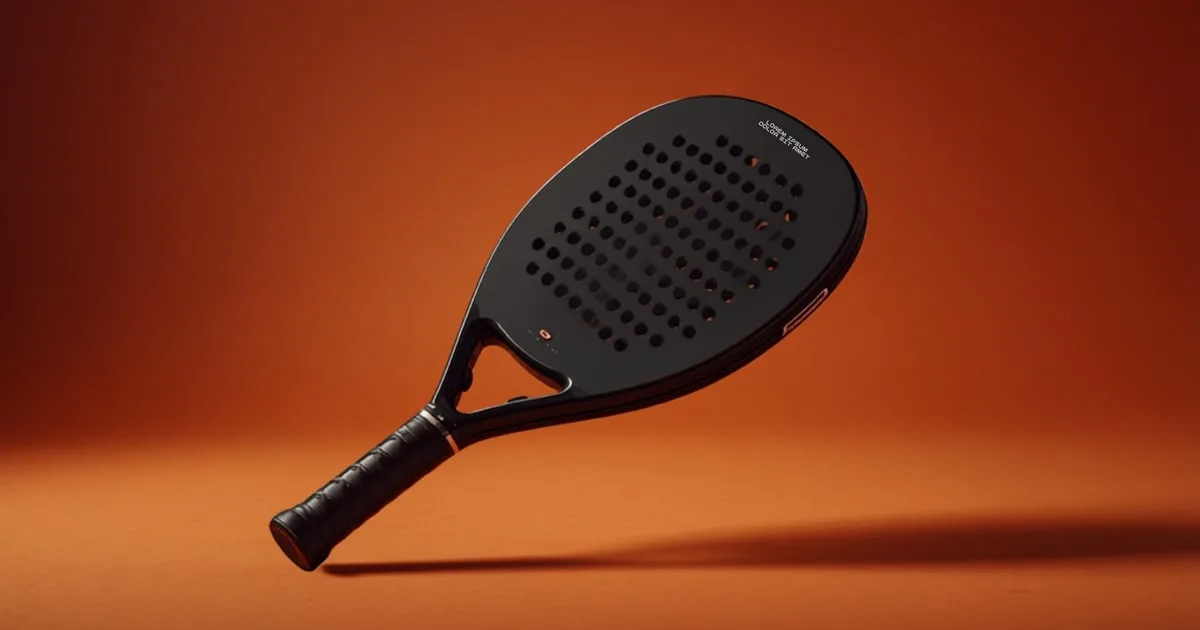
What makes the Contact the default at this price is how much of the beginner brief it covers for the money. Under £100 you're usually choosing which forgiving trait to give up; the Contact keeps them all in one frame. Round head, EVA core, head-light balance around 265 mm, and a manageable 340 g, which means a big central sweet spot, an easy swing, and no punishment for scrappy first-month technique.
What the price doesn't buy you is spin and power. The face is a carbon-and-fibreglass mix rather than textured carbon, so there's little bite on the ball, and you'll supply your own pace. Neither matters while you're learning control, which is exactly why it tops this list.
Check price· typically £80–100 (opens in new tab)Bullpadel Indiga CTR: best value
Bullpadel has a strong reputation for value, and the Indiga CTR earns it. Round shape, soft EVA core, head-light balance, polyglass face: it's built squarely for comfort and control. Players consistently flag it as a lot of racket for the money.
Two things to weigh: it sits at 360–370 g, so the top end feels heavier than the Contact, and the polyglass face won't grip the ball for spin the way carbon does. Neither is a dealbreaker for a beginner, but if your wrist is on the weaker side, try the lighter picks first.
Check price· typically £80–100 (opens in new tab)Adidas Drive Light: for players who want it nimble
Despite the "Light" name, the spec actually runs 360–375 g, so read the listing before you assume it's a featherweight. What it does deliver is a round shape with a smooth carbon surface and easy manoeuvrability — handy when you're reacting late at the net, which as a beginner you will be, a lot.
The smooth surface is the compromise: almost no spin. That's fine for now (spin is a later-stage skill), but it's worth knowing where the sacrifice lands.
Check price· typically £70–100 (opens in new tab)Head Flash: a little more reach
The Flash breaks the round-only rule slightly: it's an oversized teardrop with a Power Foam core and even balance around 265 mm. The oversized head keeps the hitting area large, and the foam core hands you a bit of free depth, so your shots don't die at the net.
One drawback most guides skip: that extra reach and pop can quietly encourage lazy footwork. When the racket does the reaching for you, you stop moving your feet, and footwork is the single most important thing to build early in padel. Great racket, just stay honest with your movement.
Check price· typically £70–95 (opens in new tab)Wilson Blade LT v2: best for improvers who want spin
At 355 g the Blade LT v2 is the lightest racket here, and it's the only one with a textured carbon-fibre face, meaning it actually grips the ball for a touch of spin. The teardrop shape blends control with a bit more punch.
But teardrop shrinks the sweet spot compared to a true round head, so this is the one I'd steer you toward after your first handful of sessions, not before. If you already know you enjoy the game and want something to grow into, it's a smart under-£100 buy.
Check price· typically £80–100 (opens in new tab)Quick comparison
Babolat Contact
- Shape
- Round
- Weight
- 340 g
- Face
- Carbon/fibreglass
- Best for
- All-round control
Bullpadel Indiga CTR
- Shape
- Round
- Weight
- 360–370 g
- Face
- Polyglass
- Best for
- Best value
Adidas Drive Light
- Shape
- Round
- Weight
- 360–375 g
- Face
- Smooth carbon
- Best for
- Manoeuvrability
Head Flash
- Shape
- Teardrop (oversized)
- Weight
- 360 g
- Face
- – (Power Foam core)
- Best for
- A bit more reach
Wilson Blade LT v2
- Shape
- Teardrop
- Weight
- 355 g
- Face
- Textured carbon
- Best for
- Improvers wanting spin
When it's worth spending a bit more
Counterintuitive but true: for your first few months, spending more rarely makes you better. A £150 racket doesn't forgive mishits any more than a good £90 one — often less, because pricier rackets tend to be firmer and shape-specific. Under £100 is genuinely the right budget to start.
Where the extra money does pay off: durability and materials. Cheaper faces and layups can lose pop or dent sooner, so if you play three-plus times a week, a mid-tier carbon racket will last longer per pound. And once you can reliably control depth and placement, a textured carbon face is what makes the spin game possible. That's the natural moment to upgrade. Until then, save it for court time.
Bottom line
Buy the Babolat Contact if you want the safest, most forgiving first racket under £100. Grab the Bullpadel Indiga CTR if value is your priority and you don't mind a slightly heavier frame. And if you already know you're hooked and want a bit of spin to grow into, the Wilson Blade LT v2 is the improver's pick. Whatever you choose, keep it round and soft while you're learning — your footwork and timing matter far more than the racket does right now.
The picks
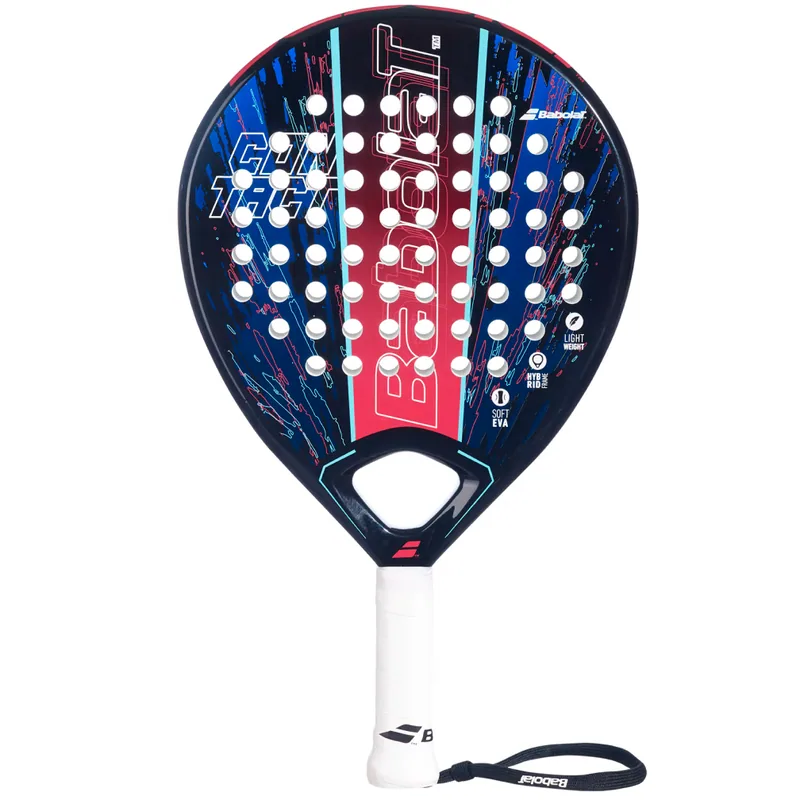
Babolat Contact
Best for: Most beginners who want control
- Weight: 340 g (+/-10)
- Shape: round
- Core: EVA
- Balance: 265 mm (head light)
- Face: carbon and fibreglass
- Thickness: 38 mm
Pros
- Round head + head-light balance = a big, forgiving sweet spot
- Lighter 340 g feels manageable if you're new to the swing
- Control-first — it won't punish scrappy technique
Cons
- Fibreglass surface means less spin bite than a textured carbon face
- Not much power on tap — you'll have to generate your own
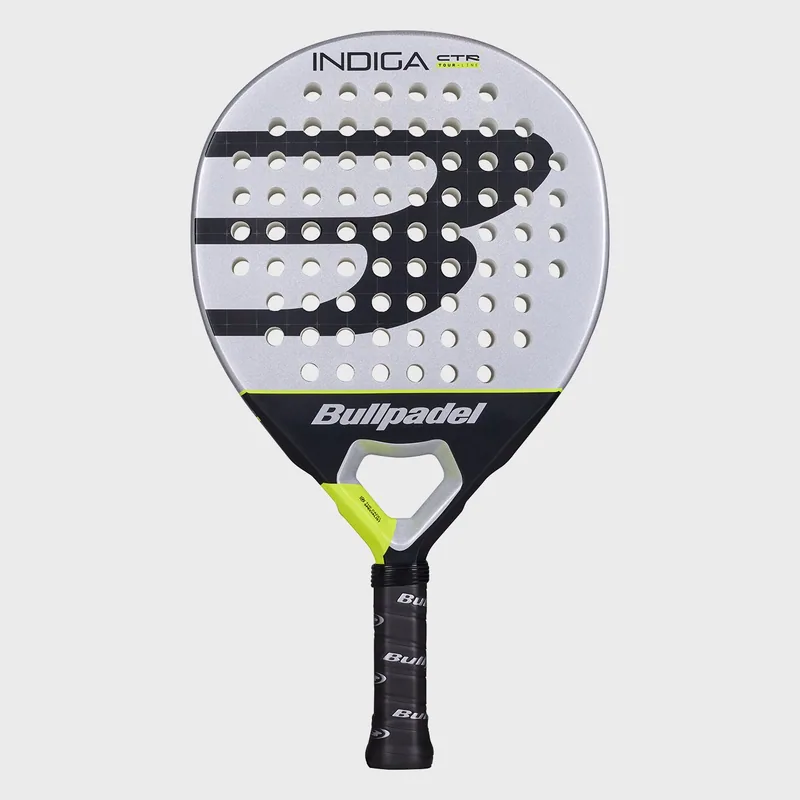
Bullpadel Indiga CTR
Best for: Best value control racket
- Weight: 360–370 g
- Shape: round
- Core: soft EVA
- Balance: head light
- Face: polyglass
- Thickness: 38 mm
Pros
- Round shape with low balance — easy to place the ball where you want
- Soft EVA core is comfortable and kind to the arm
- Widely praised for value in the UK
Cons
- Heavier end of the range (up to 370 g) can tire a new player's wrist
- Polyglass face won't grip the ball like carbon for spin
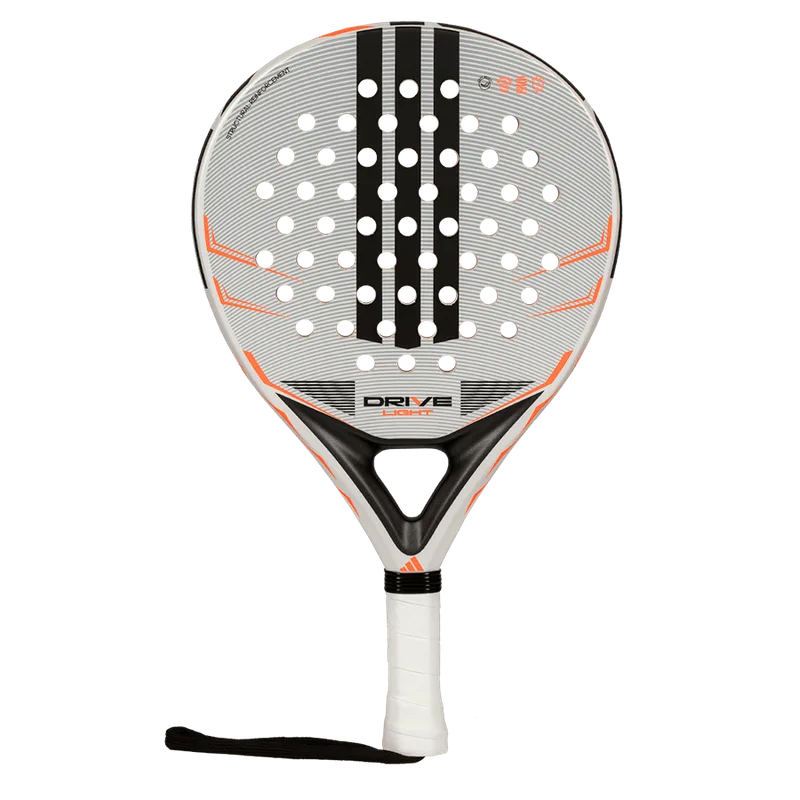
Adidas Drive Light
Best for: Players who want a lighter racket
- Weight: 360–375 g
- Shape: round
- Core: check the listing
- Balance: balanced
- Face: carbon, smooth surface
Pros
- Round shape rewards precision on every shot type
- Manoeuvrable — good if you're reacting late at the net
- Carbon surface holds up reasonably well for the price
Cons
- Smooth surface = limited spin
- Weight spec runs up to 375 g, heavier than the name suggests
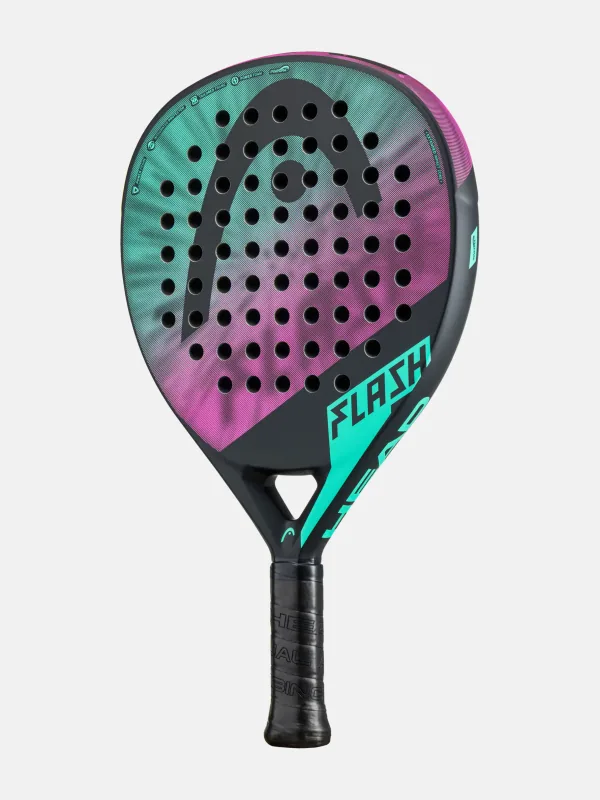
Head Flash
Best for: Beginners who want a bit more reach and pop
- Weight: 360 g (+/-10)
- Shape: teardrop (oversized)
- Core: Power Foam
- Balance: 265 mm (even)
- Thickness: 38 mm
Pros
- Oversized teardrop head gives a large hitting area
- Power Foam core adds a little free depth on your shots
- Even balance is a sensible middle ground
Cons
- Teardrop shape is slightly less forgiving than a true round
- The extra reach can encourage lazy footwork early on
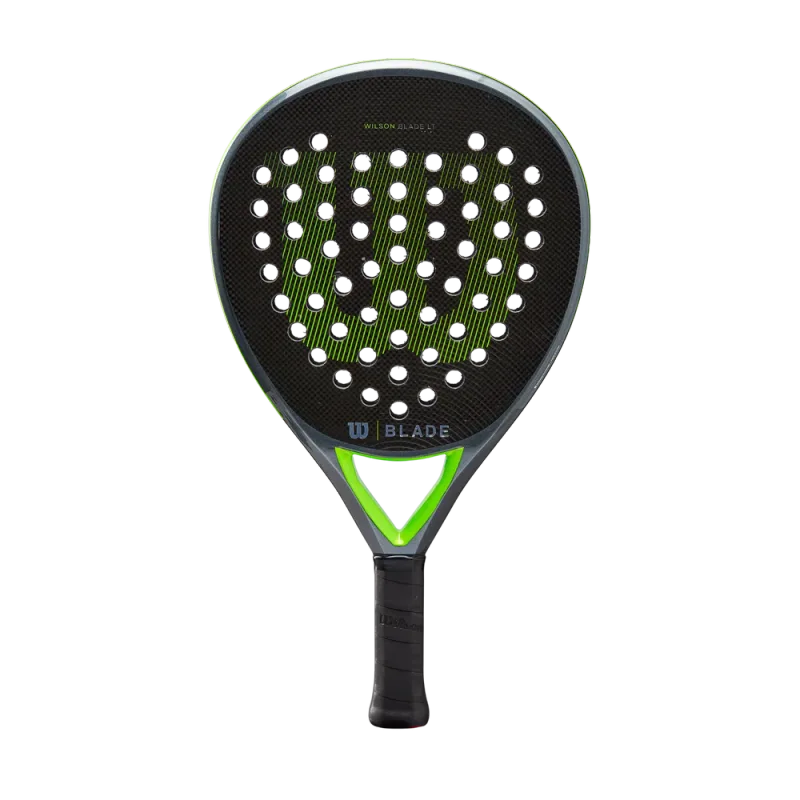
Wilson Blade LT v2 Padel
Best for: Improvers chasing a bit more power
- Weight: 355 g
- Shape: teardrop
- Balance: 260 mm
- Face: textured, carbon fibre
- Thickness: 38 mm
Pros
- Lightest pick here at 355 g — easy to swing
- Textured surface actually grips the ball for a bit of spin
- Teardrop balance blends control with a touch more punch
Cons
- Teardrop shape shrinks the sweet spot vs a round head
- Better suited to someone already past their first few sessions
Frequently asked questions
Is a £100 padel racket good enough for a beginner?
Yes — a sub-£100 racket is plenty for your first year. At this price you get the forgiving round shape and soft core that beginners actually need. What you give up is premium carbon layup and long-term durability, not playability. Spending more early on rarely helps a new player.
What weight should a beginner padel racket be?
Around 355–365 g is the sweet spot for most adults starting out. Lighter is easier to swing and kinder to the wrist; heavier gives more free power but tires you faster. If you're coming from tennis, you'll find these feel featherlight compared to a tennis racket.
Should a beginner pick a round or teardrop padel racket?
Round, almost always. A round head puts the sweet spot in the centre of the face, so off-centre hits still land — exactly what you want while your timing is developing. Teardrop shapes shift the sweet spot higher and reward better technique. See our round vs teardrop vs diamond guide for the full breakdown.
What do you sacrifice buying a padel racket under £100?
Mostly durability and premium materials. Cheaper faces (fibreglass, polyglass, smooth carbon) grip the ball less for spin, and the layups can dent or lose pop sooner than pricier rackets. None of that stops you learning — it just means you may want to upgrade once your game outgrows the racket.
Do I need spin from my first racket?
No. Spin matters much more once you can reliably control depth and placement. A smooth or fibreglass face is fine for months. Focus on hitting the middle of the strings consistently first — the textured-carbon spin conversation can wait.