Best Tennis Racket for One-Handed Backhand 2026: Top Picks
The best tennis rackets for a one-handed backhand: control-first frames with headlight balance, low flex, and stability. Honest picks for classic players.
Published
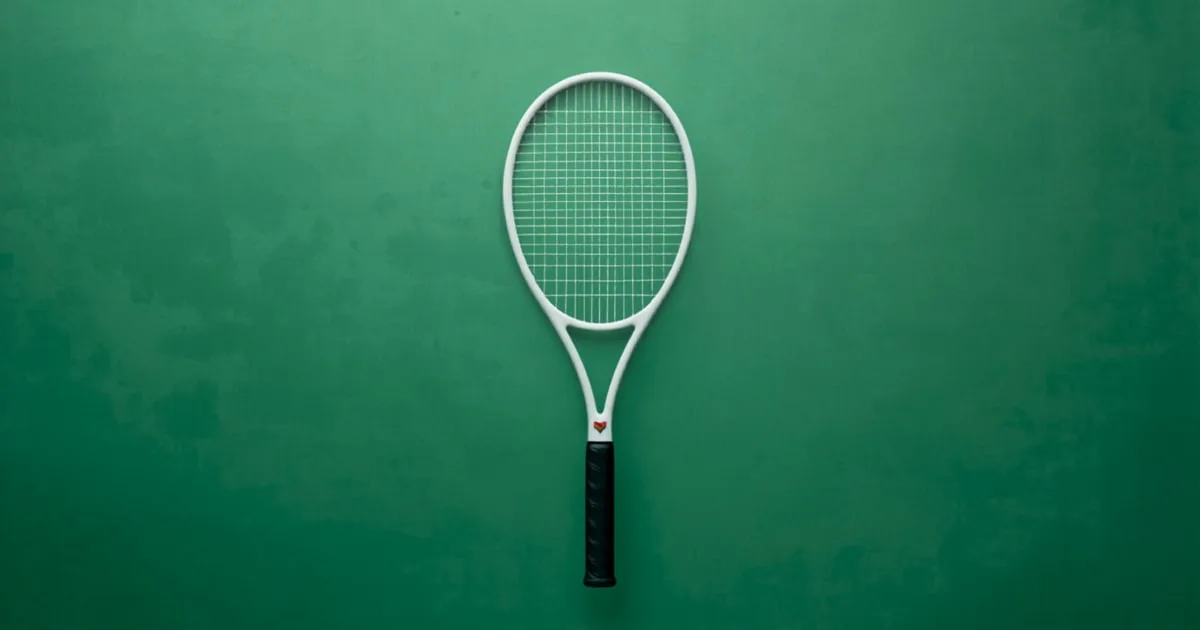
Yonex VCORE Pro 97 310
- Best for
- One-handers who want the classic 97 feel
- Price
- around $220–260
Wilson Blade 98 v9 (16x19)
- Best for
- One-handers who want a bigger sweet spot
- Price
- around $230–260
Wilson Pro Staff 97 v14
- Best for
- Strong, clean ball-strikers
- Price
- around $240–270
Head Prestige MP (2023)
- Best for
- Feel-first control players
- Price
- around $220–250
Babolat Pure Strike 98 (16x19)
- Best for
- One-handers who want control plus spin
- Price
- around $230–270
If you hit a one-handed backhand, you want a control racket that swings fast and stays planted — and for most players that's the Yonex VCORE Pro 97 310: a classic 97 head, 7 points headlight, and just enough weight to drive through the ball. Want a more forgiving hitting zone? The Wilson Blade 98 v9 is the easier everyday pick. This guide is for the classic-style player — the crosscourt slicer, the topspin-driving one-hander — who wants a frame that rewards timing instead of covering for its absence.
Why a one-hander needs different things
The one-handed backhand is a single-arm swing that lives and dies on timing and racket-head speed. That changes what you want in a frame in three ways:
- Headlight balance. Weight toward the handle means the racket swings through faster and lags less. When you're driving a one-hander, that quicker swing gets the racket head around on time.
- Stability. A one-hander meets pace with less bracing than a two-hander. A frame with some mass and a decent swingweight won't get shoved off line when you're stretched wide or blocking a heavy return.
- Control over power. Classic players shape the ball themselves. A tighter, more controlled string bed and a flexier frame keep the ball inside the lines instead of launching it long.
Add it up and you land on control frames in the 97–98 range, headlight, with moderate flex. Nothing here is a spray-and-pray power stick, and that's on purpose.
How we picked
We don't do lab testing at Rallyary — this is research synthesis. These picks come from the published specs, how frames in this category tend to play, and the consensus among control players and reviewers who live with these rackets. You can read more about that on our how we research page and browse the wider tennis silo for related guides.
We leaned on three filters: headlight balance, a head size that suits a driven one-hander (97–98, occasionally 99), and a feel that reviewers consistently describe as controlled rather than powerful. Every spec below comes straight from product listings — where a number varies between sources, we flag it.
The 97 vs 98 question — read this first
Here's the honest part most guides skip. A 97-inch head is smaller than it sounds, and on a one-hander that matters more than on a two-hander.
Your backhand is a single-arm swing, so mistimed contact — a fraction late, a hair off-center — gets punished harder. A 97 rewards you with pinpoint control and a lovely connected feel when you catch it clean. A 98 gives you a slightly bigger, more forgiving sweet spot and better defense when you're stretched or your timing's off.
So who should actually use what? If you're a strong, confident ball-striker who hits the middle of the strings most of the time, the 97s (Yonex VCORE Pro, Pro Staff) will feel like a reward. If you're a solid club player who wants margin — or you play a lot of returns and defensive backhands — the 98s (Blade, Pure Strike) are the smarter buy, even though the 97 has more romantic appeal. Don't let ego pick your head size.
Our top picks explained
Yonex VCORE Pro 97 310 — the classic one-hander's frame
This is the one we'd hand most one-handers first. It's 326 g strung, a 97 head with a 16x19 pattern, and a genuinely healthy 7 points headlight balance — which is exactly what makes it swing so freely through a one-handed backhand. The Yonex feel is plush for a control frame, so it's kinder to the elbow than the numbers suggest.
The catch is the same as any 97: off-center hits don't get much sympathy. If your timing wanders, the small hitting zone will remind you.
Check price· around $220–260 (opens in new tab)Wilson Blade 98 v9 — the forgiving everyday pick
If the Yonex is the purist's choice, the Blade is the sensible one. 98 head, 323 g strung, 16x19, 4 points headlight, with a swingweight around 324. That extra square inch and the flexy, muted feel make it the easiest one-hander frame here to live with day to day — soft on contact, stable, and steady through the swing.
It's a touch less headlight than a true 97, so it doesn't feel quite as whippy on the backhand. A small trade for a much friendlier sweet spot.
Check price· around $230–260 (opens in new tab)Wilson Pro Staff 97 v14 — for strong, clean strikers
The Pro Staff is a proper player's frame. 11.7 oz strung, 97 head, 16x19, balance around 320 mm. It's stable against pace in a way lighter rackets simply aren't — it holds its line when you drive a one-hander into a heavy ball. Reviewers are blunt about it, though: as one put it, "if you're strong enough to handle this racket, the payoff is there." That's the whole story.
The drawback is right there in that quote. This one asks for strength and clean timing. If you're not there yet, it'll feel like hard work rather than reward.
Check price· around $240–270 (opens in new tab)Head Prestige MP — feel-first control
The Prestige is the touch player's answer. A 99 head that reads a little more forgiving than the 97s, 326 g, and a denser 18x19 pattern that gives you a controlled, connected string bed — plus that famous Prestige precision on the one-hander. Stiffness sits around 66 strung, so it's not a limp noodle; it has enough structure for feel and touch.
That tighter pattern is the trade-off. You get less free spin than an open 16x19, so you'll supply more of the topspin shape yourself with your swing.
Check price· around $220–250 (opens in new tab)Babolat Pure Strike 98 — control with a spin bias
If your one-hander is a topspin weapon rather than a slice, the Pure Strike 98 (16x19) is worth a look. It's on the beefier side — 332 g strung — with a 98 head, open 16x19 pattern, 7 points headlight, and a swingweight around 322. Translation: real plow-through plus an open string bed that helps you rip topspin. It's crisper and livelier than the softer Blade or Yonex.
That crispness comes from a stiffer layup. If your arm is at all sensitive, this one can feel harsh — pair it with a soft string and don't string it too tight.
Check price· around $230–270 (opens in new tab)Quick comparison
Yonex VCORE Pro 97 310
- Head
- 97 in²
- Weight (strung)
- 326 g
- Balance
- 7 pts HL
- Best for
- Classic 97 feel
Wilson Blade 98 v9
- Head
- 98 in²
- Weight (strung)
- 323 g
- Balance
- 4 pts HL
- Best for
- Forgiving daily driver
Wilson Pro Staff 97 v14
- Head
- 97 in²
- Weight (strung)
- 11.7 oz
- Balance
- 320 mm
- Best for
- Strong clean strikers
Head Prestige MP
- Head
- 99 in²
- Weight (strung)
- 326 g
- Balance
- 33.2 cm
- Best for
- Feel and touch
Babolat Pure Strike 98
- Head
- 98 in²
- Weight (strung)
- 332 g
- Balance
- 7 pts HL
- Best for
- Topspin one-handers
A note on weight and comfort
Every frame here sits in the 320–335 g strung range with a headlight balance, and that's not an accident — it's the band where a one-hander gets stability without becoming a chore to swing. If you're building toward more control but these feel like a lot right now, our guides for lighter control rackets women players tend to prefer and comfort-focused frames for senior players cover softer, easier-swinging options that still hold up on a one-hander.
And whatever you pick, mind the string. A flexy frame with a soft multifilament will always feel better on the arm than a stiff frame with a tight poly — the one-hander already puts leverage on the elbow, so don't stack a harsh setup on top of it.
Bottom line
Most one-handers should start with the Yonex VCORE Pro 97 310 for that classic, whippy, control-first feel — or step to the Wilson Blade 98 v9 if you want a bigger sweet spot and an easier ride. The 97s reward clean timing; the 98s forgive the days when it isn't. Pick the head size that matches how you actually play, not the one that looks best on the wall.
The picks
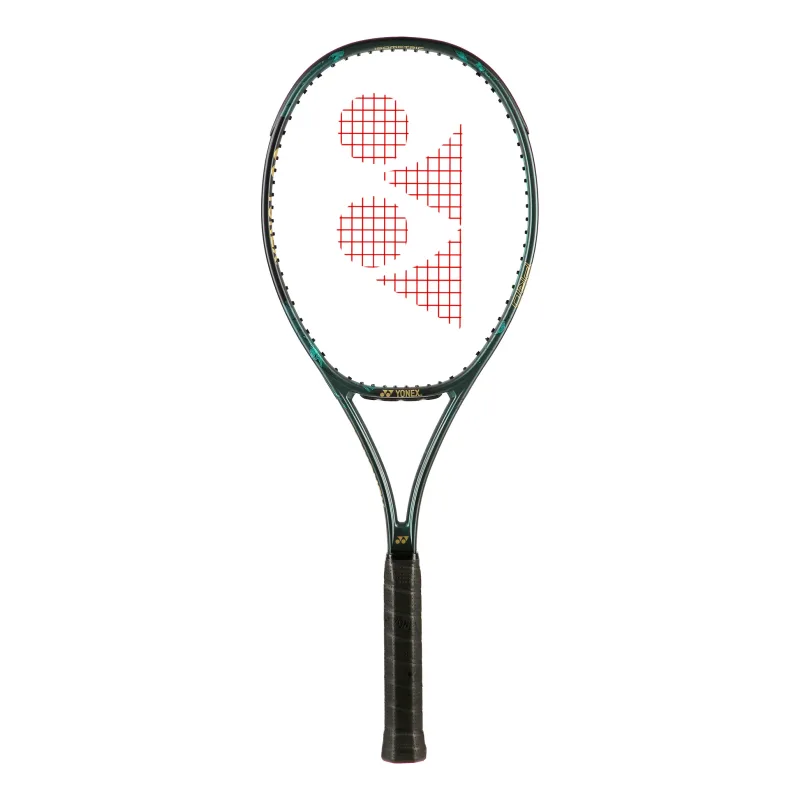
Yonex VCORE Pro 97 310
Best for: One-handers who want the classic 97 feel
- Weight: 326 g (strung)
- Head Size: 97 in²
- String Pattern: 16x19
- Balance: 7 pts HL
- Stiffness: check the listing
Pros
- 7 points headlight — swings fast and whips through the backhand
- 97 head with 16x19 keeps the ball on a string for control players
- Plush Yonex feel is easy on the elbow for its category
Cons
- 97 head is unforgiving on off-center hits — mistimed one-handers punish you
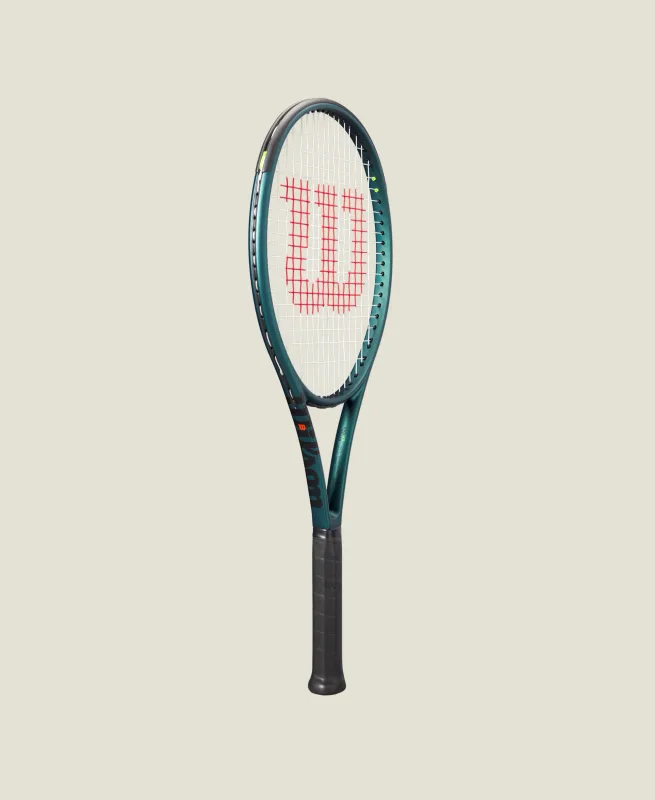
Wilson Blade 98 v9 (16x19)
Best for: One-handers who want a bigger sweet spot
- Weight: 323 g (strung)
- Head Size: 98 in²
- String Pattern: 16x19
- Balance: 4 pts HL
- Swingweight: 324
Pros
- 98 head gives a more forgiving hitting zone than the 97s
- Flexy, muted feel that plays soft on contact
- 4 pts HL with a stable swingweight — steady through the backhand
Cons
- Slightly less headlight than a 97, so it feels a touch less whippy
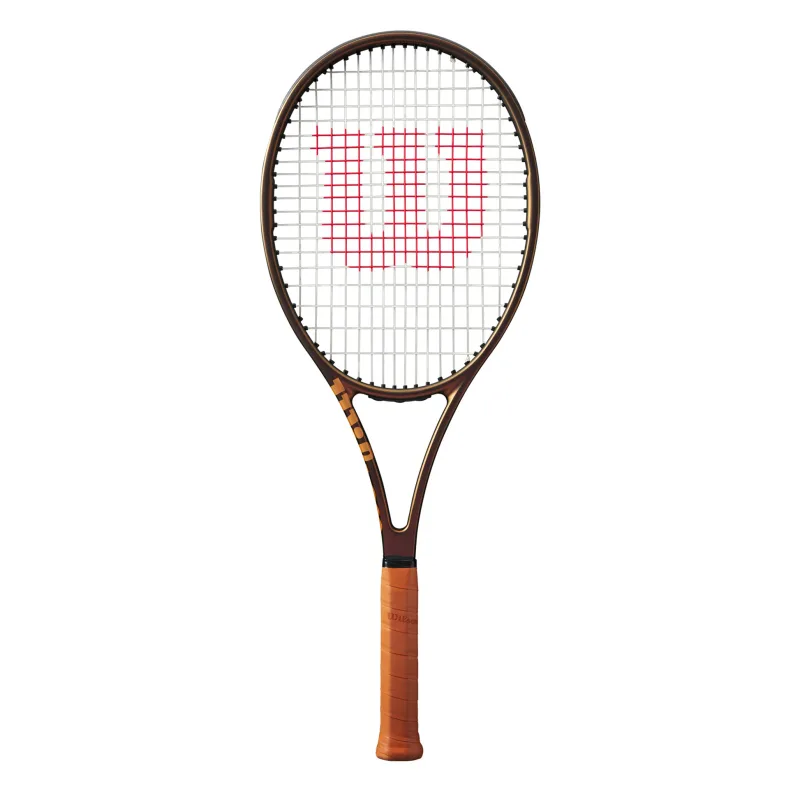
Wilson Pro Staff 97 v14
Best for: Strong, clean ball-strikers
- Weight: 11.7 oz (strung)
- Head Size: 97 in²
- String Pattern: 16x19
- Balance: 320 mm
Pros
- Rock-solid stability — it doesn't flinch against pace
- Precise, connected feel that classic players love
- Compact 97 head suits a driven, penetrating one-hander
Cons
- Demands strength and clean timing — the payoff only comes if you can handle it
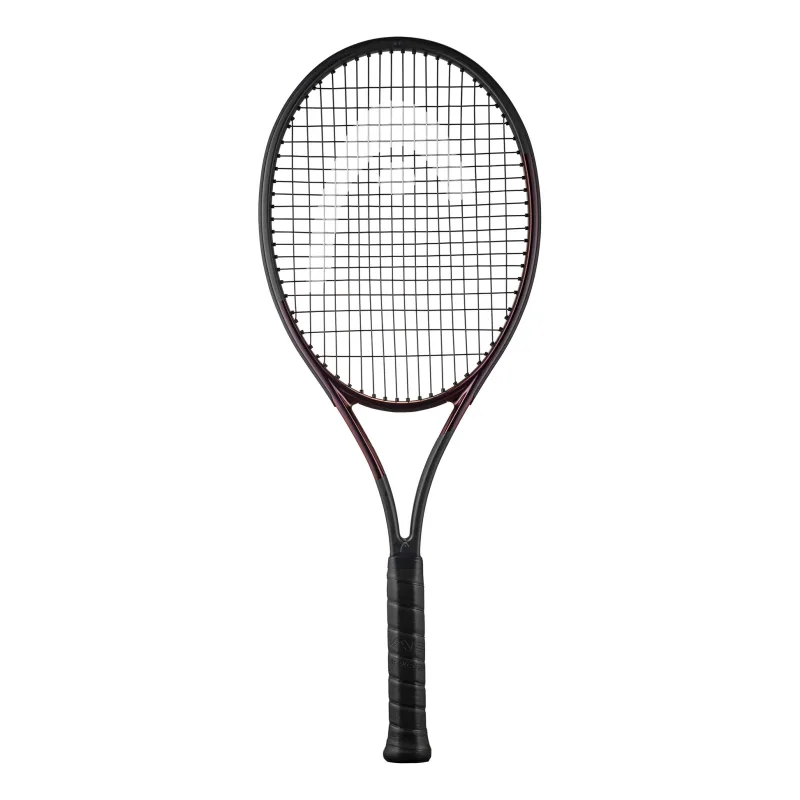
Head Prestige MP (2023)
Best for: Feel-first control players
- Weight: 326 g
- Head Size: 99 in²
- String Pattern: 18x19
- Balance: 33.2 cm
- Stiffness: 66 (strung)
Pros
- 99 head reads as forgiving without going full tweener
- 18x19 pattern gives a dense, controlled string bed
- Legendary Prestige feel — precision and touch on the one-hander
Cons
- Tighter pattern means less free spin — you supply the shape yourself
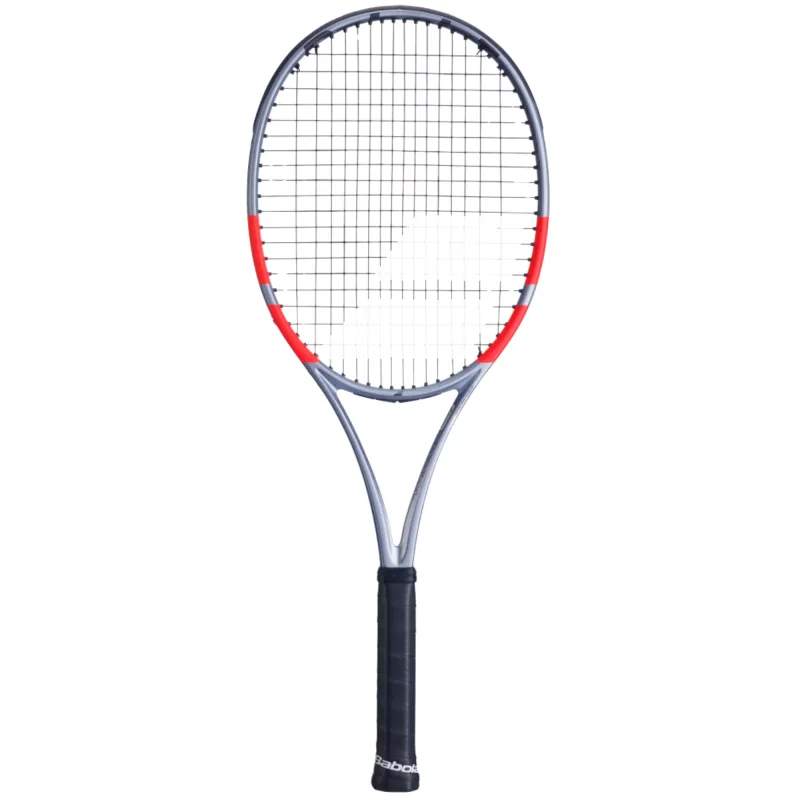
Babolat Pure Strike 98 (16x19)
Best for: One-handers who want control plus spin
- Weight: 11.7 oz / 332 g (strung)
- Head Size: 98 in²
- String Pattern: 16x19
- Balance: 7 pts HL
- Swingweight: 322
Pros
- 98 head and 16x19 open pattern add spin to your topspin backhand
- 7 pts HL and a healthy swingweight give real plow-through
- Crisper, livelier feel than the softer control frames
Cons
- Stiffer than the Blade or Yonex — can feel harsh if your arm is sensitive
Frequently asked questions
What kind of tennis racket is best for a one-handed backhand?
A control-oriented frame with a headlight balance, a head size around 97–98 square inches, and moderate-to-low stiffness. That combo gives you the stability to hold up against pace and the maneuverability to whip the racket head through a one-hander cleanly.
Should a one-hander use a 97 or a 98–100 racket?
Use a 97 if you're a strong, clean striker who wants maximum control and precision. Go 98–100 if you want a bigger sweet spot, easier defense, and more margin on off-center backhands. Most club players are better served by a 98.
Why does headlight balance matter for a one-handed backhand?
A headlight racket keeps the weight toward the handle, so the frame swings faster and easier through a one-handed backhand. Since you're generating that whole shot with one arm, that quicker swing helps you get the racket head around on time.
Is a heavier racket better for a one-handed backhand?
A bit of mass helps — it adds stability and plow-through so the ball doesn't push the racket around. Aim for roughly 320–335 g strung with a headlight balance. Too heavy and you'll be late; too light and you'll get bullied on returns.
Do I need a stiff racket for topspin on a one-hander?
No. Spin comes mostly from your swing path and string pattern, not stiffness. An open 16x19 pattern with a flexier frame will give you plenty of topspin while staying comfortable — stiffness mainly adds pop, not spin.