Elongated vs Standard Pickleball Paddle: Which Shape Fits?
Elongated paddles give you reach and power but a tighter sweet spot; standard shapes are more forgiving. Who each shape is right for, plus real paddle picks.
Published
| Criteria | Elongated | Standard |
|---|---|---|
| Typical length | ~16.5 in | ~15.5–16 in |
| Sweet spot | Narrower, higher up | Larger, centered |
| Reach | More | Less |
| Power potential | Higher (more leverage) | Moderate |
| Forgiveness | Lower | Higher |
| Hand speed at net | Slightly slower to maneuver | Quicker, more nimble |
| Best for | Confident, aggressive players | Beginners, dinkers, quick-hands players |
Short answer: go elongated if you want reach and put-away power and you can consistently hit the middle of the face — go standard (widebody) if you'd rather have a big forgiving sweet spot and fast hands at the net. Most rec players and nearly every beginner are better served by standard. The elongated shape is a specialist's tool that gives you more, but asks for more back.
If you're coming from tennis, there's a twist worth knowing up front — more on that below. First, the differences that actually change how a paddle plays.
Key differences at a glance
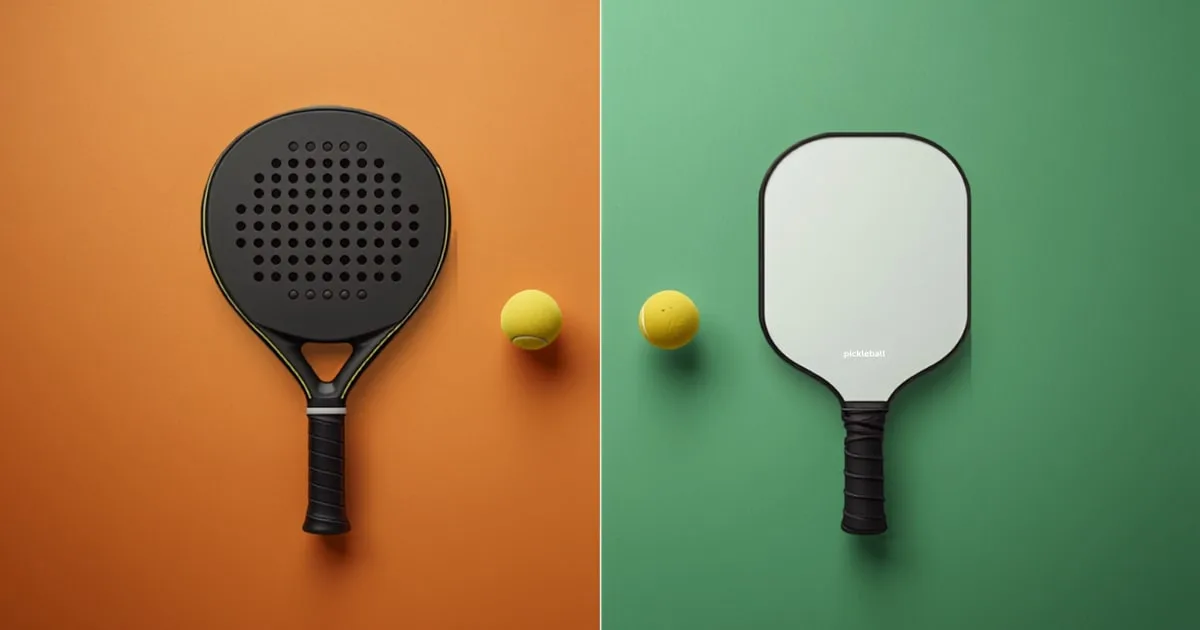
Paddle shape mostly comes down to how the same rough surface area is distributed. The USA Pickleball rule caps total length plus width at 24 inches, so every legal paddle is playing the same trade-off game. An elongated paddle stretches that budget into a longer, narrower body — typically around 16.5 inches long. A standard (often called widebody) paddle keeps things shorter and wider, closer to 15.5–16 inches with a fatter face.
Stretch the shape taller and narrower and you gain reach and leverage. Keep it shorter and wider and you gain a bigger sweet spot and quicker handling. That's the whole story in one sentence — the rest is about which side of it fits your game.
Reach and power: the elongated case
The reach gain is real but modest. You're talking maybe a half-inch to an inch of extra length. Doesn't sound like much, but at the net that inch is the difference between poking back a fast dink and watching it drop. On the stretch — reaching wide for a passing shot or a lob you almost let go — the longer body buys you a little extra grace.
Power is the bigger draw. A longer paddle acts like a longer lever: the same swing generates more head speed at the tip, and elongated paddles often carry a bit more mass toward the head (a head-heavy balance). That combination is why you see aggressive singles players and bangers gravitating to this shape.
The Selkirk Power Air Invikta is a textbook elongated power paddle — 16.5-inch length, a hybrid fiberglass-and-carbon face, and a thinner 13 mm polymer core built for spin and pop. The JOOLA Ben Johns Hyperion runs a similar 16.5″ x 7.5″ footprint with a head-heavy balance and a carbon friction face. Both are paddles you swing to end points, not to noodle around at the kitchen line.
Forgiveness and hand speed: the standard case
Here's the quiet drawback of elongated that a lot of listings gloss over: that longer, narrower face means a smaller, higher sweet spot. Miss toward the edges or catch the ball low on the face and you'll feel it — a dead, off-center hit that flutters instead of flies. The sweet spot doesn't disappear, it just moves up and shrinks side-to-side.
Standard shapes solve exactly that. A wider face spreads the sweet spot out, so mishits still behave. The Paddletek Tempest Wave is a good example of the forgiving-standard breed — its roughly 8-inch width gives a large, friendly hitting zone, and the Tempest polymer core has that soft, absorbing feel that's easy on your hands. It's the paddle you hand a friend who's trying the sport for the first time and it just works.
The other standard advantage is hand speed. Because the weight sits closer to your hand, a widebody paddle whips through those frantic hands battles at the net faster. When two players are trading counters at the kitchen, quicker maneuverability wins points that a slightly-slower elongated paddle loses.
There is a middle-ground shape, too. The Engage Pursuit MX family leans toward that popular elongated shape (some models widebody), landing around 8.1 oz with a raw T700 carbon face and a very high twistweight — that high twistweight is the spec to watch, because it means the paddle resists twisting on off-center hits, clawing back some forgiveness an elongated shape would otherwise cost you. If you want reach without giving up all your margin, a high-twistweight elongated paddle is the compromise to shop for.
The tennis crossover angle
If you're coming from tennis, your instinct will pull you toward elongated — and that instinct is half right. You already swing with a full stroke, you have racquet-head awareness, and the extra reach and leverage feel familiar and satisfying. Good.
But here's what trips tennis players up: a pickleball paddle has no strings and a rigid face, so the sweet spot is far less forgiving than the string bed you're used to. Your tennis frame flexes and the strings trampoline the ball back even on so-so contact. A paddle doesn't. So the tighter sweet spot of an elongated shape punishes the exact mishits your tennis game would normally forgive. Plenty of ex-tennis players start elongated, get frustrated at the net where finesse and hand speed matter, and drop back to a standard shape once the dinking game clicks. Start standard, earn your way to elongated — not the other way around.
Weight matters at least as much as shape here, too, so read our guide on what pickleball paddle weight to start with as a beginner before you commit to either shape.
Construction matters as much as shape
Don't let the shape debate distract you from what the paddle's made of. A thermoformed, unibody paddle plays stiffer and more powerful than a foam-injected one, and that changes how much a given shape forgives you — sometimes more than the length does. Our breakdown of thermoformed vs foam-core pickleball paddles walks through how core construction changes feel, so pair that with your shape decision rather than treating them separately.
Which should you choose
Go elongated if you play aggressively, you're comfortable ending points with pace, you have singles ambitions, and — this is the non-negotiable part — you consistently hit the middle of the face. The reach and power are genuinely useful once you can pay the forgiveness tax.
Go standard if you're newer, if you love the soft dinking-and-resetting game, if you play a lot of doubles with fast hands exchanges, or if you just don't want to think about where on the face you're making contact. It's the safer default, and there's no shame in that — plenty of high-level players stay widebody for exactly the control and hand speed it buys.
Older players and anyone protecting their arm should lean standard for the bigger sweet spot and easier feel — our roundup of the best pickleball paddles for seniors leans into forgiving, comfortable shapes for that reason.
One honest caveat before you buy: specs like exact weight and grip circumference vary between paddle versions and even between individual paddles in the same run. Always confirm the current spec on the listing before you commit — spec varies, check the listing.
Frequently asked questions
Is an elongated or standard paddle better for beginners?
Standard (widebody) is better for most beginners. The wider face gives you a larger sweet spot, so off-center hits still land where you want them. Elongated shapes reward clean contact you haven't built yet.
Does an elongated paddle really give more reach?
Yes, but the gain is small — usually about a half-inch to an inch of extra length. That matters most at the net for poaching and stretching to reach dinks, less so on groundstrokes.
Why do elongated paddles have a smaller sweet spot?
The paddle face is longer but narrower, so the same total surface area is stretched into a taller, thinner shape. That pushes the sweet spot higher up the face and shrinks the margin on side-to-side mishits.
Are elongated paddles harder to control at the net?
They can be. The extra length shifts weight away from your hand, which slows down fast hands exchanges and quick blocks. Nimble players adapt fine; slower hands may prefer a standard shape.
Which shape has more power?
Elongated paddles generally have more power potential because the longer body creates more leverage and often more mass toward the head. Standard shapes trade some of that power for control and a bigger hitting zone.