Padel vs Pickleball Equipment: The Differences That Matter
Padel rackets vs pickleball paddles, balls, courts, and start-up cost — a clear side-by-side of the equipment differences and what you actually need to buy.
Published
| Criteria | Padel | Pickleball |
|---|---|---|
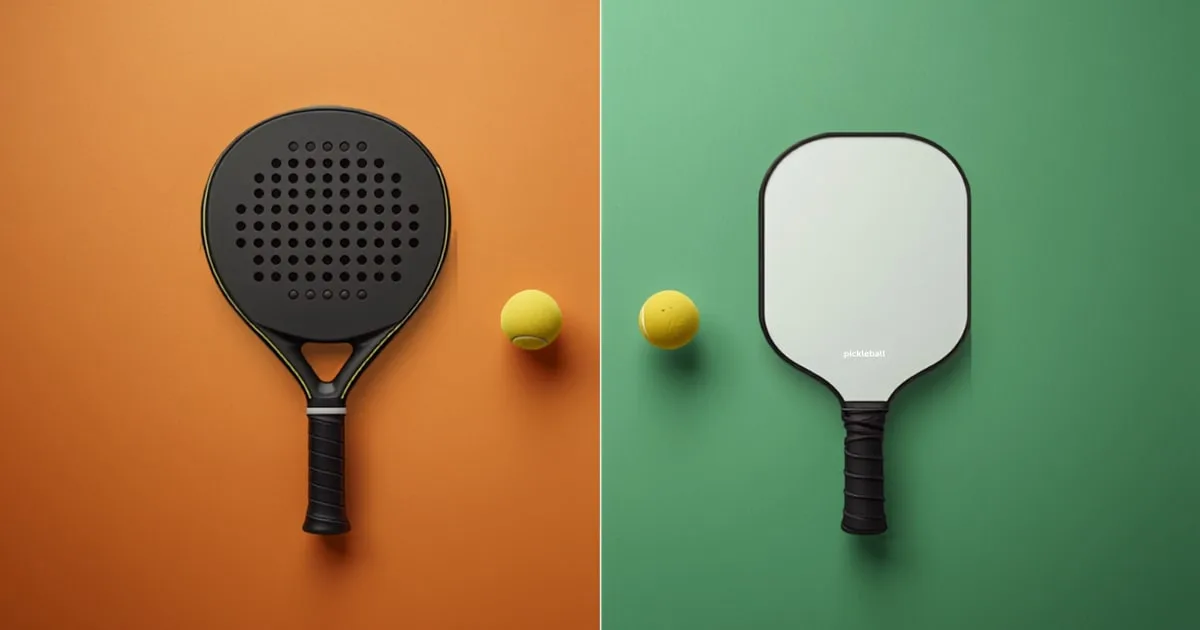
| What you hit with | Solid stringless racket, perforated face | Solid flat paddle, no holes |
| Typical weight | 360–375 g | 7.3–8.5 oz (~210–240 g) |
| Ball | Pressurized rubber (like a slower tennis ball) | Perforated plastic (hollow, holey) |
| Court | Enclosed, glass + mesh walls, 10 × 20 m | Open, 6.1 × 13.4 m, low net |
| Start-up cost | Higher — racket alone often $80–150+ | Lower — playable paddle from ~$40 |
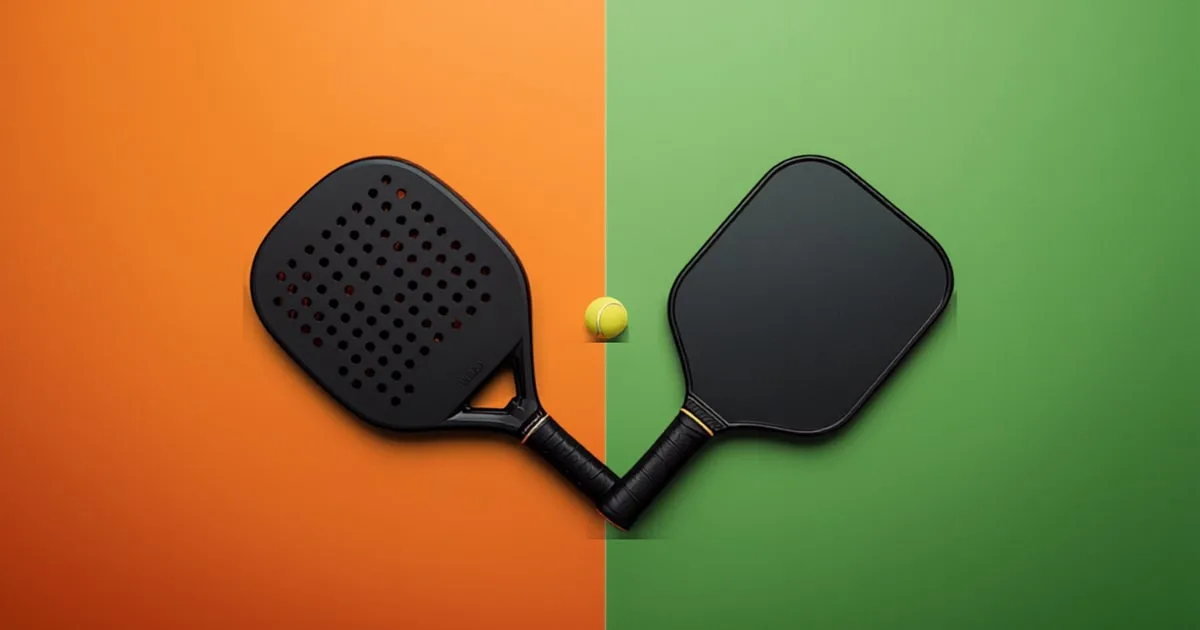
Padel and pickleball look like cousins from across the room — both are paddle-ish, both are social, both are exploding right now. But the gear tells a different story. Padel uses a heavier solid racket, a bouncing pressurized ball, and an enclosed glass court; pickleball uses a light flat paddle, a hollow plastic ball, and an open court with a low net. If you want the cheapest, fastest way in, pickleball wins on cost. If you're a tennis player who wants a real swing and a ball that behaves, padel's equipment will feel like home.
Here's the full breakdown of what's actually different, and what you need to buy for each.
Key differences at a glance
The head-to-head table above covers the headline stuff. The short version: everything in padel is bigger, heavier, and costlier, and everything in pickleball is lighter, flatter, and cheaper. The gap in feel between the two is much wider than the gap in looks.
If you're weighing the sports themselves rather than the gear, our full padel vs pickleball breakdown covers court, rules, and vibe. This piece stays on equipment.
The racket vs the paddle
This is the biggest difference, so start here.
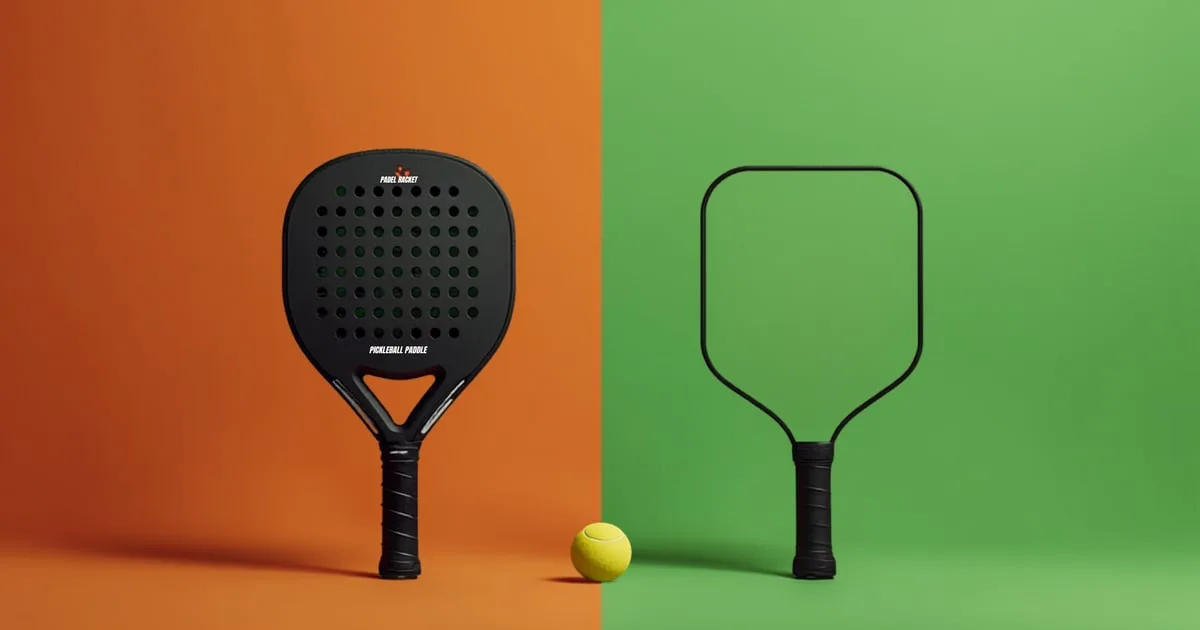
A padel racket is a solid, stringless piece of gear — usually a foam or EVA core sandwiched between fiberglass or carbon faces, with holes drilled through the face. It's thick (around 38 mm), heavier (typically 360–375 g), and shaped in a diamond, teardrop, or round profile depending on how much power or control you want. There's no handle-and-strings setup like tennis. And it comes with a wrist strap you're required to wear, because that racket becomes a projectile off a hard swing.
A pickleball paddle is also solid and stringless, but that's where the similarity ends. It's flat — no holes in the face — thinner, and much lighter, usually 7.3 to 8.5 oz (roughly 210–240 g). The face is honeycomb polymer core with a carbon, fiberglass, or graphite skin. It's built to pop a light plastic ball, not absorb a bouncing rubber one.
For a tennis player, the padel racket is the friendlier crossover. It has weight behind it, you swing through the ball, and topspin actually works. The pickleball paddle asks you to shrink your motion into something compact and wristy — closer to table tennis than tennis. Plenty of tennis players struggle to stop over-swinging in pickleball for their first month.
If you're picking a padel racket coming from tennis, our guide to the best padel rackets for tennis players walks through which shapes forgive a big swing. For the pickleball side, going from tennis to a pickleball paddle covers what to look for when you're used to a heavier frame.
One non-obvious thing: padel rackets have a real break-in cost to your wallet if you buy up too fast. A stiff, head-heavy carbon racket punishes a bad swing with elbow strain. Beginners are almost always better off with a softer, rounder, control-oriented racket first — even if the flashy diamond-shaped one looks cooler.
The balls are completely different
Don't let the "small ball, paddle sport" thing fool you. These balls have nothing in common beyond being round.
A padel ball is a pressurized rubber ball — it looks like a tennis ball and behaves almost like one, just a touch smaller and slightly lower in pressure so it plays a bit slower. It bounces properly. It comes off the glass walls. You can hit it with spin. If you've ever opened a can of tennis balls, you know the drill: they lose pressure over time and you replace them.
A pickleball is a hollow plastic ball with holes drilled all over it — think a firmer wiffle ball. It barely bounces, flies slower, and gets pushed around by wind outdoors. There are indoor versions (bigger holes, softer) and outdoor versions (smaller holes, harder). No pressure to lose, but they do crack, especially in the cold.
Cost-wise, pickleballs are cheap — a few dollars a ball, and a pack lasts a while. Padel balls cost more per can and go dead faster, so factor that into ongoing spend, not just start-up.
The court changes what gear you need
You don't buy a court, but the court dictates two things: shoes and how forgiving your gear needs to be.
Padel is played on an enclosed court — glass and mesh walls, 10 × 20 m, with a sand-topped artificial turf surface. The ball plays off the walls, which is the whole appeal. That surface means you want shoes with grip for turf; a clay-court tennis shoe or a padel-specific shoe keeps you from slipping.
Pickleball is played on an open hard court, 6.1 × 13.4 m, with a low net at 34 inches in the middle. No walls, no bounce-back. Any solid court or tennis shoe handles a hard court fine, so most people skip a dedicated shoe purchase early on.
The court also explains why padel rackets are perforated and pickleball paddles aren't: the holes in a padel racket cut air resistance for faster swings and better control on a ball that's coming off glass at pace. A pickleball never moves fast enough to need that.
Start-up cost: the honest numbers
Here's where the gear gap hits your card.
Pickleball is the cheaper entry, no contest. A genuinely playable beginner paddle runs about $40–70. Balls are a few dollars each. Many courts are free public tennis courts with taped lines. You can be fully equipped and playing for under $80.
Padel costs more across the board. A decent beginner racket typically starts around $80–150 and climbs fast into the $200+ range for carbon frames. Balls cost more per can. And padel courts are almost always pay-to-play club facilities, so court time is a recurring cost pickleball players often dodge entirely.
Where padel doesn't cost more: you don't restring anything (it's solid, like the paddle), and a well-made racket lasts seasons if you don't crack it on the glass.
The counterintuitive part — don't over-buy in either sport at the start. In pickleball, a $200 pro paddle won't fix a beginner's dinks and you'll likely want a different weight once you find your style. In padel, an expensive stiff racket can actively hurt your arm before your technique catches up. Buy mid-range, play for a few months, then upgrade with real preferences.
Which gear should you buy
Go with pickleball gear if you want the lowest possible cost to start, you value a paddle you can just grab and play with, and you're fine with a ball that flies slow and doesn't bounce much. It's the easiest, cheapest on-ramp into a racquet sport, full stop.
Go with padel gear if you're a tennis or racquet-sport player who wants a real swing, a ball that bounces and takes spin, and equipment that rewards technique. You'll spend more — on the racket, the balls, and court access — but the payoff is a game that feels closer to the tennis you already love.
And if you're genuinely torn between the two sports, not just the gear, read the full padel vs pickleball comparison before you spend a cent. The right sport for you decides the gear, not the other way around.
Frequently asked questions
Can I use a pickleball paddle for padel?
No. A pickleball paddle is flat, solid, and too light and small to handle a pressurized padel ball off the walls. Padel rackets are thicker, heavier, perforated, and have a wrist strap you're required to use. The two aren't interchangeable in either direction.
Is padel or pickleball cheaper to start?
Pickleball is cheaper to start. A decent beginner paddle runs about $40–70 and balls are a few dollars each, so you can be fully kitted for under $80. Padel rackets typically start around $80–150, and the balls and court access usually cost more too.
Do padel and pickleball use the same ball?
No, and they're nothing alike. A padel ball is a pressurized rubber ball — basically a slightly slower tennis ball that bounces. A pickleball is a hollow plastic ball with holes, closer to a wiffle ball, that barely bounces and flies slower.
As a tennis player, which gear feels more familiar?
Padel gear feels far more familiar. The racket has real heft, the ball bounces and can be hit with topspin, and the strokes borrow from tennis. Pickleball's light paddle and dead ball feel foreign at first — more like table tennis than tennis.
Do I need special shoes for either sport?
For pickleball on a hard court, any decent court or tennis shoe works. For padel you'll want a shoe with grip for the sand-topped artificial turf — a padel-specific or clay-court tennis shoe is worth it once you play regularly.