Padel vs Pickleball: Which Should You Actually Play?
Padel or pickleball? A no-fluff breakdown of court size, gear, cost, rules, and learning curve — plus a pickleball player's guide to trying padel.
Published
| Criteria | Padel | Pickleball |
|---|---|---|
| Court size | 10 × 20 m, enclosed by glass/mesh walls | 6.1 × 13.4 m (20 × 44 ft), open |
| Played as | Almost always doubles | Doubles or singles |
| Gear cost to start | $$ (racket + balls) | $ (paddle + balls) |
| Learning curve | Easy to rally, hard to master (walls) | Very fast — fun in one session |
| Walls in play | Yes — ball plays off glass | No |
| US availability | Growing but limited | Everywhere |
Play pickleball if you want to start this weekend, spend under $100, and probably find a court within a few miles. Choose padel if the idea of balls ricocheting off glass walls sounds like your kind of puzzle and you don't mind hunting down a club to play at. That's the short version — most Americans will bump into pickleball first because it's roughly ten times more common here, but a lot of pickleball players get curious about padel and end up hooked.
Both are doubles-friendly, both are easier than tennis, and both are more social than they look. The differences that'll actually decide it for you come down to court access, cost, and whether you like the wall.
Key differences at a glance
The head-to-head table above covers the specs. Here's the plain-English version.
Pickleball is small, open, and immediate. You stand close to the net, the ball is a slow plastic wiffle ball, and rallies happen fast because there's nowhere far to run. It rewards touch and patience.
Padel is bigger, enclosed, and springier. It looks like tennis compressed into a glass box. The ball is a slightly depressurized tennis ball, the racket is a stringless perforated slab, and the walls are in play — meaning a ball that flies past you can rebound off the back glass and you get to hit it again. That single rule changes everything about how the game feels.
If you've never touched either, know this: pickleball is the one you can be fun at in an afternoon. Padel is the one that keeps surprising you a year in.
Which is easier to learn
Pickleball, on day one. Full stop.
The court is tiny, the ball is slow, and the underhand serve removes the single most intimidating part of racquet sports for beginners. Two people who've never played can have a real, laughing, back-and-forth rally within ten minutes. That low floor is exactly why it exploded.
Padel's floor is nearly as low — the walls actually help beginners, because balls that would be winners in tennis come back into play and keep the rally alive. What makes padel harder is the ceiling. Reading a ball off the glass, deciding whether to volley it or let it bounce off the wall, positioning with a partner across a bigger court — that's months of learning, not minutes. New padel players consistently report that the wall feels like fighting your own instincts at first. Your brain screams "that ball's gone," and it isn't.
So the honest answer to is padel harder than pickleball: harder to master, roughly equal to start. If you want quick wins, pickleball. If you want a game with more depth to grow into, padel.
For a fuller picture of the sport itself, our beginner's guide to what padel is walks through the rules and the vibe without assuming you've ever seen a court.
Court size and space
This is the quiet dealbreaker nobody mentions.
A padel court is 10 by 20 meters, fully enclosed in glass and metal mesh. It's a permanent, purpose-built structure — you can't chalk one onto a school gym. That's why padel spreads slowly: someone has to build the box.
A pickleball court is 6.1 by 13.4 meters (20 by 44 feet), open, no walls, and it fits inside a single tennis court or badminton hall with room to spare. Communities convert existing tennis and basketball courts by the thousands. That's the whole reason pickleball is everywhere and padel isn't — one needs construction, the other needs tape and a net.
Practical upshot: before you fall for either sport, check what's actually near you. In most US towns there are more pickleball courts than restaurants. Padel might mean a 30-minute drive to the one club in the region. Availability, more than any spec, is what'll decide which sport you actually keep playing.
Cost and gear
Pickleball wins on cost, clearly.
A solid beginner paddle runs roughly $50–100, balls are a few bucks a pack, and a huge share of courts are free public ones. You can be fully kitted out for under a hundred dollars and never pay for court time.
Padel costs more at every step. Beginner rackets typically start around $60–90 and climb quickly into the hundreds, and because padel courts are almost always at private clubs, you're usually paying to rent by the hour. It's not expensive by tennis-club standards, but it's a step up from pickleball's near-free model.
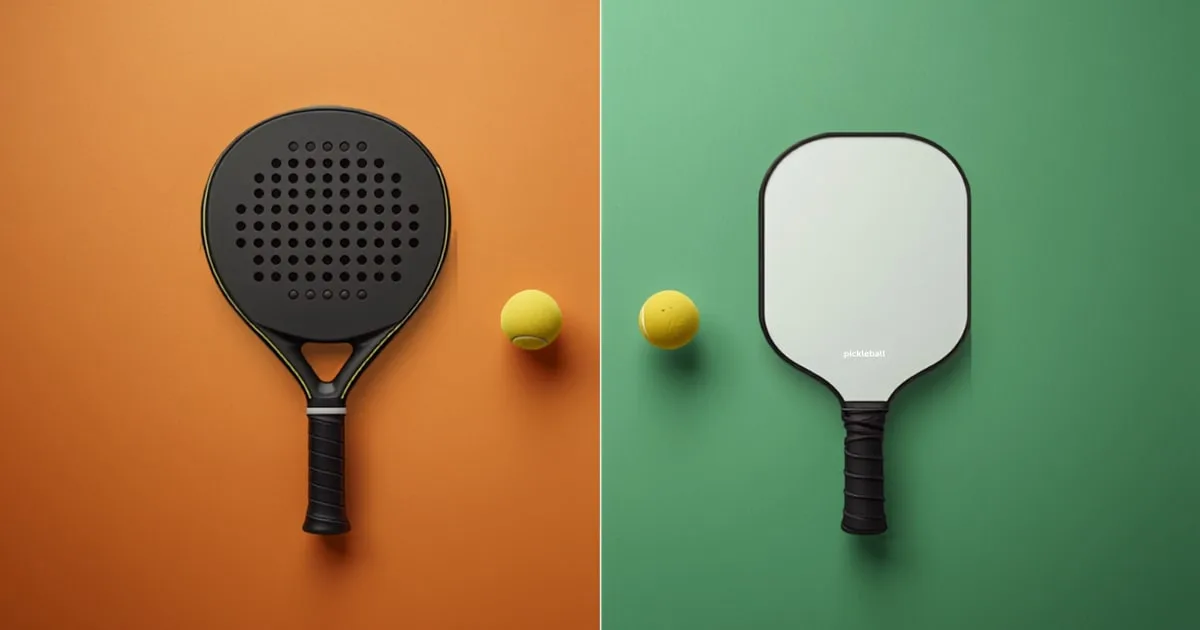
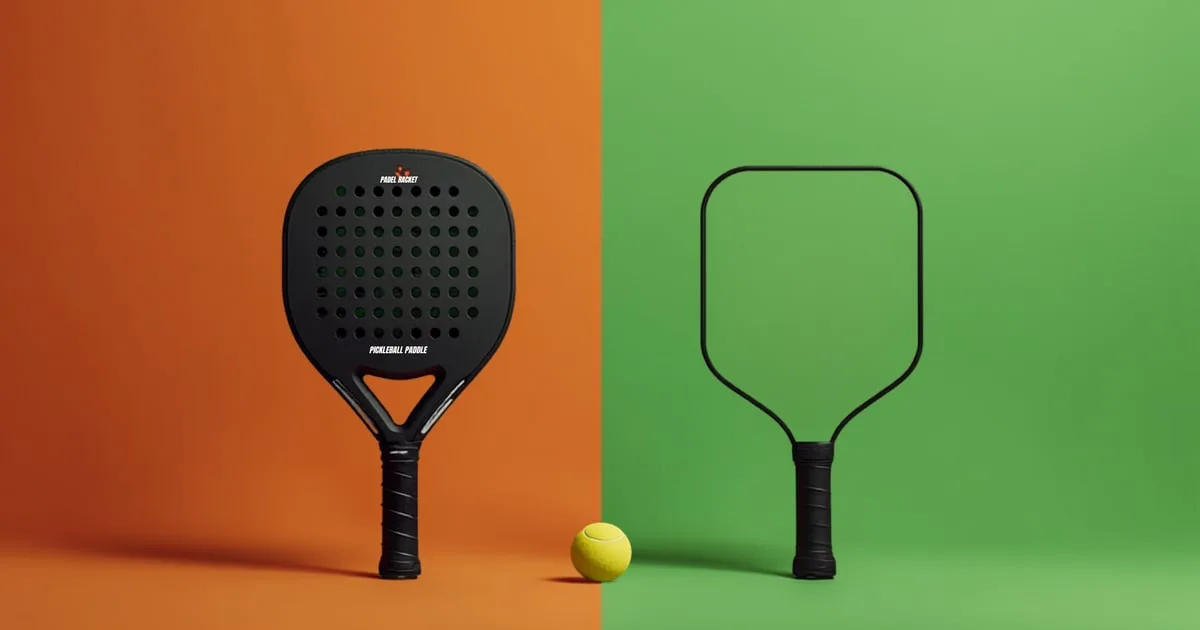
The gear itself is completely different, too. A padel racket is thick, has a foam or EVA core, is drilled with holes for airflow, and wears a wrist strap so it can't fly out of your hand — no strings anywhere. A pickleball paddle is thin, flat, rigid, and light. They are not interchangeable, and trying to swap one for the other feels wrong immediately.
If padel wins the coin flip for you, don't overthink your first racket — our guide to the best padel rackets for beginners covers forgiving, round-shaped options that won't punish a new player's off-center hits.
A pickleball player's guide to trying padel
Coming from pickleball, you're better prepared than you think.
What transfers immediately: your soft hands, your net game, your doubles positioning, and your patience for constructing a point rather than blasting it. Padel rewards all of that.
What's genuinely new is threefold. First, the overhead serve — padel serves underhand too, but off a bounce, which takes a few tries. Second, the bigger court means more running; padel is more athletic than pickleball, closer to a light tennis workout. Third, and biggest: the walls. Your instinct will be to let a passing ball go. In padel, you turn, wait for it to rebound off the back glass, and play it. Rewiring that instinct is the whole fun of the sport, and it's the part pickleball can't prepare you for.
The counterintuitive tip: don't hit hard early. Pickleball players often arrive swinging for winners, but in padel a hard shot just feeds the wall and hands your opponents an easy rebound. Slower, higher, deeper shots win more points until you learn the geometry.
Which should you choose
Pick pickleball if you want to start now, spend as little as possible, play close to home, and be genuinely fun at it within a week. It's the easy yes for most people in the US, and there's zero shame in that — it's a great game.
Pick padel if you're drawn to the wall-play puzzle, you're okay driving to a club and paying for court time, and you want a sport with more depth and a bit more running. It's the one people describe as addictive once it clicks.
And if you're a tennis refugee weighing both, note that padel will feel more familiar to you than pickleball will — similar ball, similar court feel, similar athleticism. We break that crossover down in our padel vs tennis differences guide.
You don't actually have to choose forever. Plenty of people play pickleball for the convenience and padel for the challenge. But if court access forces a single pick, let that be the tiebreaker: the sport you can walk to is the one you'll still be playing next year.
Frequently asked questions
Is padel harder than pickleball?
Padel is harder to master but not harder to start. Both let you rally within your first hour, but padel adds walls you can play the ball off, which takes months to read well. Pickleball's smaller court and slower ball mean fewer variables, so most people plateau at a fun level faster.
Can a pickleball player pick up padel easily?
Yes, faster than most. You already have soft hands, doubles positioning, and net instincts — all of which transfer. The big new skill is the wall: learning to let a ball rebound off the glass and hit it on the way back instead of chasing it.
How big is a padel court vs a pickleball court?
A padel court is 10 by 20 meters and fully enclosed by glass and mesh walls. A pickleball court is much smaller — 6.1 by 13.4 meters (20 by 44 feet), the same footprint as a badminton court, with no walls. Padel needs about four pickleball courts' worth of space.
Which is cheaper to get into, padel or pickleball?
Pickleball is cheaper. A decent starter paddle runs $50–100 and balls are a few dollars. Padel rackets typically start around $60–90 for beginners and climb fast, plus court rental at a club usually costs more than a public pickleball court, which is often free.
Do padel and pickleball use the same paddle?
No. A padel racket is thick, perforated, solid foam or EVA core with no strings, and it has a wrist strap. A pickleball paddle is thin, flat, and much lighter. They aren't interchangeable — using one for the other is awkward and can damage the paddle.