Can You Use a Tennis Racket for Padel? The Short Answer
Can you use a tennis racket for padel? No. Padel needs a solid, perforated, strung-less frame under 45.5 cm with a wrist cord. Here's why, and what to buy.
Published
| Criteria | Tennis racket | Padel racket |
|---|---|---|
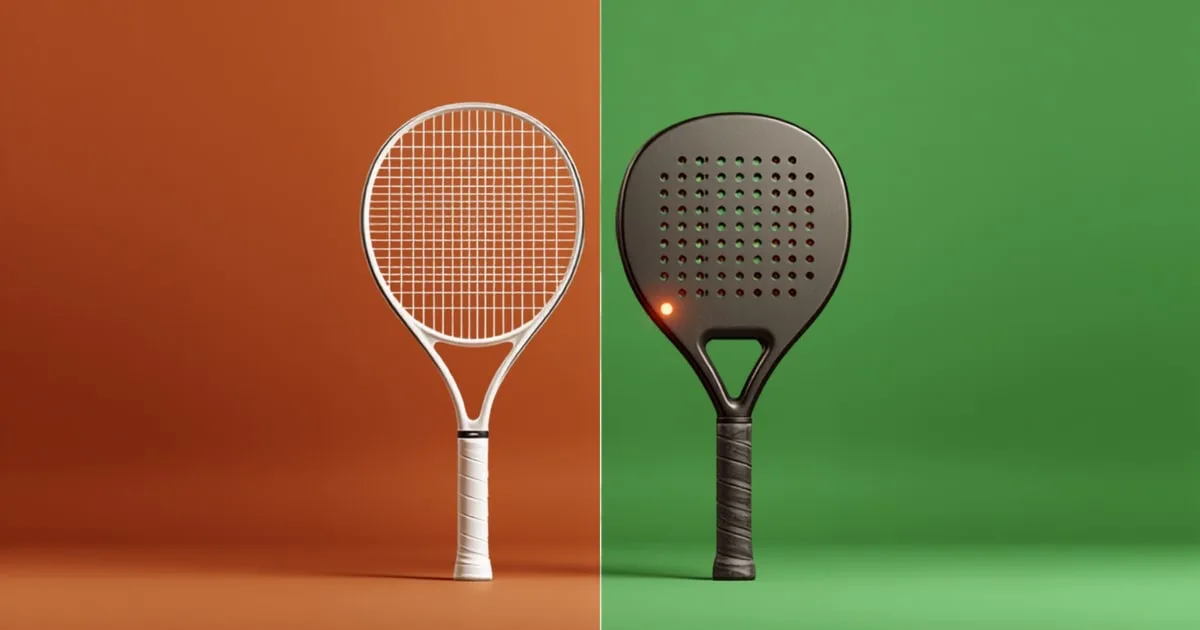
| Construction | Strung, open string bed | Solid, molded one piece, no strings |
| Hitting surface | Flat grid of crossed strings | Perforated face with drilled holes |
| Materials | Graphite frame around a string bed | EVA foam core, carbon or fiberglass faces |
| Length | ~68.6 cm (27 in) standard | 45.5 cm maximum, total |
| Wrist strap | None | Mandatory tether cord |
| Legal for padel | No | Yes |
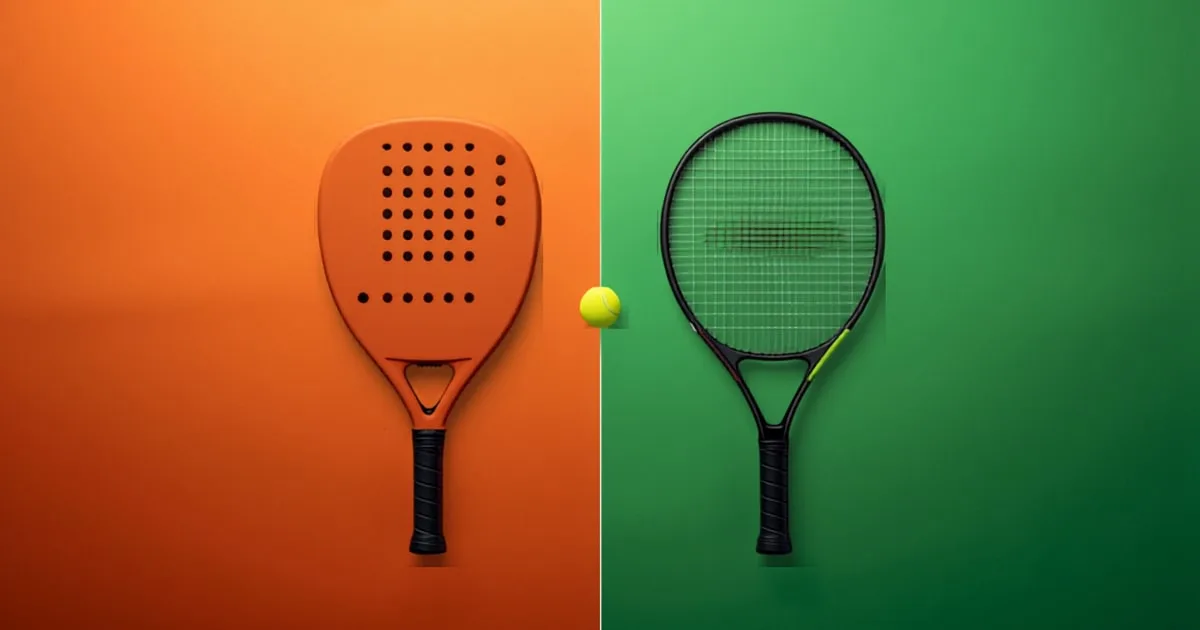
No. You can't use a tennis racket for padel, and it isn't a close call. Padel is played with a completely different tool: a short, solid, strung-less frame with holes drilled through the face and a cord that loops around your wrist. A tennis racket is long, strung, and open-faced, so it fails the padel rules on multiple counts and would play poorly against the glass anyway. If you're a tennis player eyeing padel, the switch means buying an actual padel racket, and the encouraging part is that a lot of your game comes along for free.
Let's break down why the two are not interchangeable, what a padel frame actually is, and what you should buy to get started without overspending.
The short answer, and the rule behind it
Padel has its own governing body and its own equipment rules. Under the International Padel Federation's Rules of Padel, a legal racket is a solid frame with a maximum total length of 45.5 cm, a maximum width of 26 cm, and a maximum thickness of 38 mm, with a perforated hitting surface and a wrist strap that you're obligated to wear. A tennis racket blows past the length limit before you even get to the strings. So beyond "it plays wrong," a tennis racket is simply not permitted equipment on a padel court.
That's the clean answer. The interesting part is why padel is built this way, and what it means for a tennis player crossing over.
What makes a padel racket a padel racket
A padel racket looks like a stubby, thick paddle, and every part of that shape is deliberate.
It's solid, not strung. Instead of a string bed, the face is a molded surface, usually a soft EVA foam core sandwiched between layers of carbon fiber or fiberglass. Fiberglass faces flex more and feel forgiving; carbon faces are stiffer and punchier. There are no strings to break, restring, or fuss over.
It's perforated. The face is drilled with holes across the hitting surface. Those holes cut air resistance so you can swing the heavier solid frame quickly, and they shape how the ball comes off the face. It's a construction that has nothing in common with a taut grid of tennis strings.
It's short and thick. At 45.5 cm max, a padel racket is far shorter than a 27-inch (about 68.6 cm) tennis frame. The compact length suits the fast, close-quarters exchanges padel is built around, where a long lever would only get in your way.
And it has a wrist cord. The tether isn't optional flair. It's required safety equipment, because in a small enclosed court with a partner beside you, a flung racket is a real hazard. Tennis rackets don't have one.
Why the tennis frame fails on the padel court
Put a tennis racket on a padel court and it goes wrong on every axis at once.
It's illegal, as covered above, so it can't be used in any real game or club session. It's too long, so the timing and swing padel demands would be off from the first ball. It's strung, so it behaves nothing like the solid face everyone else is using, and the ball reacts differently off strings than off a padel surface. And it has no wrist cord, which clubs won't overlook.
Then there's the wall problem. Padel's defining feature is that the glass and mesh walls stay in play. You routinely let a ball pass, bounce off the back glass, and play it on the rebound, like a controlled squash shot. That game rewards a short, maneuverable frame you can reset and redirect with. A long tennis racket, swung with a full tennis motion, is the wrong instrument for those tight rebound exchanges. Even setting the rules aside, you'd be fighting your equipment on every point.
What actually transfers from tennis
Here's the encouraging news, and the reason tennis players tend to enjoy padel quickly. You don't lose your athletic foundation, you just re-tool the swing.
Your footwork, split-step, and court sense move over almost completely. Your volley instincts are a head start, because padel lives at the net and rewards quick hands. Your anticipation, reading where the ball and your opponent are going, carries directly. Hand-eye coordination, obviously.
What you have to unlearn is mostly the big swing. Tennis trains a long, looping stroke to create pace across a large court. Padel wants a short, compact punch, because the ball is already on you fast in a small space and the walls do some of the work. The other habit to break is letting balls go long. In tennis that's an out; in padel that same ball is alive off the back glass. If you want the full picture of what carries over and what doesn't, our padel vs tennis breakdown digs into the differences shot by shot.
What a tennis player should actually buy
Since a tennis racket is out, you need a real padel racket, and your tennis background points you toward a specific kind of first frame.
Lean toward control and forgiveness, not raw power. A round-shaped racket with a soft core and a fiberglass face puts the sweet spot in the middle and is the most beginner-friendly layout, which helps while you shrink that tennis swing down to padel size. Diamond-shaped power frames are tempting for a hard hitter, but they punish off-center contact and can aggravate an arm that's already adjusting. The shape question is worth understanding before you buy, and our guide to round vs teardrop vs diamond rackets lays out the trade in plain terms.
On budget, a solid beginner padel racket typically runs about $70 to $130. You can spend less on a mass-market frame or far more on a pro-level one, but you don't need a premium racket while you're learning the walls. We put together picks aimed at exactly this crossover in the best padel racket for tennis players guide, and if you're starting from scratch, the best padel racket for beginners roundup covers forgiving all-rounders. New to the sport entirely? Our what is padel explainer covers the basics before you spend a cent.
Don't confuse padel with its paddle-sport cousins
One thing that trips up newcomers: padel is not paddle tennis, platform tennis, or pickleball, and none of those paddles work for it either. They're separate sports with separate gear. A pickleball paddle is flat, thin, and rigid, with small holes only for airflow rather than a drilled hitting surface, and it's built for a light plastic ball. A platform (paddle) tennis paddle is solid and perforated too, but sized and shaped for a different court and a spongy ball. A padel racket is the thick, foam-cored, curved-face frame described above. The names sound alike and the paddles look vaguely similar in a photo, but they're tuned to different balls, courts, and rules. So "I have a paddle already" doesn't get you onto a padel court unless it's specifically a padel racket.
If you're weighing which racquet sport to try in the first place, our padel vs pickleball comparison covers how the two play and what each one asks of you.
Which should you reach for
For padel, reach for a padel racket. A tennis racket won't get you on the court, won't play right against the walls, and isn't allowed. The rules and the physics both point the same way.
If you already play tennis, treat that as an advantage rather than a loss. Your instincts transfer, the underhand padel serve removes tennis's hardest shot, and a forgiving beginner frame will have you in real rallies within a session or two. Keep your tennis racket for tennis, add a padel racket for padel, and enjoy the fact that the two scratch different itches while sharing the same athletic base.
Frequently asked questions
Can you use a tennis racket for padel?
No. Padel requires a solid, strung-less, perforated frame no longer than 45.5 cm with a wrist cord. A tennis racket is strung, roughly 68.6 cm long, and has no tether, so it's illegal under the padel rules and plays badly against the walls. You need a purpose-built padel racket.
Why can't a tennis racket be used in padel?
Three reasons stack up. It's strung rather than solid and perforated, it's far longer than the 45.5 cm padel limit, and it lacks the mandatory wrist strap. On top of the rules, padel's short rebound game rewards a compact frame, and a long strung racket handles those exchanges poorly.
Can you use a padel racket for tennis?
No, and for the mirror-image reasons. A padel racket has no strings and is much shorter, so it can't generate the pace or reach tennis needs across a full court, and it isn't legal tennis equipment. Each sport needs its own frame.
Is a padel racket the same as a pickleball paddle or paddle tennis racket?
No. All three are solid paddles, but padel rackets are thicker with a foam core and a curved perforated face, pickleball paddles are flat and thin with small holes only for airflow, and platform (paddle) tennis paddles are solid and holed differently again. The rackets are not interchangeable across the sports.
How much does a beginner padel racket cost?
A solid beginner padel racket usually runs about $70 to $130. You can find cheaper mass-market frames and much pricier pro models, but a mid-range control-oriented racket is plenty while you learn, especially if you're carrying over a tennis swing.
Does tennis experience help you learn padel?
Yes, a lot of it transfers. Your footwork, net reflexes, court sense, and hand-eye coordination all carry over. The main adjustments are shrinking your swing and learning to play balls off the back glass instead of letting them go.