Best Padel Racket for Control 2026: Top Picks for Defenders
The best padel rackets for control in 2026, ranked for defenders and touch players — round shapes, low balance, soft cores, plus the honest power trade-off.
Published
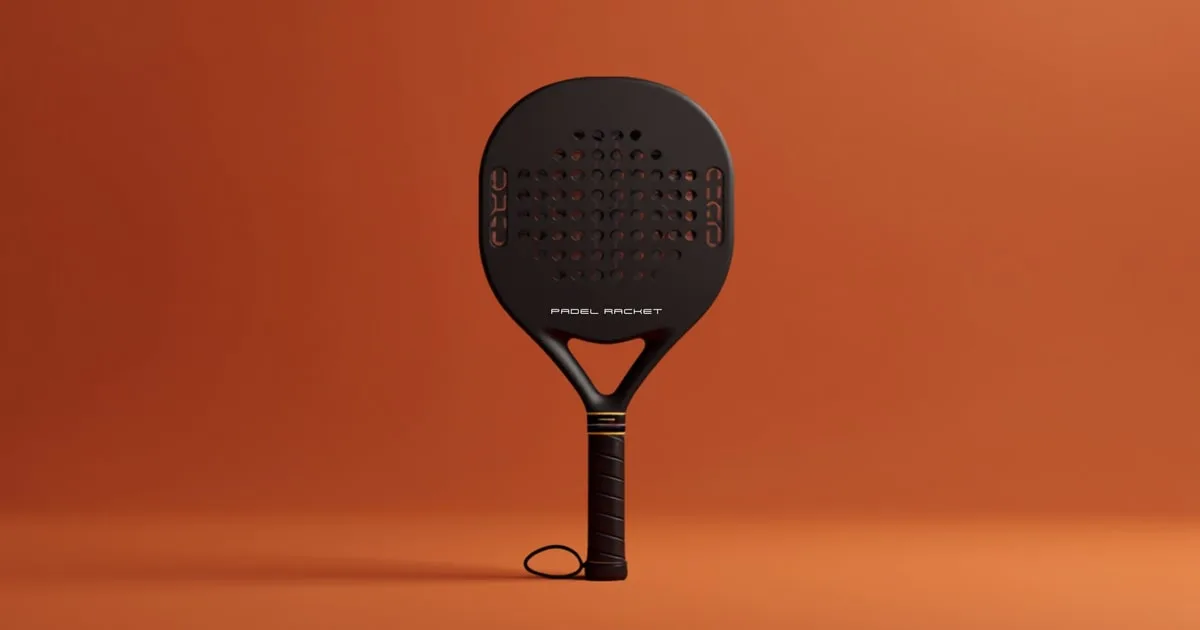
Babolat Contact
- Best for
- Control-first players and ex-tennis defenders
- Price
- typically $110–140
Nox ML10 Pro Cup
- Best for
- Control players who want a touch more net presence
- Price
- around $160–210
Adidas Adipower CTRL 3.4
- Best for
- Intermediate control players who like a firmer feel
- Price
- around $130–180
Head Alpha Motion
- Best for
- Control-leaning players who still want some pop
- Price
- around $120–160
Bullpadel Vertex 04
- Best for
- Aggressive players who want stability, not softness
- Price
- around $180–240
If control is your thing (you'd rather place the ball than blast it), the short answer is a round-head racket with a low balance and a soft core. Our top pick is the Babolat Contact: round shape, head-light balance, soft EVA, all pointing the same direction. The Nox ML10 Pro Cup is the runner-up if you want a bit more weight and net presence. But read this bit first: a true control racket costs you raw smash power, and if you're a brand-new beginner, you don't actually need one yet.
This guide is for players who already know they lean defensive or touch-based: you win points with consistency, blocks, and lobs, not with pace. That includes a lot of ex-tennis players.
How we picked
We're a research-synthesis site, not a lab, so this isn't "we swung each one for a week." These picks come from published manufacturer specs, the way each spec combination tends to play, and the consensus you'll find from padel players online. You can read the full how we research approach, and browse the rest of our padel coverage for context.
For a control shortlist, we weighted three specs hard: shape (round beats teardrop beats diamond for forgiveness), balance (head-light or even, not head-heavy), and core (softer EVA for touch). Anything that failed those on paper got flagged as not-really-a-control-racket, even when the name says otherwise.
What actually makes a racket "control"
Three things, and they matter in this order.
Shape
Round is the control shape. The sweet spot sits in the center of the face, right where most of your contact happens, so mishits stay closer to their intended target. Teardrop nudges the sweet spot slightly higher and adds a touch of power; diamond pushes it up near the tip and is built for smashing, not defending. If you want the full breakdown, our round vs teardrop vs diamond padel racket guide walks through exactly how the shapes feel different in play.
Balance
Balance is where the racket's mass sits. Head-light (low balance) keeps the weight in your hand, which makes the racket quick to maneuver and easier on the arm: great for volleys, blocks, and reacting to pace. Head-heavy loads the tip for power on the smash. Control players want head-light or even. Think of it like a light hammer versus a sledgehammer: the light one is faster to swing and easier to aim.
Core
A softer EVA core lets the ball sit on the face a fraction longer, giving you more feel and touch. A harder core is crisper and more responsive but less plush. Softer generally suits control and comfort; harder suits players who want immediate, snappy feedback and can generate their own pace.
The crossover angle: ex-tennis defenders
Single-sport sites tend to miss this. If you played tennis as a counterpuncher (someone who redirected pace, hit heavy, patient balls, and outlasted people), a control racket fits your instincts almost perfectly. The redirecting and placement muscle memory carries straight over.
The trap is your swing. Tennis players arrive at padel swinging big, and a control racket doesn't convert effort into power the way a diamond frame does. You'll spray balls long if you keep taking full cuts. Shorten the swing, use the walls, and let the racket do what it's built for. Once that clicks, the control racket becomes a real weapon for you.
Our top picks explained
Babolat Contact: best overall for control
The Contact ticks every control box on paper: round head, head-light balance (around 265 mm), soft EVA core, and a light 340 g frame. That combination is about as forgiving and arm-friendly as padel rackets get, and if you are specifically managing tennis elbow, our best padel racket for tennis elbow guide goes deeper. The light, head-light build means it's fast in the hand, ideal for reacting at the net and stringing together consistent shots.
The trade is obvious: you're not going to overpower anyone with this. It's built for players who win by building points, not ending them. That's the whole point.
Check price· typically $110–140 (opens in new tab)Nox ML10 Pro Cup: best for a bit more presence
Miguel Lamperti's racket is round-shaped with a big, honest sweet spot and a soft-ish HR3 EVA core that rewards touch. At 360–375 g with a medium balance, it's got more weight and stability than the Contact, so it holds up better against hard hitters. Good pick if you like feeling the racket in your hand a little more.
The catch: medium balance isn't as light and whippy as a true head-light frame, so it's slightly more demanding on the arm over a long match.
Check price· around $160–210 (opens in new tab)Adidas Adipower CTRL 3.4: best firm-feel control
Round shape, precision focus, and adjustable weighting: the Adipower CTRL is built for control players who prefer a firm response over a plush one. The high-memory EVA core is on the harder side, which gives you crisp, predictable feedback on contact. The multiweight system also lets you tune balance to taste, which is a nice bonus if you're fussy.
The downside is right there in the core: a hard EVA is less shock-absorbing. If you've had elbow or shoulder trouble, a softer racket is the safer call.
Check price· around $130–180 (opens in new tab)Head Alpha Motion: best control-with-pop compromise
The Alpha Motion is a teardrop, not a round, so it's a slight step away from pure control toward a bit more power. Its carbon face gives touch and precision, and at 360–365 g it's manageable for all-around play. This is the pick if you want most of the control benefits but hate the idea of giving up all your pop.
Because it's teardrop, the sweet spot sits higher than on a round racket, so it punishes mishits a little more. Not the choice if maximum forgiveness is your top priority.
Check price· around $120–160 (opens in new tab)Bullpadel Vertex 04: the outlier on this list
Read the specs carefully: the Vertex 04 is a diamond shape with a high balance (≈25) and a 365–375 g weight. That's a power-and-stability profile. Despite "Control" appearing in some listings, this is closer to an attacking racket than a defensive one. The MultiEVA core is lively on the smash, and the heft soaks up pace nicely.
We're including it precisely so you don't buy it expecting a touch racket. If you're an aggressive player who wants stability, it's a good frame. If you actually want control, it's the wrong end of the shelf.
Check price· around $180–240 (opens in new tab)Quick comparison
Babolat Contact
- Shape
- Round
- Balance
- Head-light
- Core
- Soft EVA
- Weight
- 340 g
- Best for
- Control-first, comfort
Nox ML10 Pro Cup
- Shape
- Round
- Balance
- Medium
- Core
- HR3 EVA
- Weight
- 360–375 g
- Best for
- More net presence
Adidas Adipower CTRL 3.4
- Shape
- Round
- Balance
- Even
- Core
- Hard EVA
- Weight
- 355–370 g
- Best for
- Firm-feel control
Head Alpha Motion
- Shape
- Teardrop
- Balance
- Check listing
- Core
- Check listing
- Weight
- 360–365 g
- Best for
- Control-with-pop
Bullpadel Vertex 04
- Shape
- Diamond
- Balance
- High
- Core
- MultiEVA
- Weight
- 365–375 g
- Best for
- Attacking, not control
Who does NOT need a control racket
If you're a genuine beginner, don't overthink the "control" label. What you actually need is a round, forgiving, lightweight racket, and the forgiveness that helps a beginner overlaps heavily with control features anyway. You don't need to pay for a dedicated control frame to get the benefit early on. Start with something in our best padel rackets for beginners guide, get a defined style, then shop the control shelf once you know you're a defender or a touch player.
Buying a control racket before you've developed a game is like buying a road bike before you know you like cycling. The gear won't hold you back — but it's solving a problem you don't have yet.
Bottom line
The Babolat Contact is the cleanest pick for most control-minded players: round, head-light, soft, light, and easy on the arm. Players who want more weight and stability at the net should step up to the Nox ML10 Pro Cup instead. Whatever you choose, go in clear-eyed: a control racket trades cheap power for placement and consistency, and that trade only pays off if placement really is how you want to win.
The picks
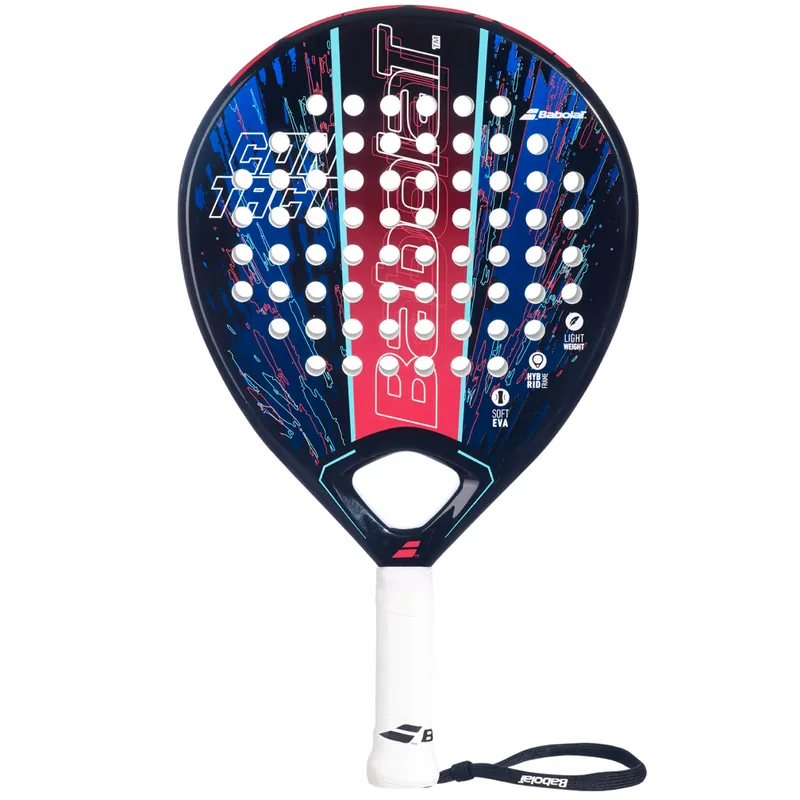
Babolat Contact
Best for: Control-first players and ex-tennis defenders
- Weight: 340 g (±10)
- Shape: round
- Core: EVA
- Balance: head-light (265 mm)
- Face: carbon / fiberglass
- Thickness: 38 mm
Pros
- Head-light balance makes it fast and forgiving in the hand
- Round shape puts the sweet spot dead center where you actually hit
- Light enough to swing all match without your arm fading
Cons
- Gives up raw smash power — you have to build points, not end them
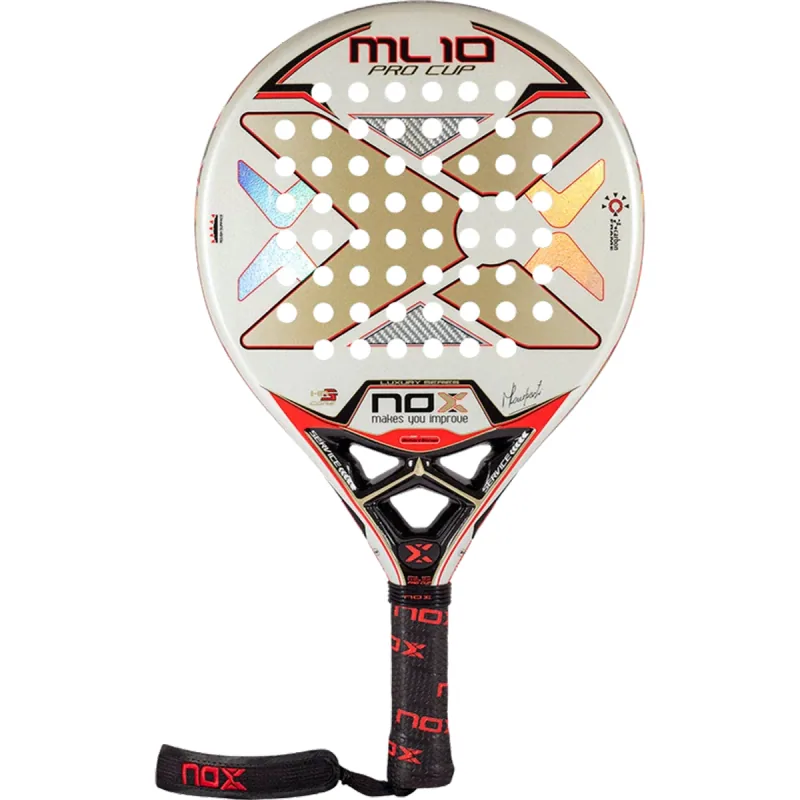
Nox ML10 Pro Cup
Best for: Control players who want a touch more net presence
- Weight: 360–375 g
- Shape: round
- Core: HR3 EVA
- Balance: medium
- Face: fiberglass / carbon
- Thickness: 38 mm
Pros
- Round shape with a big, honest sweet spot
- Soft-ish feel that rewards touch shots and blocks
- Enough weight to stay stable against pace
Cons
- Medium balance is less arm-friendly than a true head-light frame
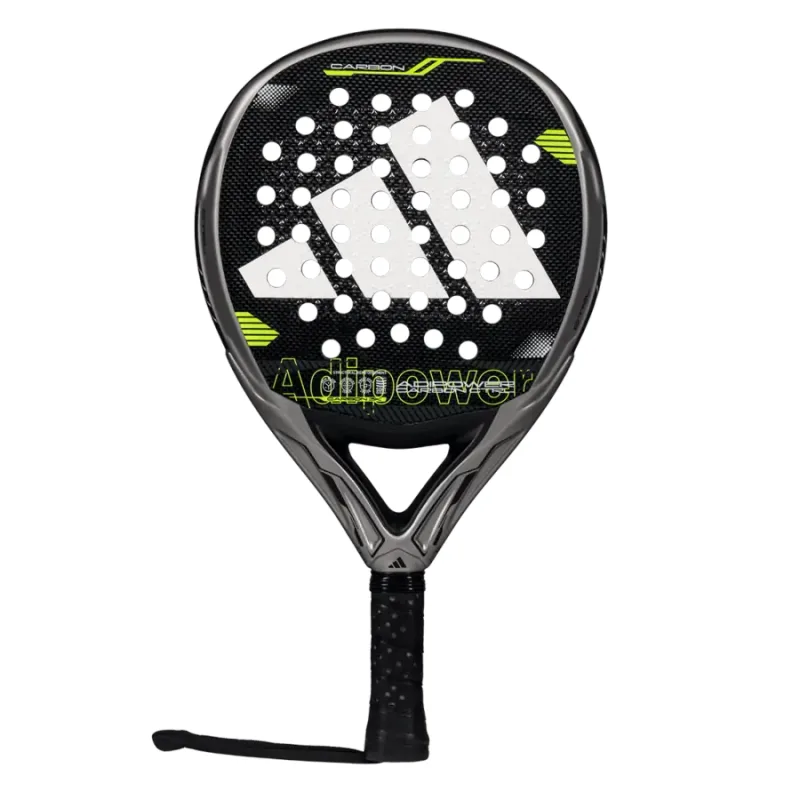
Adidas Adipower CTRL 3.4
Best for: Intermediate control players who like a firmer feel
- Weight: 355–370 g
- Shape: round
- Core: hard EVA (High Memory)
- Balance: even
- Face: carbon / carbon 18K
- Thickness: spec varies — check the listing
Pros
- Round, precision-tuned shape aimed squarely at control play
- Firm core gives crisp, predictable feedback on contact
- Weight system lets you fine-tune balance to taste
Cons
- Harder core is less plush than a soft-EVA racket — not for arm issues
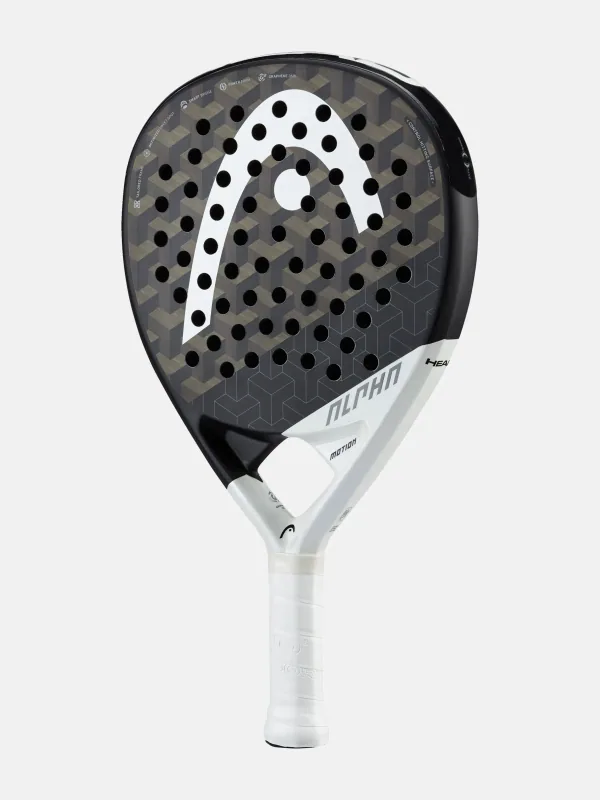
Head Alpha Motion
Best for: Control-leaning players who still want some pop
- Weight: 360–365 g
- Shape: teardrop
- Core: check the listing
- Face: carbon
- Balance: check the listing
- Thickness: 38 mm
Pros
- Teardrop shape blends control with a bit more power than a pure round
- Carbon face gives touch and precision for experienced hands
- Manageable weight for all-around play
Cons
- Teardrop shape shifts the sweet spot up — less forgiving than round on mishits
Bullpadel Vertex 04
Best for: Aggressive players who want stability, not softness
- Weight: 365–375 g
- Shape: diamond
- Core: MultiEVA
- Balance: high (≈25)
- Face: check the listing
- Thickness: 38 mm
Pros
- Stable and heavy — soaks up pace from hard hitters
- MultiEVA core gives a lively response on the smash
- Built for players who attack more than they defend
Cons
- Diamond shape + high balance is the opposite of a control profile — 'Control' in the name is relative
Frequently asked questions
What makes a padel racket good for control?
A round head shape, a low (head-light) balance, and a soft core. The round shape centers the sweet spot where most players actually make contact, the head-light balance makes the racket quick and forgiving, and a soft EVA core cushions the ball for more dwell time and touch. Together they trade raw smash power for placement and consistency.
Is a round or teardrop padel racket better for control?
Round is better for control. It puts the sweet spot in the center of the face and gives the most forgiving, predictable response. Teardrop is a compromise — a slightly higher sweet spot and a little more power, at the cost of some forgiveness. If control is your priority, go round; if you want a bit of both, teardrop is the middle ground.
Do beginners need a control racket?
Not specifically. A pure beginner just needs a round, forgiving, lightweight racket — which happens to overlap with control features, but you don't need to shop the 'control' label. Any beginner-friendly round racket already gives you the forgiveness that matters early. Chase a dedicated control racket once you have a defined defensive or touch-based style.
Are control rackets good for ex-tennis players?
Often yes, especially if you were a defender or a counterpuncher in tennis. Control rackets reward the redirecting and placement instincts you already have. The catch: tennis players tend to swing hard, and a control racket won't turn effort into free power — you'll have to dial back the big cuts and let the walls do some work.
Does a control racket mean I can't smash?
You can still smash — you just won't get free power. A control racket rewards clean technique and placement on the smash rather than sheer racket-head speed. If your game is built on ending points with pace, a power or teardrop frame will do more of the work for you.