Best Babolat Padel Rackets 2026 (UK): Picks by Level
The best Babolat padel racket depends on your game. We break down the 2026 Viper, Veron, Counter and Contact ranges with honest UK picks for every level.
Published
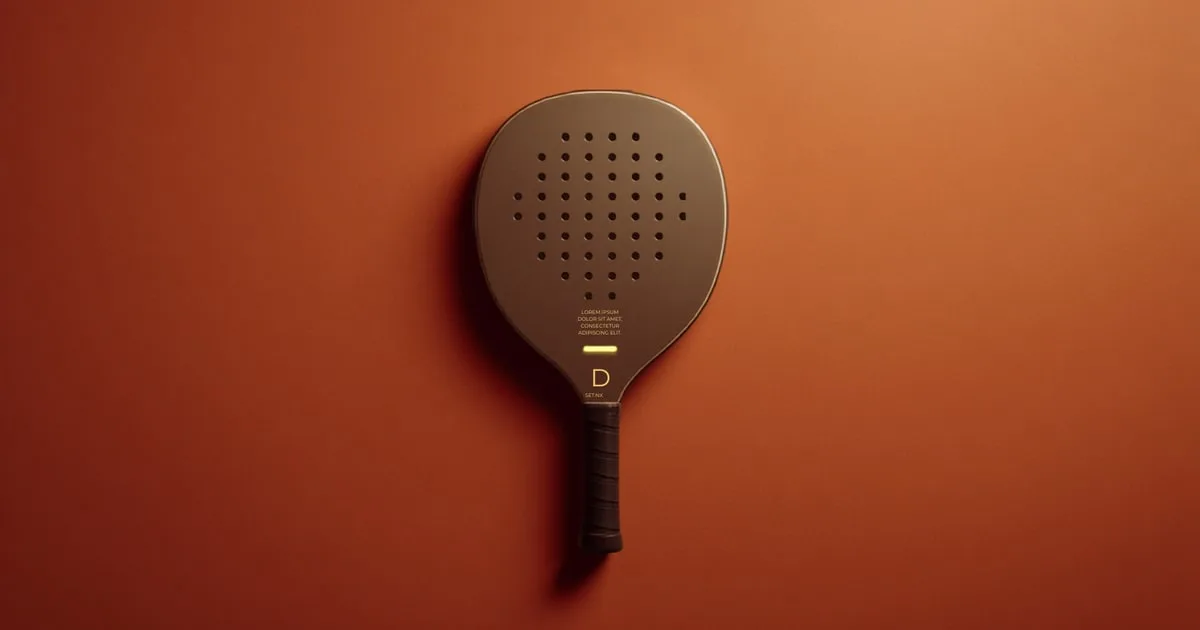
Babolat Contact
- Best for
- Total beginners who want a soft, forgiving first racket
- Price
- around £80–110
Babolat Counter Vertuo 2026
- Best for
- Improvers who want easy control and ball output
- Price
- around £100–140
Babolat Air Veron 2026
- Best for
- All-court club players who want a do-everything racket
- Price
- around £120–170
Babolat Veron 3.0 2026
- Best for
- Advanced all-court players who want control with power on tap
- Price
- around £200–250
Babolat Counter Viper 2026
- Best for
- Control players who dominate rallies from the back
- Price
- around £160–210
Babolat Technical Viper 2026
- Best for
- Advanced attackers who want a pro power frame
- Price
- around £280–330
The best Babolat padel racket for you depends on how you play, not on which pro is on the box. For most UK club players the Babolat Air Veron is the sweet spot: versatile, comfortable and forgiving, with enough ball output to reward a committed shot. Total beginners should start with the Babolat Contact, a round and soft frame that is easy to learn on. Control players who live at the back of the court want the Counter Viper, and hard hitters chasing the Juan Lebron power frame want the Technical Viper.
Babolat is better known in tennis, but its padel range has grown into one of the most complete on the market. It runs from a sub-£110 beginner racket to a pro frame north of £300, split across four main families. Knowing those families is the key to buying well, because the wrong tier is a costly mistake in either direction. Here is how the 2026 line breaks down and who each racket actually suits.
How we picked
We do not lab-test rackets. Rallyary is research synthesis, built from manufacturer specs, UK retailer listings and the consensus across player reviews, cross-checked so the numbers agree. You can read the full method on how we research.
For a brand roundup the job is to map the range by level and style rather than crown a single winner. Babolat sells rackets in tiers, so we sorted the picks from the most forgiving to the most demanding and flagged any spec that is hard to pin down. Every racket below is a current 2026 model.
What to look for in a Babolat padel racket
Learn the four families
Babolat's range makes sense once you know the names. Contact is the entry point, round and soft for beginners. Counter is the control line, built for players who dominate from the back. Veron is the all-court line, balanced between attack and defence. Viper is the power line, sharper and head-heavy, the frame the pros use. The Air versions of Veron and Viper are lighter, easier-swinging takes on those families.
Shape decides forgiveness
This rule holds across every brand. A round head keeps the sweet spot central and forgiving, a diamond pushes it high for power, and a teardrop sits between the two. If your contact point is still a work in progress, a round Contact will treat you far better than a diamond Technical Viper. Our round vs teardrop vs diamond guide explains exactly what each shape does.
Weight, balance and comfort
Most Babolat frames sit in the 355 to 365 gram band. What changes the feel more is balance. A low or even balance keeps the racket quick and manageable, which is what a beginner or a net player wants. A high, head-heavy balance adds smash power but demands a fast swing and tires the arm. The Air line and the Counter line skew towards comfort and control, the Viper towards power. Match that to how you actually play, not how you wish you played.
Face and core
Babolat uses softer fiberglass and comfort carbon faces on its friendlier rackets, and rougher, firmer carbon on the performance frames. Softer means more comfort and forgiveness, rougher and firmer means more spin and power at the cost of shock through the arm. The move from a Contact to a Technical Viper is really a move along that comfort-to-power line.
Our top picks explained
Babolat Contact: the beginner default
Start here if this is your first racket. The Contact is a round, soft EVA frame with a fiberglass face, which is the classic beginner setup. It forgives off-center hits and stays kind to the arm while your technique settles. The trade-off is power, and you will feel the ceiling once your contact cleans up. That is fine. A first racket is meant to be replaced, and the Contact does the learning job as well as anything at the price.
Check price· around £80–110 (opens in new tab)Babolat Counter Vertuo 2026: an easy step up
The Counter Vertuo is the racket for players who have the basics and want a little more without a big jump. It launches the ball easily, so you get output without swinging hard, and the low balance keeps it predictable. It is not a power frame and does not pretend to be. As a second racket for an improver who values control, it fits neatly between the Contact and the pricier performance frames.
Check price· around £100–140 (opens in new tab)Babolat Air Veron 2026: the smart all-court buy
For most club players, this is the one. The Air Veron is a lighter, more manageable take on the all-court Veron family, which means it does a bit of everything without feeling like hard work. The teardrop shape gives you pace when you commit, the lighter build keeps you comfortable deep into a match, and there is enough forgiveness to enjoy. It will not out-smash a Viper or out-defend a Counter, but as a single racket for a player who does everything, it is hard to beat.
Check price· around £120–170 (opens in new tab)Babolat Veron 3.0 2026: the complete player's racket
The Veron 3.0 is the step up for an advanced all-court player who wants more racket than the Air version. Its hybrid build balances a controlled feel with real ball exit, and the Carbonflex face is responsive without being harsh. This is a racket for someone who attacks and defends in equal measure and has the swing to use a premium frame. You are paying a premium price, so it only makes sense once your game can cash the cheque.
Check price· around £200–250 (opens in new tab)Babolat Counter Viper 2026: control from the back with a counter
If you dominate rallies from the back of the court and want to counter with pace, the Counter Viper is built for you. It keeps the ball where you aim it, then has power in reserve when you get the chance to attack. The balance sits lower than the Technical Viper, so it stays controllable, which suits a patient player who wins points with positioning and then finishes when the opening comes. It rewards footwork and timing over raw swing speed.
Check price· around £160–210 (opens in new tab)Babolat Technical Viper 2026: the power weapon
This is the frame Juan Lebron competes with, and it plays the part. The Technical Viper is a diamond shape with a high, head-heavy balance and a rough carbon face, all built to load power into the smash and grip the ball for topspin. In the right hands it is punishing off the top of the net. In the wrong hands it is a chore, because the high balance and firm core punish a late swing and tire the arm quickly. Buy it only if you already swing hard and clean.
Check price· around £280–330 (opens in new tab)Quick comparison
Babolat Contact
- Weight
- ~360g
- Shape
- Round
- Best for
- Total beginners
Counter Vertuo
- Weight
- 355–365g
- Shape
- Round/Teardrop
- Best for
- Easy control
Air Veron
- Weight
- 350–360g
- Shape
- Teardrop
- Best for
- All-court club players
Veron 3.0
- Weight
- ~360g
- Shape
- Teardrop
- Best for
- Advanced all-court
Counter Viper
- Weight
- 360–365g
- Shape
- Teardrop
- Best for
- Control from the back
Technical Viper
- Weight
- ~365g
- Shape
- Diamond
- Best for
- Advanced attackers
The mistake most Babolat buyers make
The trap is the same one every brand sets: buying the racket your favourite pro uses. Babolat markets the Technical Viper hard through Juan Lebron, and it is easy to believe the pro frame will lift your game. It will not. A head-heavy diamond racket only works with a fast, repeatable swing, and for a club player it usually costs control and comfort. The players who improve fastest buy for the level they are at now. For most people reading this, that is the Air Veron or the Contact, not the Technical Viper.
If you want to see Babolat next to the other big names, our best padel racket UK 2026 roundup lines them up, and the best padel racket for control guide digs deeper if placement is your thing. Beginners should also read the best padel racket for beginners picks first.
Bottom line
Babolat covers every level, so match the family to your game. The Contact is the honest beginner buy, the Air Veron is the do-everything club racket, and the Technical Viper is the power frame for players who have earned it. Control specialists should look at the Counter Viper, and advanced all-court players at the Veron 3.0. Whatever you choose, keep your swing short and compact, and browse the rest of our padel guides if you are building a kit from scratch.
The picks
Babolat Contact
Best for: Total beginners who want a soft, forgiving first racket
- Weight: 360 g (+/-5g)
- Shape: round
- Core: soft EVA
- Face: fiberglass
- Balance: even to head-light
Pros
- Round head and soft core forgive the mishits every beginner makes
- One of the most widely stocked entry rackets in the UK
- Comfortable on the arm during those early shanks
Cons
- Low power ceiling that you will outgrow inside a year
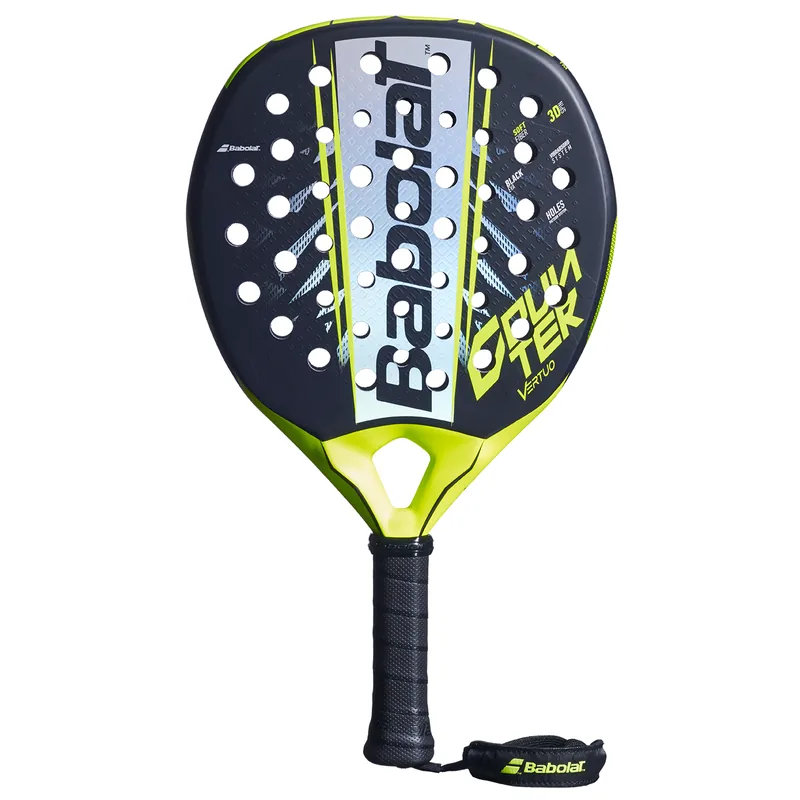
Babolat Counter Vertuo 2026
Best for: Improvers who want easy control and ball output
- Weight: 355–365 g
- Shape: round / teardrop
- Core: soft EVA
- Face: carbon
- Balance: low
Pros
- Easy launch on the ball without demanding a big swing
- Low balance keeps it manageable and predictable
- A gentle step up from a pure beginner frame
Cons
- Not built for players who want to finish points with power
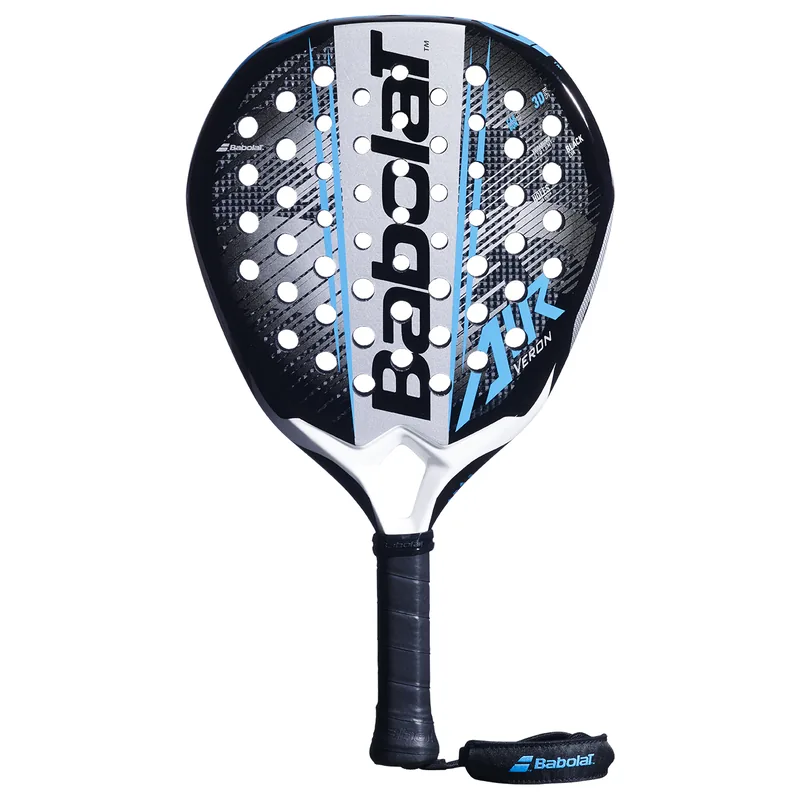
Babolat Air Veron 2026
Best for: All-court club players who want a do-everything racket
- Weight: 350–360 g
- Shape: teardrop
- Core: EVA
- Face: carbon
- Balance: medium
Pros
- Genuinely versatile, it does a bit of everything well
- Lighter build stays comfortable across a long match
- Teardrop shape gives pace without losing forgiveness
Cons
- Jack-of-all-trades feel means it is not a specialist at anything
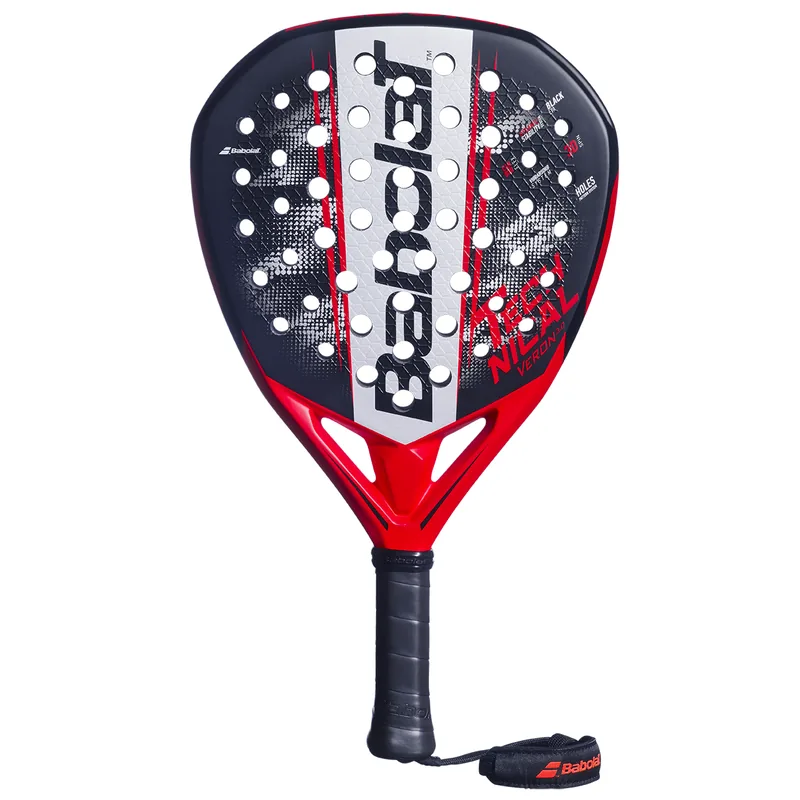
Babolat Veron 3.0 2026
Best for: Advanced all-court players who want control with power on tap
- Weight: 360 g
- Shape: teardrop (hybrid)
- Core: spec varies, check the listing
- Face: Carbonflex carbon
- Balance: medium
Pros
- Hybrid build balances a controlled feel with real ball exit
- Carbonflex face is responsive without being harsh
- Suits a complete player who attacks and defends in equal measure
Cons
- Premium price for a racket that rewards a developed game
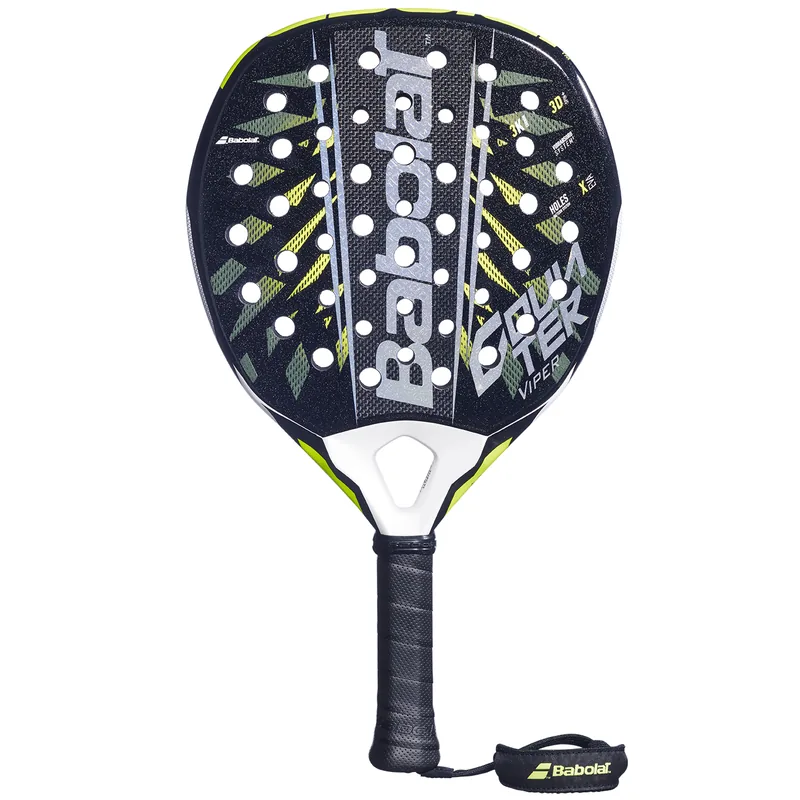
Babolat Counter Viper 2026
Best for: Control players who dominate rallies from the back
- Weight: 360–365 g
- Shape: teardrop
- Core: spec varies, check the listing
- Face: carbon
- Balance: medium to low
Pros
- Built for players who defend deep and counter with pace
- Controlled response that keeps the ball where you aim it
- More power in reserve than a pure control frame
Cons
- Rewards positioning and patience, not raw swing speed
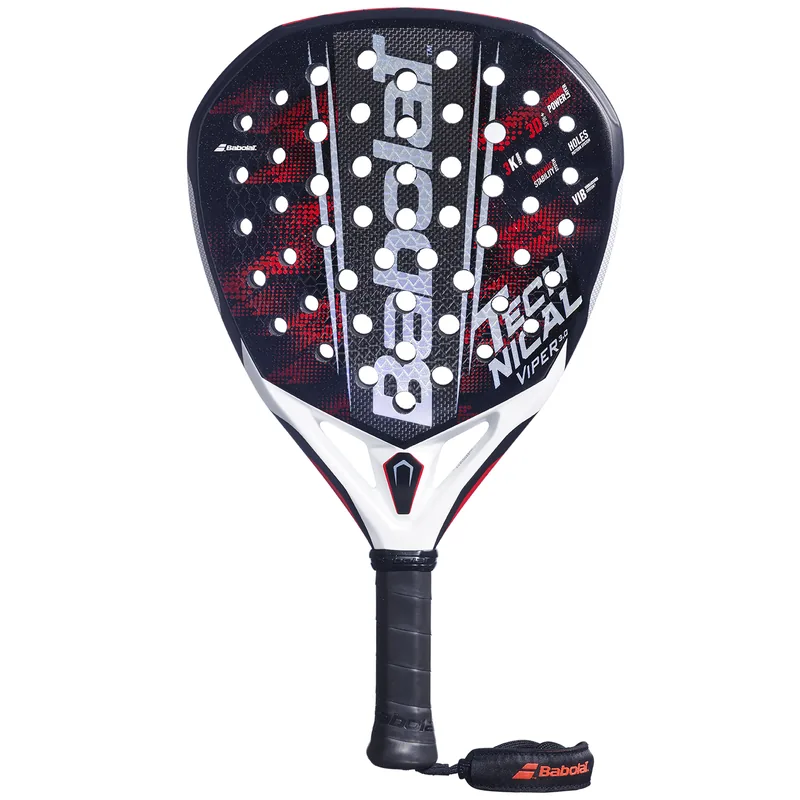
Babolat Technical Viper 2026
Best for: Advanced attackers who want a pro power frame
- Weight: 365 g
- Shape: diamond
- Core: firm EVA
- Face: carbon (rough)
- Balance: high (head-heavy)
Pros
- Diamond shape and high balance load serious power into the smash
- Rough face grips the ball for aggressive topspin
- The frame Juan Lebron competes with, so the pedigree is real
Cons
- High balance and firm core punish a slow or late swing
- Top of the range on price
Frequently asked questions
Which Babolat padel racket is best for beginners?
The Babolat Contact. It is round, uses a soft EVA core and a fiberglass face, and is one of the most widely stocked entry rackets in the UK. Those three things, a round head, a soft core and a friendly price, are exactly what a first racket needs. The Counter Vertuo is a good next step once you have the basics.
What is the difference between the Viper and Veron ranges?
The Viper is Babolat's power line, sharper and more head-heavy, built around Juan Lebron's aggressive game. The Veron is the all-court line, more balanced and forgiving, aimed at players who both attack and defend. If you finish points with the smash, look at Viper. If you want a do-everything racket, Veron fits more players.
Is the Babolat Contact good enough to keep long term?
It is a genuinely good beginner racket, but most players outgrow it within a year as their contact cleans up and they want more power. That is normal and not a criticism. Buy it to learn on, get comfortable, then move up to something like the Air Veron when the Contact starts to feel like it is holding you back.
Are the Air rackets lighter than the standard Babolat rackets?
Yes, the Air line is built to be more manageable, usually sitting a few grams lighter with an easier swing. That makes the Air Veron and Air Viper good options for players who want performance without the demand of a heavy, head-heavy frame. Lighter players and those who play a lot at the net tend to prefer them.
Should a club player buy the Technical Viper because Juan Lebron uses it?
Probably not. The Technical Viper is a diamond-shaped power frame with a high balance that only works with a fast, clean swing. For a club player it usually costs more control and comfort than it adds in power. Buy the racket that matches your level now. For most people that means the Air Veron or the Contact, not the pro frame.