Best Padel Rackets for Intermediate Players 2026: Top Picks
The best padel rackets for intermediate players balance power and control: teardrop and hybrid shapes that reward technique without punishing mistakes.
Published
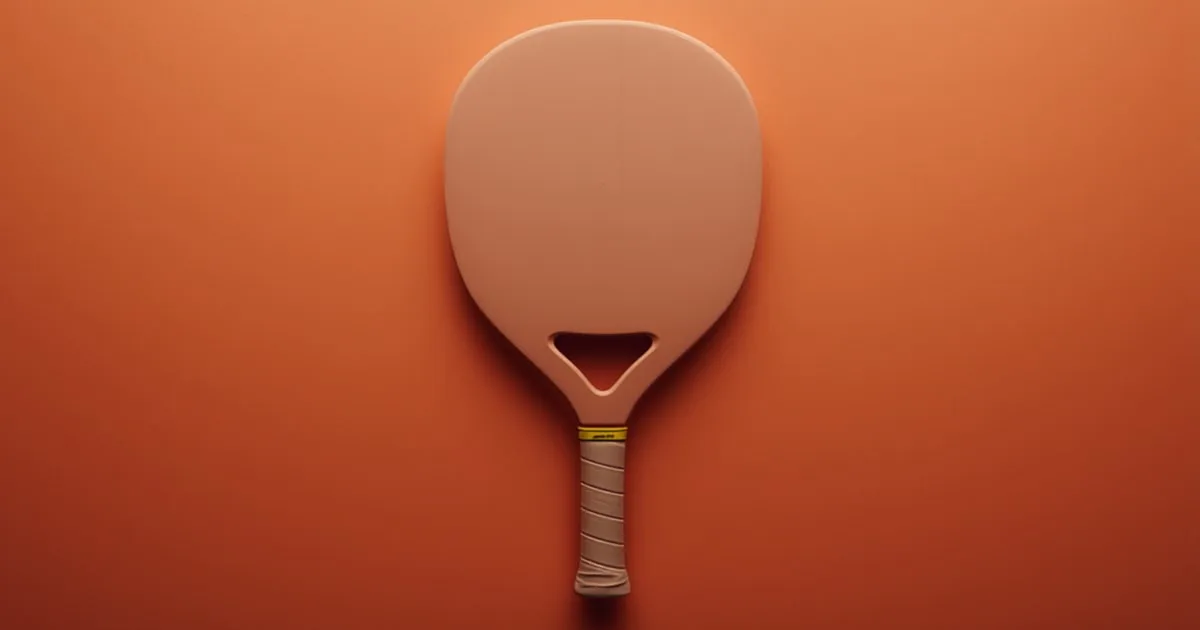
Head Speed Motion
- Best for
- Improvers who want versatility
- Price
- around $150–200
Babolat Counter Viper
- Best for
- Defensive and control-first players
- Price
- around $150–200
Siux Electra ST3
- Best for
- Intermediate players chasing more attack
- Price
- around $130–180
Bullpadel Hack 04
- Best for
- Strong intermediates with solid technique
- Price
- around $180–250
Nox AT10 Genius 18K
- Best for
- Advanced-leaning players who want a tuning system
- Price
- around $250–330
The best padel racket for most intermediate players is the Head Speed Motion — a teardrop that gives you more attacking power than a beginner racket while keeping a sweet spot forgiving enough for the mistakes you'll still make. If you play defensively and want maximum control, the round Babolat Counter Viper is the smarter pick. And here's the honest part most guides skip: a lot of improving players buy an advanced racket way too early, then wonder why their game plateaus. This guide is for players ready to upgrade from a beginner frame without overshooting into gear they can't yet use.
How we picked
We don't lab-test rackets. This guide is research-synthesis: we work from the manufacturer specs, the shape-and-weight profiles that matter for improving players, and the consensus you'll find across player reviews and reddit threads. You can read the full approach on our how we research page, and browse the rest of our padel coverage for context.
For an intermediate racket, we prioritized three things: a shape that adds a bit of power without collapsing the sweet spot (mostly teardrop and hybrid), a weight that's stable but still swingable, and a price that doesn't push you into pro-tier stiffness you're not ready for. We deliberately included one or two rackets that are a stretch — because knowing what to avoid for now is as useful as knowing what to buy.
When are you actually "intermediate"?
Confidence is not the test. Plenty of players feel intermediate after a few months and buy accordingly, then fight their racket every match.
The real signal is repeatability. You're intermediate when you can rally consistently off both wings, direct your shots on purpose (not just get them back), and use the walls with intent instead of panic. If your bandeja lands where you aimed most of the time and your volleys are steady, you're there. If those are still coin-flips, you're an improver — and you'll get more out of a forgiving frame like the ones in our beginner padel racket guide.
This matters because the intermediate stage is where shape and balance start to reward good technique — and expose weak technique. Buy for where your game actually is, not where you hope it'll be by next season.
What to look for in an intermediate racket
Shape: teardrop is the sweet spot
Round rackets are the most forgiving and control-friendly. Diamond rackets are pure power but brutally unforgiving. Teardrop sits between them, and that's exactly why it fits most intermediates — a little more pop than a round, without the tiny sweet spot of a diamond.
If you want the full breakdown, our guide on round vs teardrop vs diamond padel rackets walks through how each shape plays and who it suits. Short version: unless you're clearly a defensive control player (go round) or a confident attacker with clean technique (maybe diamond), teardrop or hybrid is your lane.
Weight and balance
Around 360–365 g is the practical middle ground — heavy enough to stay stable when the ball comes in fast, light enough to swing rally after rally. A touch lighter, near 350 g, helps if you're getting jammed up at the net.
Balance is the quieter spec. A higher (head-heavy) balance shifts weight toward the tip, which boosts power but shrinks the effective sweet spot and slows your hands. That's the trap in advanced rackets: high balance plus a stiff face means mishits go nowhere. As one player put it well, a slightly higher balance offset by a lower weight can be the real sweet spot for intermediates.
Our top picks explained
Head Speed Motion — best all-rounder
The Speed Motion is the racket we'd hand most improving players. It's a teardrop shape with a balanced weighting, running a bit lighter at around 350–355 g, which is a genuinely smart combo: you get the versatility of teardrop power without the racket feeling like a club to swing. The lighter build keeps it stable and maneuverable at the same time.
The tradeoff is honest — if you already hit through the ball hard and want a high power ceiling, this won't feel explosive enough. But for the "I want more than my beginner racket, not a totally different sport" upgrade, it's a joy to swing.
Check price· around $150–200 (opens in new tab)Babolat Counter Viper — best for control and defense
The odd one out here, and deliberately so. The Counter Viper is a round racket with a hard EVA core, a 3K carbon face, and a medium balance around 270 mm. Round shape means the biggest, most forgiving sweet spot in this lineup — ideal if you play defensively, live at the back of the court, and want your volleys to stay clean under pressure.
Two catches. The hard EVA gives a firm, low-cushion hit that some players find harsh — if you like a soft, plush feel, this isn't it. And it's a round racket, so it won't give you the attacking pop a teardrop does. It also frequently shows up at the low end of the price range, which makes it a strong value if control is your priority. Pair this reasoning with our padel racket for control guide if defense is your game.
Check price· around $150–200 (opens in new tab)Siux Electra ST3 — best for adding attack
The Electra ST3 is a teardrop/hybrid built as a universal, slightly attacking frame, listed for intermediate to advanced players at roughly 355–370 g. If your beginner racket now feels too tame and you want to start finishing points rather than just extending them, this is a sensible step up that doesn't jump straight to advanced stiffness.
One thing to watch: Siux's ST line spans a range of specs across versions and years, and some lean more advanced than others. Check exactly which weight and build you're buying so you don't accidentally grab a frame that's stiffer than you want.
Check price· around $130–180 (opens in new tab)Bullpadel Hack 04 — for strong intermediates only
Let's be clear about who this is for. The Hack 04 is a hybrid at 365–375 g with a Multi-EVA core, an 18K TriCarbon face, and a medium-hard feel. It's a genuinely powerful, technical racket — and that's exactly why it's wrong for most intermediates.
The weight plus the higher balance means mishits get punished. Players moving off this frame have described it as demanding clean, deliberate striking. If your technique is solid and you're pushing toward advanced play, it's a serious weapon. If you're an early intermediate buying it to "level up," it'll more likely slow you down.
Check price· around $180–250 (opens in new tab)Nox AT10 Genius 18K — the aspirational stretch
Agustín Tapia's signature hybrid, with an 18K carbon face, medium balance around 260 mm, and a weight in the 360–375 g range. Its party trick is an interchangeable counterweight system, so you can tune the balance to your preference — a nice feature if you know what you're chasing.
Here's the catch spelled out plainly: reviewers flag its maneuverability as the lowest in this group. Combined with the price, that makes it a genuine advanced racket, not an intermediate one. Buy it when your hands are fast and your technique is dialed. Buy it before that, and you're paying a premium to make padel harder.
Check price· around $250–330 (opens in new tab)Quick comparison
Head Speed Motion
- Shape
- Teardrop
- Weight
- 350–355 g
- Best for
- All-round improvers
Babolat Counter Viper
- Shape
- Round
- Weight
- 365 g ±10
- Best for
- Control & defense
Siux Electra ST3
- Shape
- Teardrop/hybrid
- Weight
- 355–370 g
- Best for
- Adding attack
Bullpadel Hack 04
- Shape
- Hybrid
- Weight
- 365–375 g
- Best for
- Strong intermediates
Nox AT10 Genius 18K
- Shape
- Hybrid
- Weight
- 360–375 g
- Best for
- Advanced-leaning players
A quick note for tennis crossovers
If you're coming from tennis, your instinct will be to grab the most powerful racket you can, because that's how tennis frames often work. Resist it. Padel power comes from a compact, controlled swing and using the walls — not from muscling a heavy diamond frame. A tennis background usually means solid hand-eye and decent pace, but padel-specific touch (the bandeja, the wall play) takes time. A versatile teardrop like the Speed Motion gives you room to build those shots without fighting the racket. The Hack 04 or AT10 will just amplify the timing errors you haven't ironed out yet.
Bottom line
Most improving players are best served by a versatile teardrop that adds power without shrinking the sweet spot — and the Head Speed Motion nails that brief. Go round with the Counter Viper if you're a control-and-defense player, and stretch to the Hack 04 or AT10 only when your technique is genuinely stable. The fastest way to stall your progress is buying an advanced racket a season too early. Match the frame to the game you actually have today, and let the upgrades follow your skill — not the other way around.
The picks
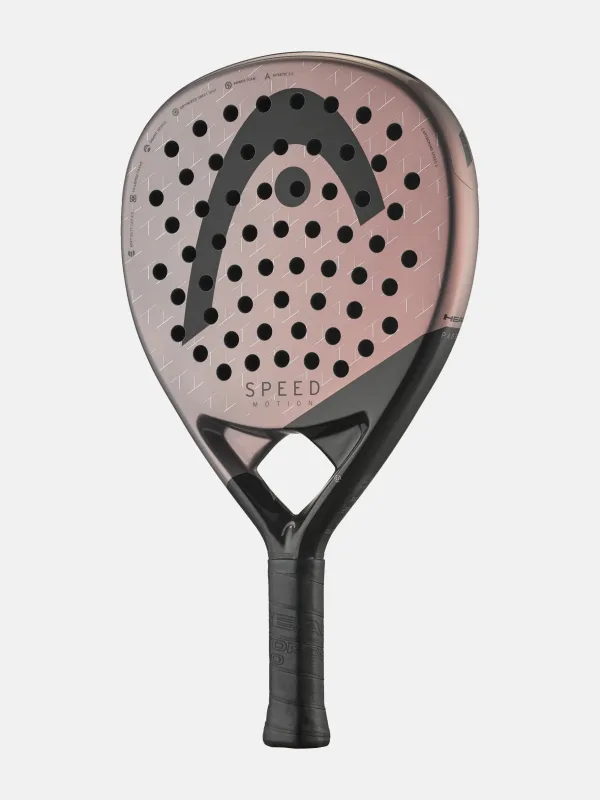
Head Speed Motion
Best for: Improvers who want versatility
- Weight: 350–355 g
- Shape: teardrop
- Core: check the listing
- Balance: medium
- Face: check the listing
Pros
- Teardrop shape splits the difference between power and control
- Slightly lighter build makes it easy to swing all match
- Balanced weighting keeps mishits playable
Cons
- Not enough punch for players who already hit through the ball hard
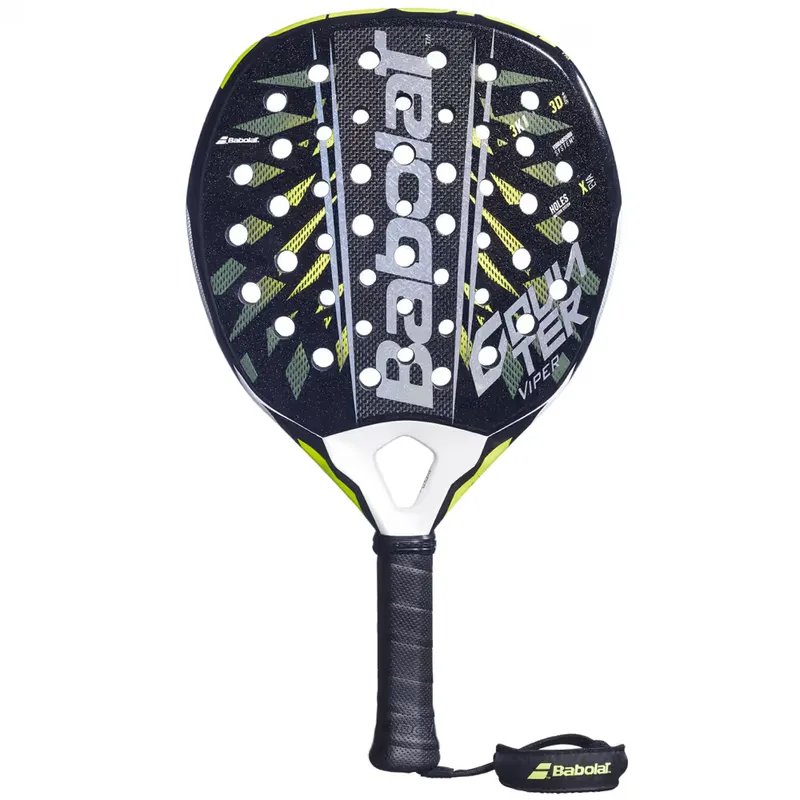
Babolat Counter Viper
Best for: Defensive and control-first players
- Weight: 365 g ±10
- Shape: round
- Core: hard EVA
- Balance: medium, 270 mm
- Face: 3K carbon
- Thickness: 38 mm
Pros
- Round shape gives the largest, most forgiving sweet spot here
- Great for defensive play and volleys at the net
- Often sits at the low end of the price range
Cons
- Hard EVA feels stiff if you prefer a softer, cushioned hit
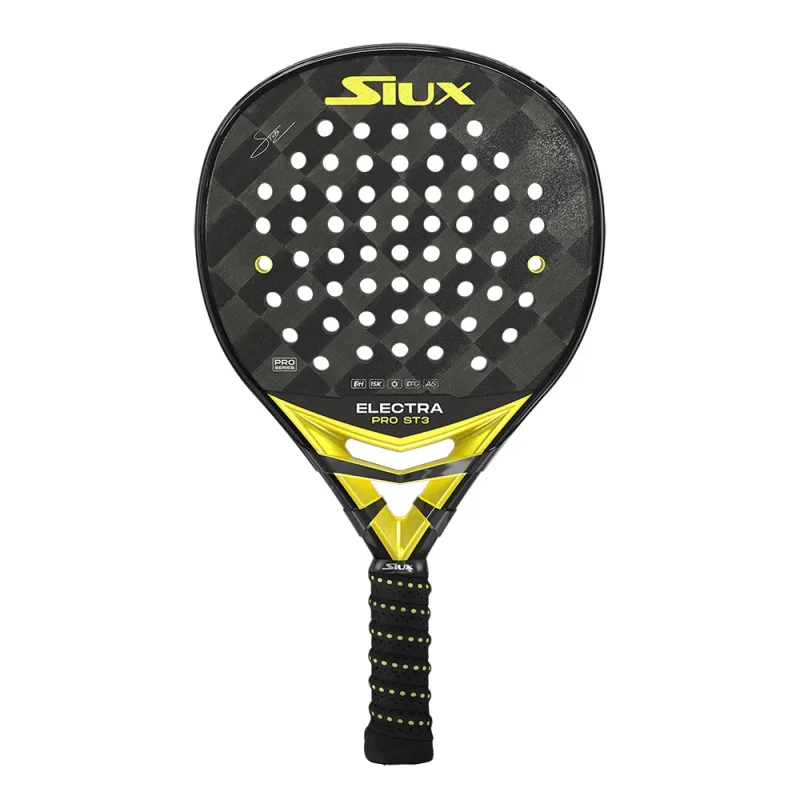
Siux Electra ST3
Best for: Intermediate players chasing more attack
- Weight: 355–370 g
- Shape: teardrop (hybrid)
- Core: check the listing
- Balance: check the listing
- Face: check the listing
Pros
- Universal teardrop shape that leans slightly attacking
- Wide weight window means you can find a spec that suits you
- Durable build reputation
Cons
- Some versions push toward advanced feel — check which spec you're buying
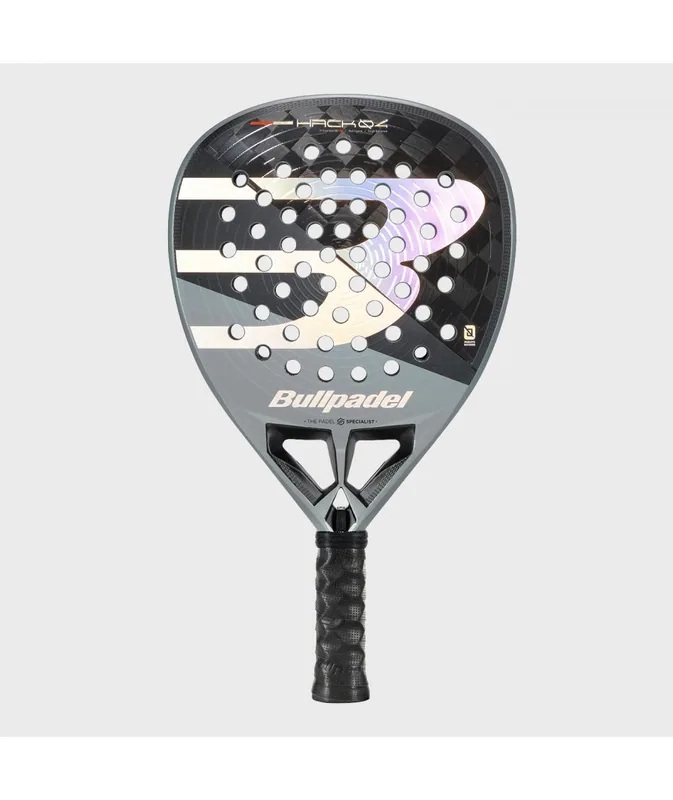
Bullpadel Hack 04
Best for: Strong intermediates with solid technique
- Weight: 365–375 g
- Shape: hybrid
- Core: Multi-EVA
- Balance: ≈ 25–26.4 cm
- Face: TriCarbon 18K
- Thickness: 38 mm
Pros
- Serious power ceiling for aggressive baseline and net play
- Medium-hard feel rewards clean, technical striking
Cons
- Higher balance and weight punish mishits — wrong for early intermediates
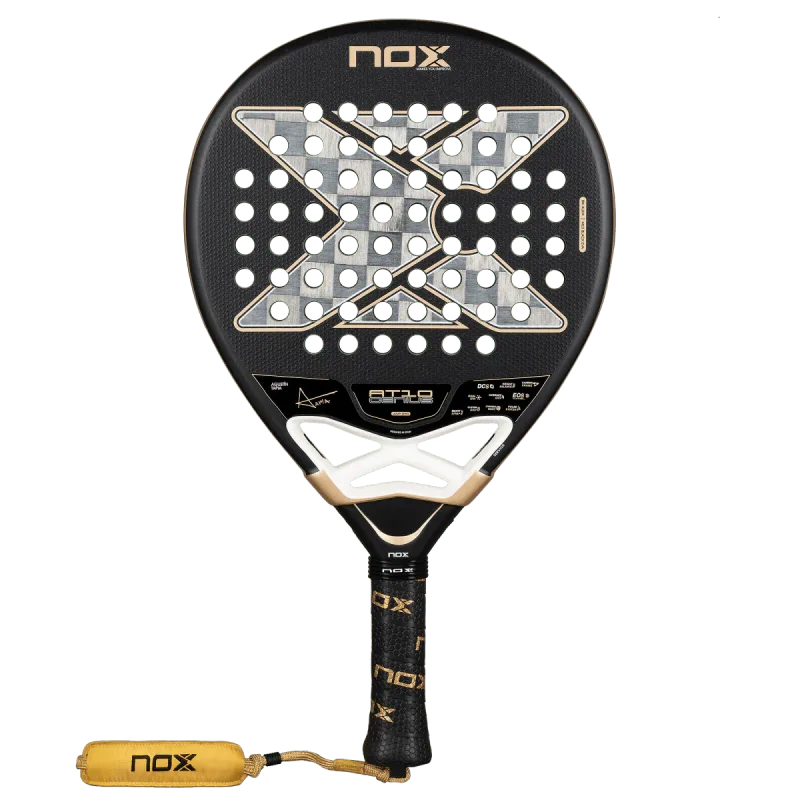
Nox AT10 Genius 18K
Best for: Advanced-leaning players who want a tuning system
- Weight: 360–375 g
- Shape: hybrid
- Core: check the listing
- Balance: medium, 260 mm
- Face: 18K carbon
Pros
- Interchangeable counterweight system lets you fine-tune balance
- Versatile power-and-control blend once you can drive it
Cons
- Lowest maneuverability in this group — a stretch for most intermediates
Frequently asked questions
How do I know if I'm actually an intermediate padel player?
You're intermediate when you can rally consistently, control the direction of your shots, and play the walls with intent — not just react to them. Confidence isn't the test; repeatable technique is. If your bandeja and vibora are still hit-or-miss, you're closer to improver than intermediate.
Should I upgrade to an advanced racket to improve faster?
Usually no — this is the most common mistake. Advanced rackets have higher balance and smaller sweet spots that punish mistakes, so an unready player ends up hitting less cleanly and progressing slower. Grow into a versatile teardrop first, then move up when your technique is genuinely stable.
Is a teardrop or round racket better for intermediates?
Teardrop is the sweet spot for most improving players — it adds a bit of power over a round racket while keeping a usable sweet spot. Go round if you play defensively and value control above all. Save diamond shapes for advanced attacking players.
How much should an intermediate padel racket cost?
Roughly $130–200 hits the value zone. You get real carbon faces and quality cores without paying for pro-tier stiffness you can't yet use. Spending $300+ on an advanced racket at this stage rarely pays off.
How heavy should my intermediate racket be?
Around 360–365 g is the practical sweet spot for many intermediates. It's stable enough to hold up against pace but light enough to swing all match. Lighter builds around 350 g help if you struggle with maneuverability at the net.