Padel Rackets: How to Choose the Right One (UK Guide)
A plain-English guide to choosing a padel racket: shape, weight, balance, core and budget explained, plus which suits your level and how brands compare.
Published
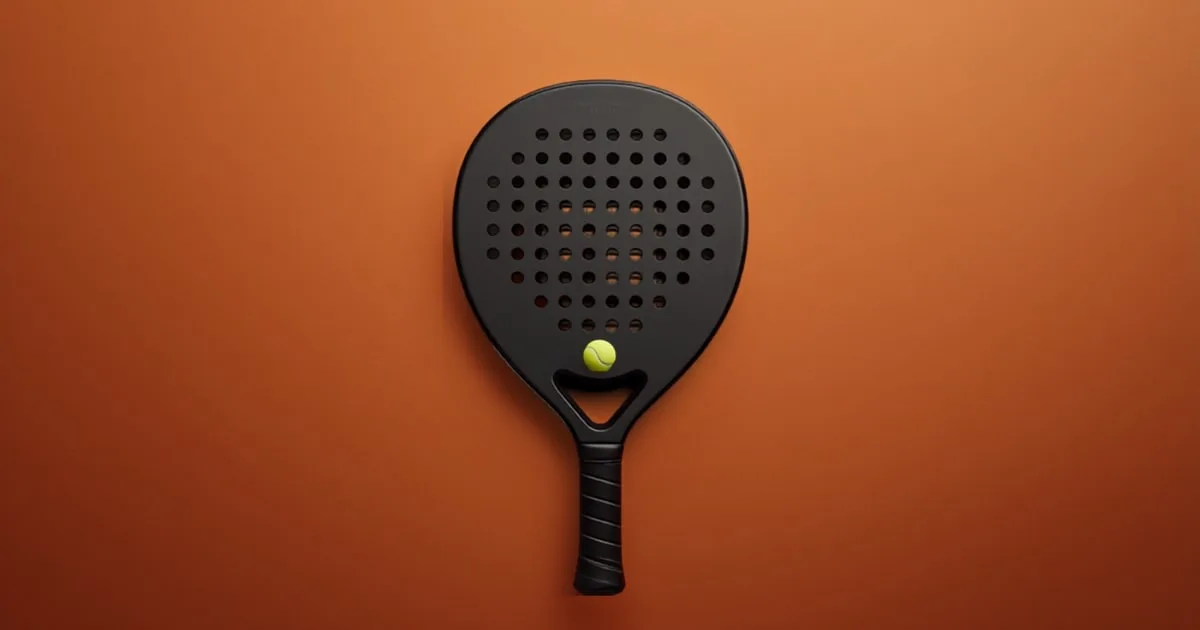
Buying a padel racket is simpler than the wall of options makes it look. Once you understand five things, shape, weight, balance, core and budget, you can walk past most of the marketing and pick a racket that actually fits your game. This guide explains each one in plain English, then points you to the right specific guide for your level and preferred brand. If you are here to buy your very first racket, the short version is easy: go round, soft and under 365 grams, and do not overspend.
There is no single best padel racket, only the best racket for you. A frame that helps an advanced attacker will actively hold back a beginner, and a forgiving beginner racket will frustrate a strong player. So instead of chasing a universal winner, work out where you sit and buy for that.
Shape: the first decision
Head shape decides where your sweet spot lives, and it is the most important choice you will make.
A round racket puts the sweet spot low and central, right where you naturally make contact. That makes it the most forgiving shape, because an off-center hit still lands in play. Round is the correct choice for beginners and for control players of any level.
A teardrop shape lifts the sweet spot slightly and balances power with forgiveness. It is the natural all-court middle ground, and a good pick for improving players who want a bit more pace without giving up too much control.
A diamond shape pushes the sweet spot high toward the tip for maximum power. It hits hard, but it punishes any contact that is not clean, and it demands a fast, confident swing. Diamonds are for advanced attackers only.
If you only remember one rule, make it this: the more power a shape promises, the less forgiving it is. Our round vs teardrop vs diamond guide breaks down exactly what each one does to your game.
Weight and balance
Most padel rackets weigh between 350 and 375 grams, and where you land in that band matters more than beginners expect.
Lighter rackets, around 350 to 360 grams, are easier to swing, quicker to react with at the net, and gentler on the arm over a long session. Heavier rackets add power and stability but tire the arm and slow your reactions. Padel points are often won and lost at the net, where a light, nimble racket helps, so when in doubt, go lighter.
Balance is the other half of the feel. A head-light or even balance keeps the weight near your hand, making the racket feel quick and manageable. A head-heavy balance shifts weight toward the tip for more smash power, at the cost of maneuverability and comfort. Beginners and net players want a low balance. Only players with a fast, developed swing benefit from a head-heavy frame. If you want the full picture, think about what weight suits your body and playing style before you fall for a spec sheet.
Core and face
The core is the foam between the two faces, and it sets the racket's comfort and response.
A soft core, usually soft EVA or FOAM, flexes on impact. That does two good things: it is gentler on your elbow, and it is more forgiving when you catch the ball off-center. Soft cores suit beginners, control players and anyone managing arm trouble.
A hard core gives a crisper, more explosive response that advanced players use to generate power. The trade-off is more shock through the arm and a demand for cleaner contact. Early on, soft wins.
The face material matters too. Fiberglass faces are softer and more forgiving, carbon faces are firmer and more powerful, and the amount of carbon, quoted as 3K, 12K or 18K, roughly tracks stiffness. Our padel racket carbon guide explains what those numbers really mean. If your elbow is a concern, prioritise a soft core and a softer face, and read our best padel racket for tennis elbow guide.
Budget: what you actually need to spend
Price in padel tracks performance, but more expensive is not more suitable.
For a first racket, around 60 to 130 pounds covers every good beginner option, and there are solid choices under 100 pounds. Spending more usually buys power and stiffness a beginner cannot use, which can slow your progress by punishing the very mistakes you are meant to be learning from.
Intermediate players with a consistent swing get real value in the 130 to 220 pound range, where you find better carbon, more spin and more refined feel. The 250 pound-plus pro frames are genuine high-performance tools, but they only make sense for advanced players who play often and swing fast. Buying a pro racket too early is one of the most common and expensive mistakes in the sport.
Which padel racket is right for you?
Once you know your level, the choice gets easy. Here is where to go next.
If you are buying your first racket, start with our best padel racket for beginners picks, and if budget is tight, the best padel racket under 100 guide keeps it affordable.
If you have the basics and want to improve, the best padel rackets for intermediate players guide is the place to look, and control-focused players should read the best padel racket for control picks.
If you have specific needs, we have targeted guides for the best padel racket for women, the best padel racket for tennis players making the switch, and arm-friendly frames in the best padel racket for tennis elbow guide. UK buyers can also see what is actually in stock in the best padel racket UK 2026 roundup.
How the big brands compare
Every major brand covers beginner to advanced, so brand choice is more about which range you like than about one being better than another.
Nox and Bullpadel are padel-first specialists with deep ranges. Nox in particular is known for comfortable, arm-friendly control frames, which you can explore in our Nox padel rackets guide.
adidas and Head bring strong, well-organised all-round lineups, from soft beginner frames to pro power weapons. See the adidas padel rackets and Head padel rackets guides for the full breakdown.
Babolat and Wilson carry serious racquet-sport pedigree into padel, with complete ranges that suit players who already trust those brands from tennis. Our Babolat padel rackets and Wilson padel rackets guides map them out.
The takeaway is that shape, weight and core matter more than the badge. Pick your level first, then choose the brand range you like the feel and look of.
Grip and a couple of extras
One detail beginners miss: padel racket handles come in a single size, unlike tennis. You fine-tune the feel with an overgrip, which also improves comfort and soaks up sweat, so most players add one straight away and replace it when it wears smooth. If your hands sweat a lot, a tacky or absorbent overgrip makes a real difference to how secure the racket feels. It is also worth using the wrist strap on every shot, because a racket can fly out of a sweaty hand, and a strap protects both your racket and the people around you. None of this is expensive, and it makes a cheap racket feel much nicer to play with.
Common mistakes to avoid
A few errors trip up a lot of buyers. The biggest is buying the racket your favourite pro uses. Pro frames are head-heavy, stiff and demanding, and they flatter almost nobody below a very high level. The second is overspending on a first racket in the hope of buying something you will not grow out of, when the opposite is true: your first racket is temporary, and a cheap forgiving one helps you improve faster. The third is ignoring your arm. If you have any history of tennis elbow, a soft core is not optional, it is the single most important spec for you.
Get those three right, avoid the hype, and you will end up with a racket that quietly does its job while you learn to play better.
The short version
Go round, soft and under 365 grams if you are a beginner. Move to teardrop shapes and firmer carbon as your contact improves and you want more pace. Keep the balance low unless you have a fast, developed swing. Spend enough to get a decent racket but not so much that you buy performance you cannot use. And whatever you buy, pair it with a shorter, more compact swing than your instincts want. When you are ready to pick a specific model, our best padel racket for beginners guide is the best place to start, or browse everything in the padel section.
Frequently asked questions
What is the best padel racket shape for beginners?
Round. A round head keeps the sweet spot low and central, right where you naturally make contact, so off-center hits still stay in play. Teardrop shapes add a little power and diamond shapes add a lot, but both move the sweet spot higher and demand cleaner contact. Beginners should choose round and grow into the others later. Our shape guide covers this in full.
How much should I spend on a padel racket?
For a first racket, around 60 to 130 pounds is plenty and covers every good beginner option. Spending more usually buys power and stiffness a beginner cannot use yet, which can slow your progress. Intermediate players who have a consistent swing get real value from the 130 to 220 pound range. Only advanced players who play often should consider the 250 pound-plus pro frames.
What weight padel racket should I buy?
Most rackets sit between 350 and 375 grams. Lighter frames, around 350 to 360 grams, are easier to swing, quicker at the net and gentler on the arm, which suits beginners, lighter players and net specialists. Heavier frames add power and stability but tire the arm and demand a faster swing. When in doubt, go lighter, because you can add weight with lead tape but you cannot remove it from the frame.
Which padel racket brand is best?
There is no single best brand. Nox and Bullpadel are padel specialists with deep ranges, adidas and Head bring strong all-round lineups, and Babolat and Wilson carry racquet-sport pedigree into padel. What matters more than the badge is matching the shape, weight and core to your level. We have brand-by-brand guides for adidas, Babolat, Nox, Head and Wilson if you want to compare within a range.
Is a soft or hard core better in a padel racket?
Soft cores flex on contact, which is more comfortable, more forgiving and easier on the elbow, so they suit beginners and anyone with arm trouble. Hard cores give advanced players a crisper, more explosive response, but they transmit more shock and demand cleaner contact. Most players are better off with a softer core until their technique and arm conditioning are well developed.