Best Tennis String for Tennis Elbow: Arm-Friendly Picks
The best tennis string for tennis elbow is a soft multifilament or natural gut strung a little lower. Arm-friendly picks by budget, gauge, and feel.
Published
Wilson Sensation
- Best for
- Budget comfort, first switch off poly
- Price
- around $10–14 a set
Head Velocity MLT
- Best for
- Value comfort with a bit more control
- Price
- around $11–14 a set
Tecnifibre NRG2
- Best for
- Maximum softness in a synthetic string
- Price
- around $17–22 a set
Babolat Xcel
- Best for
- Comfort with more control than most multis
- Price
- around $20–24 a set
Wilson NXT
- Best for
- All-around premium comfort
- Price
- around $20–24 a set
Tecnifibre X-One Biphase
- Best for
- Gut-like comfort without the gut price
- Price
- around $18–24 a set
Babolat Touch VS Natural Gut
- Best for
- The plushest hit, cost no object
- Price
- around $55–65 a set
Sore elbow after tennis? Before you spend money on a new racket, look at your strings. For most players fighting arm pain, the fix is a soft multifilament like the Tecnifibre NRG2 or Wilson NXT, strung a few pounds lower than usual. If money is no object and you want the plushest hit there is, natural gut like the Babolat Touch VS is the gold standard. On a budget, the Head Velocity MLT and Wilson Sensation give you most of the comfort for a fraction of the price.
This guide sorts real, currently-sold strings by the one thing that actually matters for a cranky arm: how soft and forgiving the string bed feels on contact. A quick, important note first. This is arm-comfort advice, not medical advice. If you've got real, persistent elbow pain, see a physio or doctor. What follows is about giving your arm an easier ride while you play.
Why the string matters more than the racket
Here's the part a lot of shoppers get backwards. When your elbow starts complaining, the instinct is to blame the racket and go buy a "arm-friendly" frame. Frames do matter, but the string is cheaper to change and often the bigger culprit, especially if you're playing a full bed of stiff polyester.
String is the first thing the ball touches, and it's the first thing that decides how much shock reaches your hand. A stiff string barely flexes, so it dumps a short, hard spike of force into your arm. A soft string stretches on impact and spreads that force over more time, which your elbow feels as a cushioned thud instead of a jolt. Tennis Warehouse's testing lays this out plainly: stiffer strings give more control and less power, but they're less comfortable, producing a higher peak force over a shorter window. That spike is what a sore elbow hates. You can read their breakdown of string stiffness if you want the full version.
There's a research angle too. In a review of tennis elbow published in the British Journal of Sports Medicine, the authors note that racquets with less string tension, or more strings per unit area, transmit lower loads to the elbow. The same review found that about half of tennis players develop pain around the elbow at some point, so if your arm is talking to you, you're in a big crowd. Worth knowing: that same review reported vibration dampeners did nothing measurable for the shock reaching your wrist and elbow. The little rubber worm is a placebo for your arm. The string is where the real gains are.
If you've drifted over from padel or pickleball and picked up "tennis elbow" from those, the same logic travels: softer contact, less shock. But this guide is about tennis strings specifically.
How we chose these
Rallyary doesn't run a stringing lab. What we do is synthesize the manufacturer specs, the long-running consensus among stringers and players, and each string's reputation for comfort, then turn that into plain recommendations. Every price here is a range because string prices bounce around with sales and gauge, and a precise number would be stale by next month.
We picked across the budget spread on purpose: two value multifilaments, a run of premium multis with different personalities, and one natural gut for the splurge. Every pick is a currently-sold string you can find in 16 and 17 gauge without hunting. If you want a broader look at frames, our guide to the best tennis racket for seniors digs into comfort-first rackets that pair well with these strings, and the best tennis racket for women guide covers how stiffness and weight play into arm comfort too. Here's how we research if you want the method.
What actually helps a sore arm
Three things decide how kind a string setup is to your elbow. None of them is the brand on the package.
Material: soft beats stiff
String comfort runs on a ladder. Natural gut sits at the top as the softest and most shock-absorbing option, which is why touring pros with the budget still swear by it. Multifilament comes next, and it's the smart-money choice for most players: hundreds of tiny fibers bundled together flex and cushion much like gut, at a quarter of the cost. Below that sits soft synthetic gut, and at the bottom for comfort is polyester, the stiffest common type. If your arm hurts and you're playing a full poly bed, that's the first thing to change.
Tension: drop a few pounds
This is the free upgrade. A looser string bed flexes more on contact and returns less shock to your arm. A 2016 study in Shoulder & Elbow measured the force reaching players' elbows on backhands at three tensions and found it climbed as tension climbed, from 200 N up through 245 N, with the jumps reaching statistical significance. Plainer version: tighter strings hit your arm harder. Take two to four pounds off your usual number and you'll feel the difference without losing much control. Comfort strings like these are happiest in the low-to-mid tension range anyway.
Gauge: thinner feels softer
Gauge is the string's thickness. A thinner string (17 gauge) tends to feel a little softer and gives you more touch and bite, but it wears out faster. A thicker string (16 gauge) lasts longer and holds up if you're a string-breaker. For an arm-first setup, 17 gauge is a nice touch if you don't snap strings often. If you do, stay at 16 and get your comfort from the material and the tension instead. Don't chase thin gauge and then have it break every two sessions.
The picks, and why
Wilson Sensation: best budget comfort
If you're stepping off a stiff poly bed for the first time and don't want to gamble much money, start here. Sensation is one of the original soft multifilaments, and it's still one of the softest you can buy this cheap. It won't dazzle you with liveliness, and the feel is a little muted next to the premium multis, but for a sore arm on a budget it does the job. A great "just fix my elbow" string.
Check price· around $10–14 a set (opens in new tab)Head Velocity MLT: best value with control
Velocity MLT has a reputation as the best-value premium-feel multifilament, and it earns it. It's comfortable and low-vibration, but it's a touch firmer than the softest multis, which control players actually prefer. That firmness is the trade: if your arm is only mildly sensitive and you want a string that doesn't feel spongy, this is a sweet spot. If your elbow is really barking, one of the softer picks below will treat it gentler.
Check price· around $11–14 a set (opens in new tab)Tecnifibre NRG2: softest synthetic feel
When people want the plushest possible hit without paying gut prices, NRG2 comes up over and over. It's among the softest and stretchiest multis made, and it has a lively pop that rewards players who bring their own pace. The flip side of all that stretch is durability and control: it won't last as long as a firmer string, and it's not the one for a player who wants to flatten out big, precise drives. For pure arm comfort, though, it's hard to beat under $25.
Check price· around $17–22 a set (opens in new tab)Babolat Xcel: comfort that still controls
Most soft strings ask you to give up control to get comfort. Xcel is the one that mostly doesn't. It's plush and gentle, but it grips the ball and gives you more control than its softness suggests, and it holds tension better than a lot of comfort strings. It also shines as the soft main in a hybrid setup. If "soft but I still want to aim" describes you, this is the pick.
Check price· around $20–24 a set (opens in new tab)Wilson NXT: the trusted all-rounder
NXT is the string a lot of stringers hand to a customer who says the word "elbow." It's soft, rounded, and reliable, sitting a hair firmer and more durable than the very softest multis, which many players like. It can feel a touch powerful, so if you already hit a big ball you might string it lower to keep it in the court. As a safe, do-everything comfort string, it's tough to argue with.
Check price· around $20–24 a set (opens in new tab)Tecnifibre X-One Biphase: closest to gut
If natural gut is the target and your wallet says no, X-One Biphase is the synthetic that gets closest. It's plush and near-gut in feel, but it keeps real power, so you're not trading pop for comfort. It sits at the top of the multifilament price range, which is the only real knock. Think of it as the "I want gut but can't justify gut" answer.
Check price· around $18–24 a set (opens in new tab)Babolat Touch VS Natural Gut: the plushest hit there is
This is the ceiling. Natural gut is the softest, most elastic string made, and Touch VS is the benchmark version. It soaks up shock better than any synthetic and stays lively and gentle even if you string it a little tighter. The catch: it's expensive, and it hates moisture, so you baby it and you don't play it in the rain. If comfort matters to you more than the receipt, nothing else feels like this. A lot of arm-conscious players split the difference by using gut in the mains and a cheaper string in the crosses.
Check price· around $55–65 a set (opens in new tab)A note on polyester and hybrids
If you play with spin and control and can't imagine giving up poly, you don't have to go cold turkey. A hybrid setup, a soft multifilament in the main strings and a softer co-polyester in the crosses, keeps some of poly's bite while easing the harshness. Strung low, that's a real compromise for players who want both. And if you insist on a full poly bed, at least pick one of the softer ones. Volkl Cyclone Tour, for instance, is easy on the arm by poly standards and has helped players off stiffer polys, though it still feels firmer than any multi and loses tension quickly. It's the arm-friendlier poly, not an arm-friendly string in the way gut and multis are.
Quick comparison
Wilson Sensation
- Type
- Multifilament
- Gauge
- 16 / 17
- Feel
- Soft, muted
- Rough price
- Around $10–14
Head Velocity MLT
- Type
- Multifilament
- Gauge
- 16 / 17
- Feel
- Comfortable, firmer
- Rough price
- Around $11–14
Tecnifibre NRG2
- Type
- Multifilament
- Gauge
- 16 / 17
- Feel
- Very soft, lively
- Rough price
- Around $17–22
Babolat Xcel
- Type
- Multifilament
- Gauge
- 16 / 17
- Feel
- Soft with grip
- Rough price
- Around $20–24
Wilson NXT
- Type
- Multifilament
- Gauge
- 16 / 17
- Feel
- Soft, rounded
- Rough price
- Around $20–24
Tecnifibre X-One Biphase
- Type
- Multifilament
- Gauge
- 16 / 17
- Feel
- Plush, near-gut
- Rough price
- Around $18–24
Babolat Touch VS
- Type
- Natural gut
- Gauge
- 16 / 17
- Feel
- Plush, elastic
- Rough price
- Around $55–65
Bottom line
Fix the string before you fix the racket. For most players with a sore arm, a soft multifilament strung a few pounds lower is the cheap, effective answer, and the Tecnifibre NRG2 or Wilson NXT are the safe picks. If your budget is tight, the Head Velocity MLT and Wilson Sensation deliver most of the comfort for a fraction of the cost. If you want the softest hit money buys and you'll look after it, natural gut in the Babolat Touch VS is the one. And no matter which you choose, take a few pounds off your tension and get out of a full bed of stiff poly. Your elbow will thank you long before your game notices any difference.
The picks
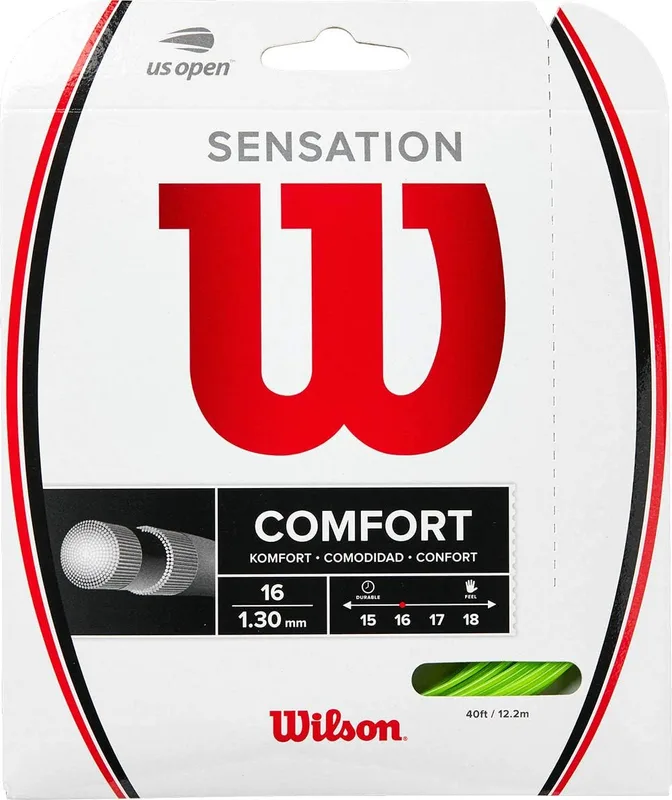
Wilson Sensation
Best for: Budget comfort, first switch off poly
- Type: multifilament
- Gauge: 16 / 17
- Feel: soft, muted
- Best Tension: low to mid
Pros
- One of the softest multis you can buy this cheap
- Widely available in 16 and 17 gauge
- Kind to the arm without a boutique price
Cons
- Feel is a touch muted and less lively than premium multis
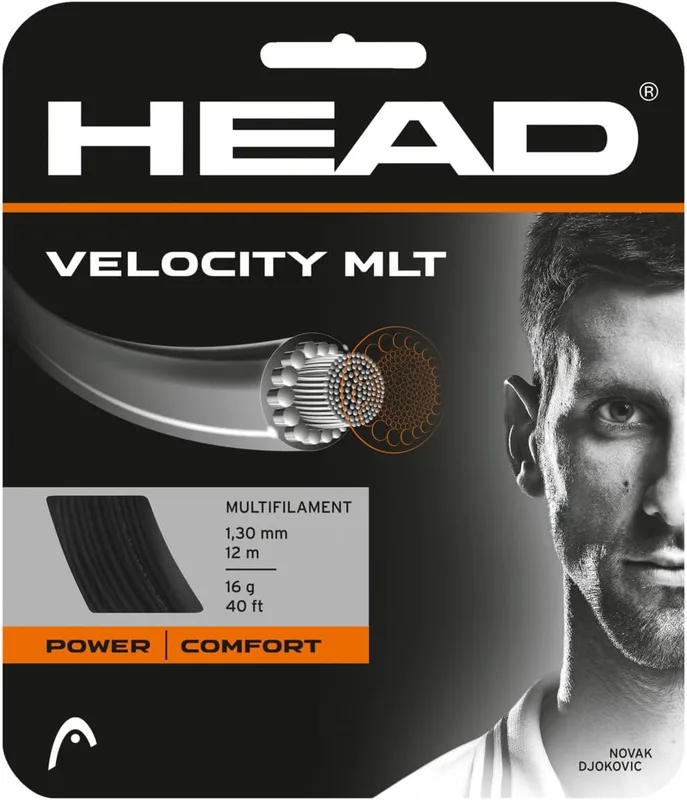
Head Velocity MLT
Best for: Value comfort with a bit more control
- Type: multifilament
- Gauge: 16 / 17
- Feel: comfortable, slightly firmer
- Best Tension: low to mid
Pros
- Best-value premium-feel multifilament around
- Firmer than the softest multis, so control players like it
- Low vibration for the price
Cons
- That firmer feel means it's not the plushest option if your arm is very sensitive
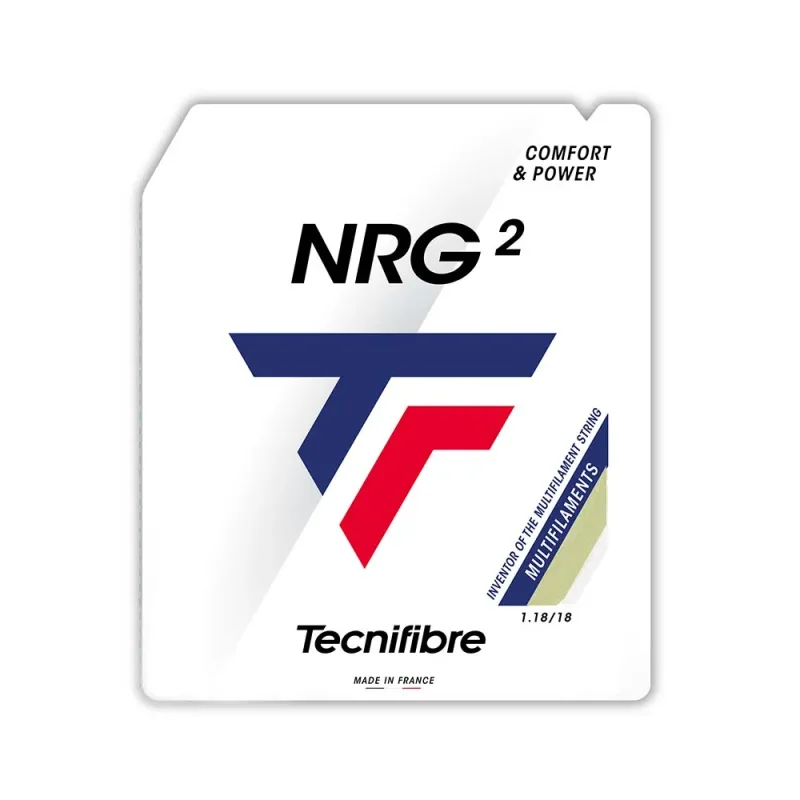
Tecnifibre NRG2
Best for: Maximum softness in a synthetic string
- Type: multifilament
- Gauge: 16 / 17
- Feel: very soft, lively
- Best Tension: low to mid
Pros
- Among the softest and stretchiest multis made
- Lively pop that helps if you supply your own pace
- A favorite soft cross in comfort hybrids
Cons
- That softness comes with lower durability and less raw control
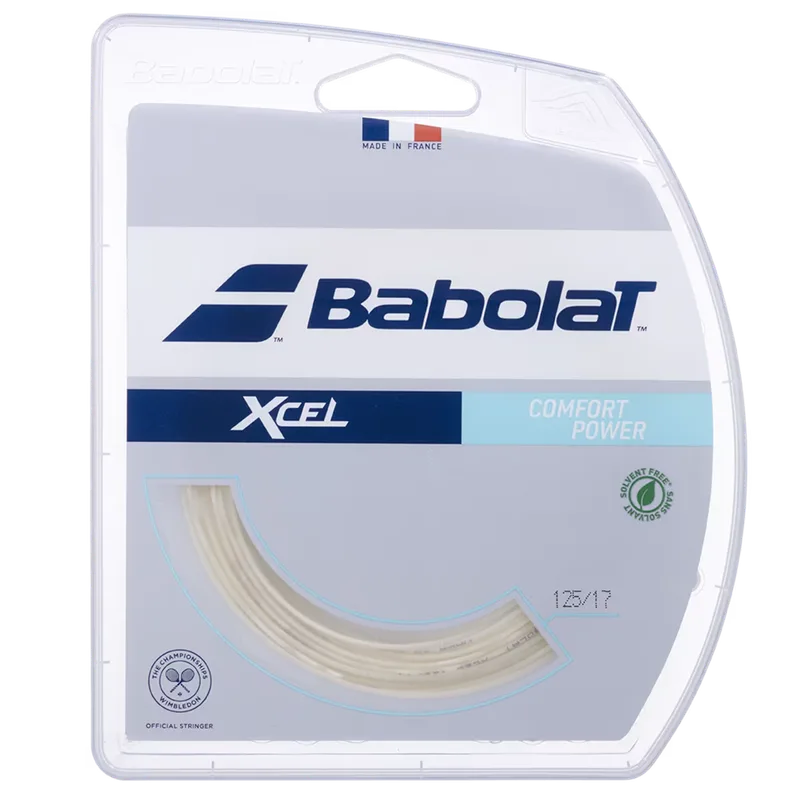
Babolat Xcel
Best for: Comfort with more control than most multis
- Type: multifilament
- Gauge: 16 / 17
- Feel: soft with grip
- Best Tension: low to mid
Pros
- Rare mix of plush comfort and above-average control
- Holds tension reasonably well for a soft multi
- Plays beautifully as the soft main in a hybrid
Cons
- Durability is only middling, as with most comfort strings
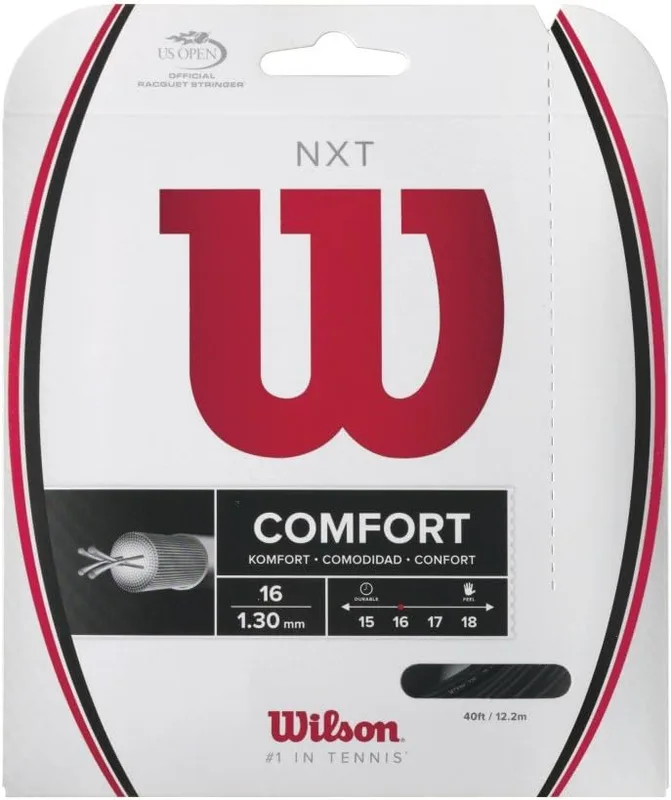
Wilson NXT
Best for: All-around premium comfort
- Type: multifilament
- Gauge: 16 / 17
- Feel: soft, rounded
- Best Tension: low to mid
Pros
- One of the most trusted comfort strings for sore arms
- Slightly firmer and more durable than the softest multis
- Easy to find in 16 and 17 gauge
Cons
- Premium price for a synthetic, and it can feel a bit powerful
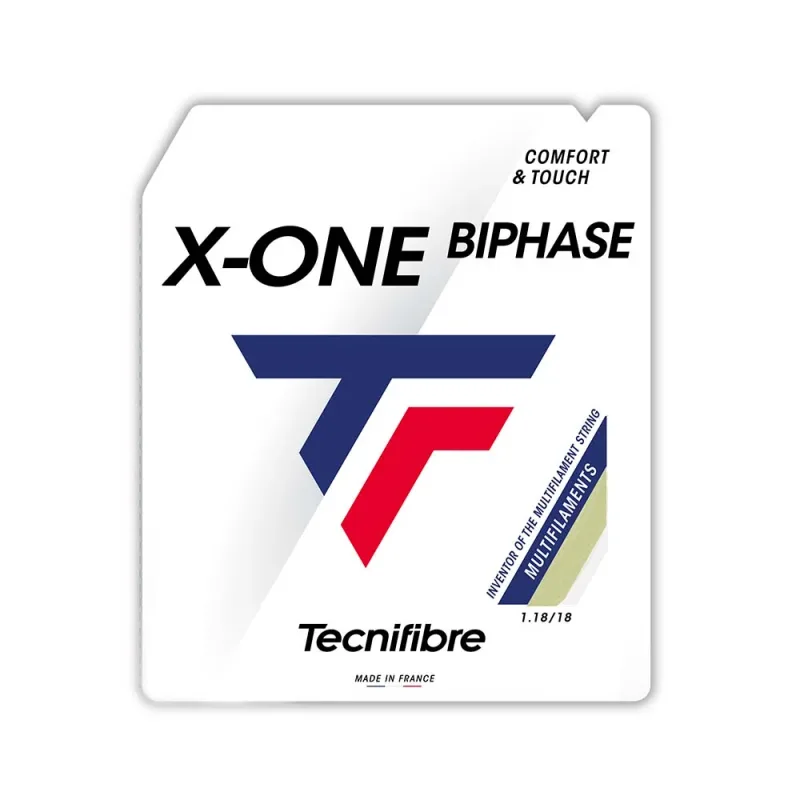
Tecnifibre X-One Biphase
Best for: Gut-like comfort without the gut price
- Type: multifilament
- Gauge: 16 / 17
- Feel: plush, near-gut
- Best Tension: low to mid
Pros
- Gets closest to natural gut of any synthetic here
- Keeps real power alongside the comfort
- Great pick if gut is out of your budget
Cons
- Sits at the top of the multifilament price range
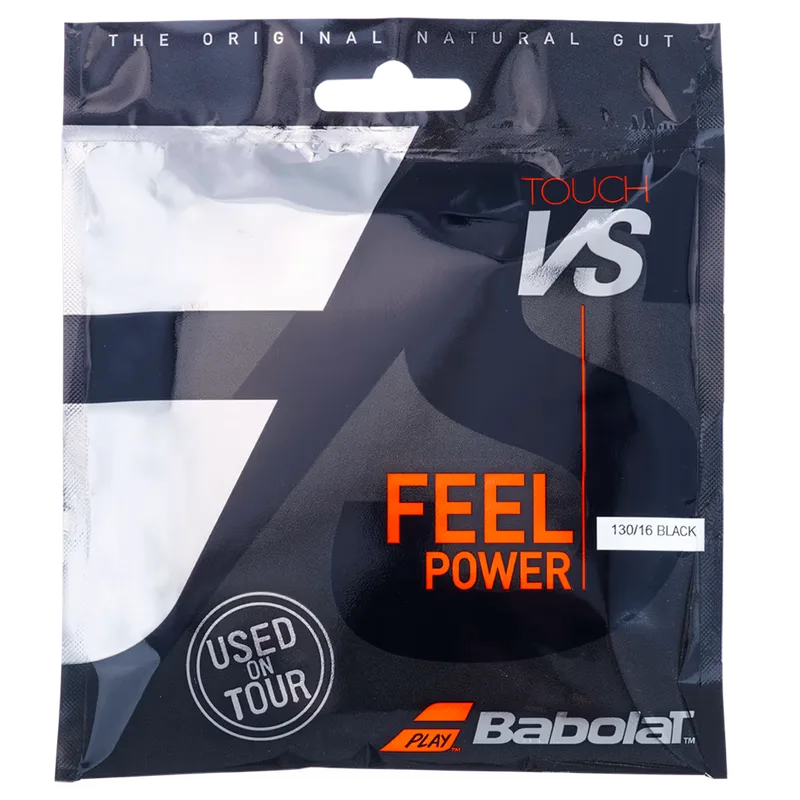
Babolat Touch VS Natural Gut
Best for: The plushest hit, cost no object
- Type: natural gut
- Gauge: 16 / 17
- Feel: plush, elastic
- Best Tension: low to mid
Pros
- The comfort benchmark every other string is measured against
- Stays lively and gentle even strung a little tighter
- Elastic feel that soaks up shock better than any synthetic
Cons
- Expensive, and it hates moisture, so it's a splurge you baby
Frequently asked questions
What tennis string is best for tennis elbow?
A soft multifilament or natural gut, strung a few pounds lower than you normally would. Multifilaments like the Tecnifibre NRG2, Wilson NXT, or budget picks like the Head Velocity MLT cushion impact far better than polyester. Natural gut is the softest of all if you can afford it. The common thread is a flexible string bed that flexes on contact instead of jarring your arm.
Does lower string tension help tennis elbow?
Yes, and there's data behind it. A 2016 study measured lower force at the elbow on backhands as string tension dropped from 245 N to 200 N, with the differences reaching statistical significance. A looser bed flexes more and returns less shock to your arm. Dropping two to four pounds off your usual tension is one of the simplest changes you can make.
Is natural gut or multifilament better for the arm?
Natural gut is the softest and most shock-absorbing string you can buy, so on pure comfort it wins. But good multifilaments get close for a quarter of the price and don't fall apart in humidity. For most recreational players, a soft multi is the smarter buy. Save gut for when comfort matters more than the receipt.
What gauge is best for arm comfort?
Thinner gauge (17 rather than 16) tends to feel a little softer and gives more feel, at the cost of breaking sooner. If your arm is the priority and you're not a string-breaker, 17 is a reasonable choice. If you snap strings often, stick with 16 and get the comfort from the material and tension instead.
Can I use polyester string if I have tennis elbow?
A full bed of stiff polyester is usually the worst choice for a sore arm, since poly is the stiffest common string type. If you love the control and spin of poly, a hybrid (soft multi in the mains, a softer co-poly in the crosses) at low tension is a gentler compromise. A softer co-poly like Volkl Cyclone Tour eases the sting, but it's still firmer than any multi.
How often should I restring for arm comfort?
A rough rule is to restring as many times per year as you play per week, so twice a week means about twice a year at minimum. For arm issues, more often is better, because strings stiffen and lose tension as they age. A dead, stiff string bed transmits more shock, so a fresh soft string is doing you a favor.